


Page 7 - 2015 Annual Project Review
P. 7
KEYSTONE INITIATIVE
Elk River Watershed Recovery
Launching a Watershed-wide Stewardship Program to Recover High Quality Habitat.
The Elk River is the largest tributary to Humboldt Bay and once provided many miles of high-quality habitat for Chinook and coho salmon and steelhead. The Elk River is not only part of the Humboldt Bay Tributaries coho salmon population, but it is also listed as a core population within the NMFS Coho Recovery Plan – the highest priority for recovery and restoration efforts.
The Elk River was a central focus of the north coast’s“timber wars” over the past several decades. During the period 1988-2000, the watershed became heavily degraded by fine sediment and nuisance flooding resulting from excessive timber harvest activities. The previous industrial timberland owner – Pacific Lumber Company or PALCO – filed for bankruptcy in 2007, and in 2008, transferred its holdings to the Mendocino Redwoods Company, later to become Humboldt Redwood Company (HRC).
In 2014, the North Coast Regional Water Quality Control Board reviewed the Total Maximum Daily Load (TMDL) allocation under the federal Clean Water Act which resulted in a “waste discharge permit”to protect the Elk River’s water quality and salmonid habitat from future harm from timber harvest.
Elk River Recovery Assessment and Community
LONG-TERM GOAL
Recover Elk River from the current severe water quality and sediment impairment, nuisance flooding conditions, habitat degradation, salmonid population reduction, and community strife that resulted from years of excessive timber harvesting.
RECENT ACCOMPLISHMENTS
• Established a watershed-wide stewardship program.
• Led the recovery assessment, working with local landowners,
HRC, the Regional Water Board and State Water Resources
Control Board, county supervisors, and the restoration community. • Secured grant funding from state agencies and private sources
to conduct a multi-phased recovery assessment and pilot restoration implementation effort that began in 2014.
WHAT WE WILL ACHIEVE IN 2015-16
• Continue working with key project partners (HRC, Regional Water Board and State Water Resources Control Board, Elk
River residents, Coastal Conservancy) to determine feasible
and appropriate actions to restore ecosystem functions, abate nuisance flooding, and recover water quality conditions beneficial to salmon and steelhead.
• Continue planning, technical analyses, and stakeholder outreach for an Elk River Stewardship Program, integrating recovery planning and pilot implementation with regulatory program development.
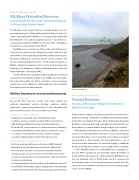
Mouth of the Elk River
KEYSTONE INITIATIVE
Coastal Estuaries
Restoring Off-Channel Habitat for the Benefit of Wild Fish and People.
Along with the ambitious Eel River Estuary Preserve Restoration, CalTrout is working on Mad River and Redwood Creek/Prairie Creek, both vital to coho habitat restoration. Much of the land bordering the Mad River is privately held, large agricultural parcels that limit the development of complex habitat along the edges of the channel.
McKinleyville Community Services District (MCSD), a large land owner in the lower Mad River, intends to increase land holdings along the Mad River, and is interested in providing recreational opportunities on their property. The lower Mad River is one of the most popular destinations for steelhead angling in Humboldt County, providing substantial economic benefits to the community.
North of Mad River, the 125-acre Orick Mill Site is a strategic focal point of Redwood National and State Park, linking the Redwood Creek and Prairie Creek portions of the parks. The Old Mill Site has the only degraded reach of Prairie Creek, which is otherwise the most pristine redwood/coho watershed remaining in the state. The site has also been identified as the best location for a new “gateway” visitor center for RNSP.
7


