


Page 24 - Sierra Meadows Strategy
P. 24
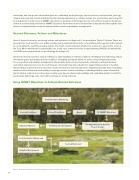
Landscape and site-speci c information (such as contributing area hydrology, species presence and potential, geology, climate and soils) and current and future threats and opportunities (e.g., climate change,  re, and invasive species) would be integrated to create as set of SMART objectives for meadows in the target area. A conservation design for meadows in that area should help meet those SMART objectives. Restoration actions would then be implemented through the next phases of implementation and post implementation monitoring/adaptive management.
Desired Outcomes, Actions and Milestones
A set of desired outcomes, necessary actions and milestones for Approach 1 are provided in Tables 1-3 below. These are presented as short-term (to occur within next  ve years), intermediate-term (to occur within next ten years), and long-term (to occur within the next  fteen years) actions. The fourth column indicates whether the actions are expected to occur at the local (W for watershed) or regional (R) scale. In this case, watershed refers to approximately HUC12 size watersheds or HUC10 and regional stands for the Strategy Area (Figure 2).
Short term desired outcomes include re ning our understanding of existing conditions; identifying and addressing critical information gaps; articulating desired conditions; identifying priority meadows for action; and prioritizing meadows
for conservation and adaptive management. Intermediate desired outcomes include achieving continued meadow restoration and protection over the next 10 years; and monitoring and evaluation to support improvement of meadow functionality. Long term desired outcomes include monitoring restored meadows to adaptively manage them; evaluating whether restored meadow functionality closely approaches desired conditions; evaluating whether restored meadow functionality is resilient across the range of water year types (reduced vulnerability); and evaluating whether bene ts to biodiversity, hydrology, soils, and carbon storage are being achieved.
Using SMART Objectives to Achieve Desired Outcomes
Desired Conditions
Implement Actions
Post Restoration Monitoring
Adaptive Management
Cloudburst Meadow. Photo: H. Drew
Pre Restoration Monitoring
Current Conditions Needs ID SMART Objectives
Permitting and Compliance
Desired Outcomes*
* Outcomes are products of achieving desired conditions
Use Objectives to ID Actions/ Project Design
Figure 3. Flowchart of the steps for achieving restoration to desired conditions and outcomes. 24


