


By Dr. Rob Lusardi
CalTrout/UC Davis Wild & Coldwater Fisheries Lead Scientist
*This article is a repost from the Summer 2016 issue of The Current
Conservation of inland trout populations in California
Threat Evolution
Native fish conservation and recovery is an onerous task. While there are many threats, hybridization has played an integral role in the demise of numerous inland trout species throughout the western United States. Nowhere is this more evident than California where introduced rainbow trout have threatened the genetic integrity of California golden trout, Little Kern golden trout, Kern River rainbow trout, Paiute cutthroat trout, and Lahontan cutthroat trout.
Species recovery, however, is challenging. Managers must often balance short-term goals of reversing a trend towards extinction with long-term species persistence. These objectives rarely align, in part because they operate at different time scales, but also because threats can shift through time as a result of management intervention.
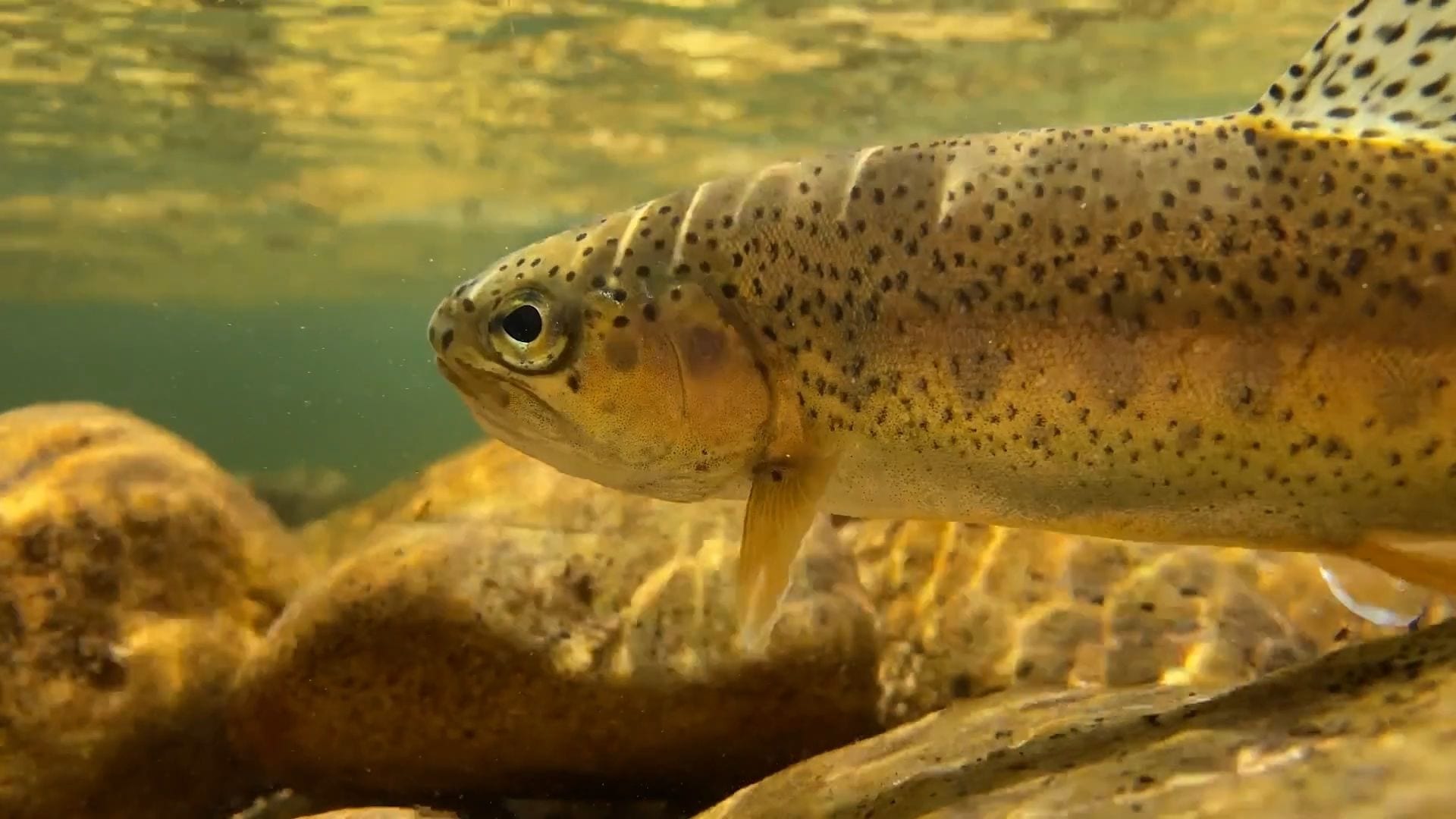
Lusardi et al. (2015) recently examined this phenomenon in the Little Kern golden trout (Oncorhynchus mykiss whitei), an endemic species to the Little Kern River watershed in the southern Sierra Nevada. Similar to many western inland trout populations, introductions of coastal rainbow trout greatly reduced the range of Little Kern golden trout by approximately 90% with fewer than 5,000 individuals isolated in five small headwater streams by 1975 (Moyle 2002). The primary cause of decline was hybridization with introduced rainbow trout.
Cover Photo: Mike Wier

Photo: Mike Wier

Photo: Mike Wier

Recovery Uncovers New Threats
In order to improve Little Kern golden trout genetics and reduce the threat of hybridization, recovery actions focused on isolating populations with instream barriers (many of which were natural) , eradicating hybrid populations using piscicides such as rotenone, and re-establishing unhybridized populations using hatchery fish.
Similar strategies have been used on other California endemic inland trout such as Paiute cutthroat trout. The strategy was largely successful in slowing the rate of hybridization, with most populations exhibiting minimal rainbow trout genetic influence. There were, however, consequences associated with these recovery actions.
Photo: Mike Wier
While the threat of hybridization was greatly reduced, re-introduced Little Kern golden trout populations exhibited very low levels of genetic diversity. Genetic diversity is important because it enables species to adapt to changes in their environment. If sufficient diversity does not exist, adapting to change becomes a difficult task and the potential for extinction increases. While resource managers were able to greatly reduce the threat of hybridization in Little Kern golden trout, a new threat of low genetic diversity emerged.
In describing the conservation history of the Little Kern golden trout, Lusardi et al. (2015) introduces the term ‘threat evolution’ and defines it as fixing an initial threat (hybridization) through management action, but in so doing creating a secondary threat (low genetic diversity). A review of the literature suggests that the phenomenon has occurred in numerous other western inland trout species. This points to an inherent difficulty in salmonid recovery. Immediate action is often required to slow further demise, but those actions might produce new threats which could equally compromise long-term persistence. This is why adaptive management is an important tool to assist in species recovery. Management strategies must be flexible in their approach, understanding that different actions can elicit different responses that operate at diverse time scales.
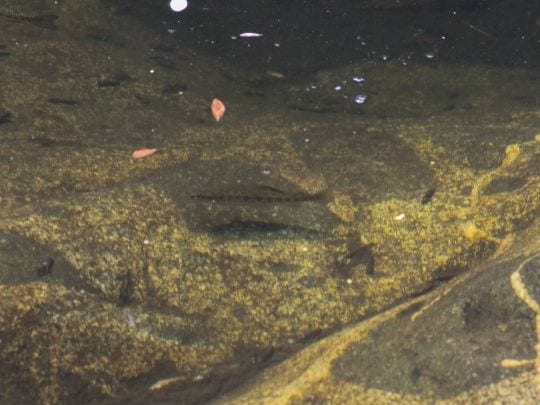
Photo: Mike Wier

Improving Genetic Diversity
Improving Little Kern golden trout genetic diversity will not be easy. Defining the entire genetic landscape of the Little Kern Basin appears to be a logical first step. Resource managers can then focus on removing remaining hybridized populations and promoting connections between isolated unhybridized populations. In some cases, this may mean altering barriers to promote connectivity or moving fish from one population to another in an effort to improve genetic diversity. There are risks associated with these types of management actions, but if approached cautiously and within a scientific framework, there are also potentially great benefits.
Establishing Little Kern golden trout refuge populations outside of the basin should also be considered. Low genetic diversity and small population sizes that currently plague the Little Kern golden trout suggest that the fish is more vulnerable to random events such as disease, wildfire, drought, or further introductions of non-native fish. Establishing refuge populations would provide insurance against the potential future loss of salmonid biodiversity.
Numerous inland trout populations are threatened by the introduction of non-native rainbow trout. Recovery of inland trout populations is a difficult task and is, at times, uncertain. Uncertainty, however, should not mean inaction. New tools such as structured decision making allow managers to weigh the relative risks and benefits of particular recovery actions and identify uncertainty. Key to all of this is understanding that the recovery of inland trout populations will take time. Adaptive management and using the best available science to guide recovery provides the best path forward.
Lusardi RA, Stephens MR, Moyle PB, McGuire CL and Hull JM. , 2015. Threat evolution: negative feedbacks between management actions and species recovery in threatened trout (Salmonidae). Reviews in Fish Biology and Fisheries 25: 521-535.
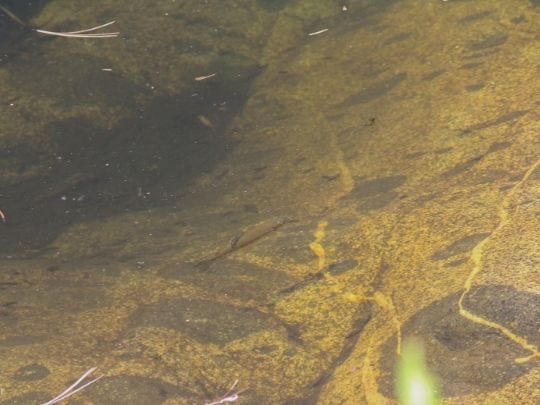
Photo: Mike Wier

Articles






Rewinding Through CalTrout’s History – Videos From The Past


The Role of Estuaries

CalTrout Member Profile: Mark Gangi

My Angle: Urban Waters Deserve Our Care and Protection

CalTrout Member Profile: Mac Heebner

Reflections: Photos from CalTrout Friends

Spot Check: Richard May, Conservationist of the Year