Caltrout’s Mission
Revitalize waters for resilient wild fish and a better California.
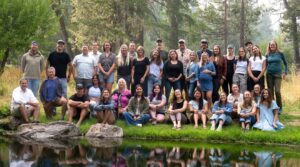
With more than sixty large-scale restoration projects underway, public policy efforts in Sacramento and Washington, D.C., a statewide Science Program, and a strong community of partners, our regional teams work tirelessly to advance our mission.
Our Beliefs
Our beliefs are the deeply held convictions that underpin the approach to our work.
They represent our collective wisdom, experience, and understanding of the world around us. Grounded in optimism and a commitment to continuous learning, our beliefs drive us forward, even in the face of adversity.
01
Our home
California is remarkable.
California is our home, and home to some of the most biodynamically diverse and irreplaceable ecosystems on earth. It is our privilege to protect, care for, and promote this landscape amid unprecedented climate change.
02
The foundation
Water is life.
Like air, water is essential to sustain life. Clean, cold, and free-flowing water is fundamental to healthy ecosystems and healthy economies in every corner of California.
03
Follow the fish
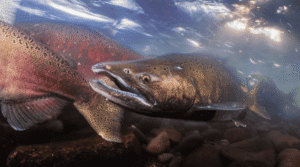
Wild fish are essential to a thriving California.
Healthy fish populations are a key indicator of healthy rivers. When they thrive, rivers help transform community, economic, and ecological health across the state — a model for thriving ecosystems nationally and globally.
04
Lead with science
Science drives solutions.
Healthy fish populations are a key indicator of healthy rivers. When they thrive, rivers help transform community, economic, and ecological health across the state — a model for thriving ecosystems nationally and globally.
05
Ecological life support
Biodiversity is fundamental to resiliency.
Biological variability is a form of ecological life support. We rely on healthy ecosystems to provide the air we breathe, the water we drink, and the food we eat. Without biodiversity, all natural systems are at risk of catastrophe.
06
We are stronger together
Collaboration is essential to lasting solutions.
It takes all of us to effect meaningful, landscape-level change. Cultivating a shared understanding of ecosystem health among all California communities is necessary to achieve big goals — we engage, listen to, and value everyone invested in the rivers of California.
07
The challenge before us
The climate crisis is real.
Climate change is the primary challenge before us, and human activity is the principal cause. We engage in landscape-scale, nature-based solutions that offer a blueprint for building resiliency in both natural ecosystems and human economies — proof that humans can support nature in solving the problems we’ve created.

Our vision
Together, we envision a future where freshwater ecosystems flourish and wild fish thrive, leaving a legacy of clean water and healthy rivers for current and future generations. Our vision inspires us to dream big, push boundaries, and pursue excellence in everything we do.
Diversity, Equity and inclusion
CalTrout commits to action relating to diversity, equity and inclusion to achieve an equitable, sustainable and effective approach to natural resource management.
CalTrout advocates for the protection of California’s watersheds because abundant wild fish indicate healthy waters and healthy waters benefit all Californians. We acknowledge the history of conservation and water management in California is characterized by the inequitable distribution of power and influence. Marginalized communities have been disproportionally impacted by the exploitation of California’s water and natural resources. CalTrout believes resilience—social, organizational, biological—depends on diversity. Our work is better served, and the world made a better place, if we all embrace an equitable and connected approach to conservation.
Our Role
Solutions to California’s complex fish and water issues require a diverse set of problem solvers.
CalTrout partners and engages with diverse groups, cultural experiences, and perspectives— learning to incorporate needs from all parties involved, ultimately creating solutions that last generations because the benefits are equitably distributed.
Diversity, equity and inclusion are fundamental pillars of our strategy. DEI is integral to advancing our commitment to science and on-the-ground restoration work driven by natural resource policy legislation and advocacy. We believe in advocacy that supports and uplifts the voices within marginalized communities to meet their needs. CalTrout commits our successful 50-year legacy and future efforts to stand in solidarity with those communities.
Our Commitments
We commit to put these principles into action, recognizing that our efforts may be imperfect, and the journey may be long:
- Foster an organizational culture based on respect for each person; on equity where everyone is treated in a fair manner according to individual needs; and on diversity that values individual differences in the workplace;
- Build and maintain diversity in our workforce and board of directors through recruiting and hiring best practices;
- Increase our understanding of and engagement with California’s many Tribal Nations. We share interests with Tribal communities related to water and fish. We strive to build and deepen these relationships and engage at the conceptual phase of project planning to create a shared vision;
- Deepening our understanding of and engagement in marginalized communities in California to ensure that our policy, advocacy and conservation projects include their ideas, knowledge, values, and needs.
- Promoting these principles in the broader angling community in particular, including participants, guides, and vendors.
How will this be reflected in CalTrout’s work?
The principles and values of diversity, equity and inclusion will join our commitment to science, restoration, and advocacy as a fundamental pillar of our strategy, of how we work. Across California, some communities have been disproportionately affected by degraded rivers, poor water quality, and climate change. That’s why CalTrout considers community benefits alongside ecological outcomes in every restoration project. We ask how a project will improve water security, reduce climate risks, expand access to nature, and strengthen the places people call home.
This work is a process—a journey not a destination. Some actions are immediate; others will take time to develop and implement. We are committed to learning, growing, and fostering a safe space for our staff to hold these conversations. We will continue to educate ourselves about DEI issues and work to incorporate these values in all we do—this will make CalTrout stronger and more relevant.
Our strategic plan incorporates DEI principles throughout our statewide portfolio of work. The upcoming third edition of our State of the Salmonids Report draws on Traditional Ecological Knowledge alongside our partners’ expertise. Recovering the fisheries California’s Tribal Nations depend on is central to our mission of salmon, steelhead, and trout recovery: as fisheries rebound, California’s Indigenous peoples regain access to harvest and subsistence fishing. Tribal partners bring ecological knowledge, technology, and senior water rights to restoration work — these partnerships are essential. We also provide DEI training for staff and board members to ensure our internal practices align with these values.

turning Belief into Action
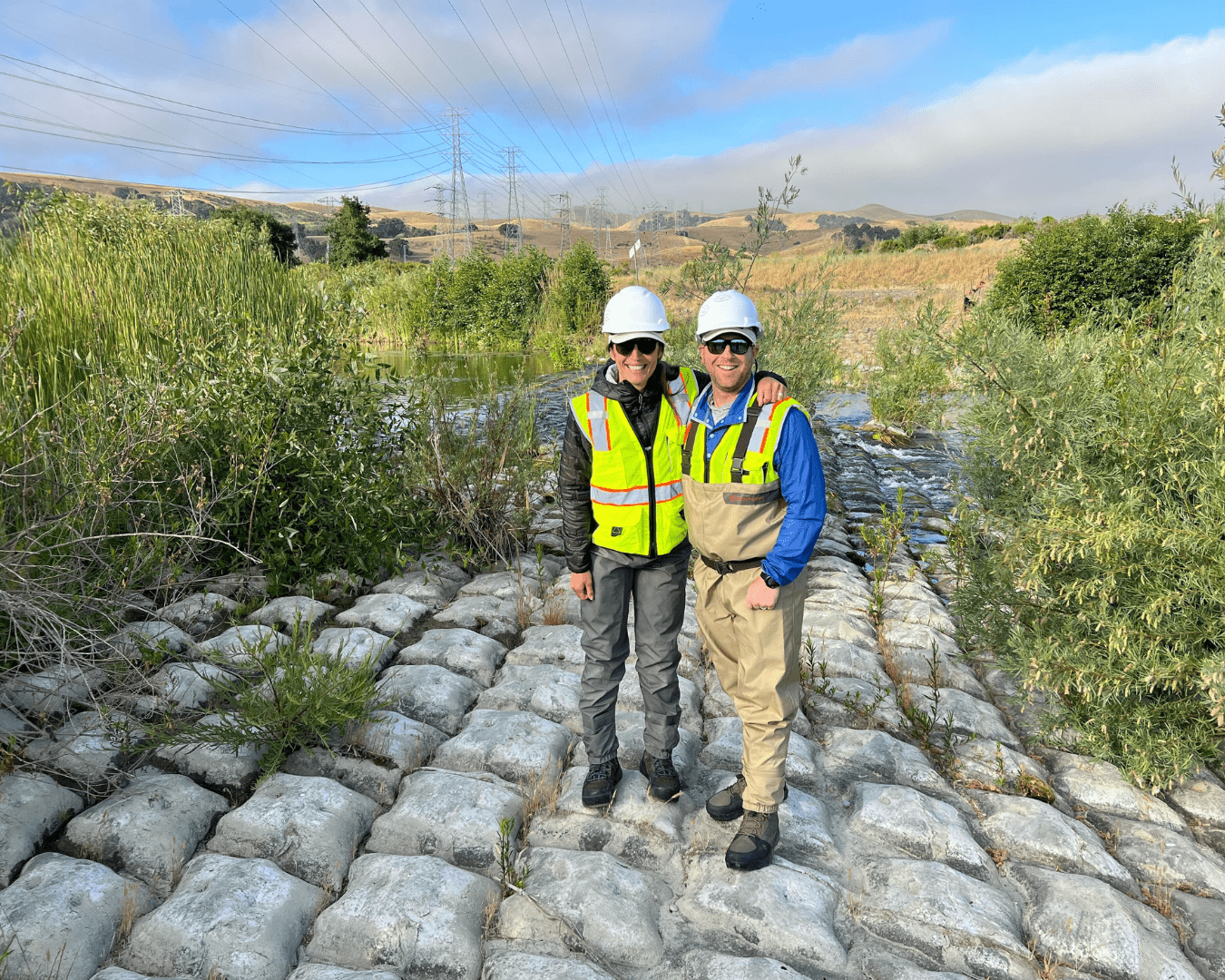
These beliefs are our North Star. Every restoration project we undertake, every policy fight we take on, and every community we engage reflects our conviction that wild fish and healthy rivers are inseparable from California’s future. Our regional teams bring science to the field, our advocacy teams carry it to the halls of government, and our partners help root it in the communities that depend on the waters we’re protecting. From headwaters to floodplains to estuary, our beliefs are guiding on-the-ground change.
OUr Approach
Built on decades of science and collaboration.
Support Caltrout
We can’t take these resources for granted.
At California Trout, our goal is to restore vibrance and abundance to California’s freshwater ecosystems, and to keep them that way for years to come. With the help of local and national partners, we are building a future where wild fish and clean water remain a defining part of California.