
CalTrout News
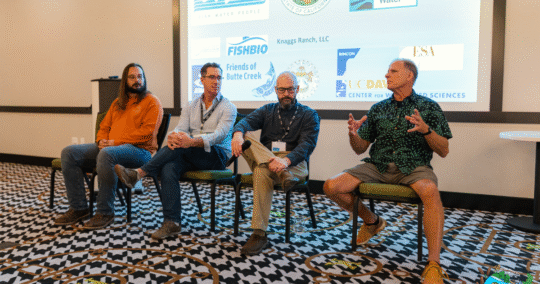
Every year, the California-Nevada Chapter of the American Fisheries Society (AFS) brings together a community of people who care deeply about native fish, watersheds, and the science that enhances our ability to understand and protect them. This year’s annual meeting convened in Chico in mid-February, drawing Tribal leaders, academics, students, agency staff, and conservation practitioners from California, Nevada, Oregon, and beyond.
Under the theme “From Microscapes to Macroscapes: Integrating Knowledge Across Scales and Systems,” the event featured fascinating talks, poster presentations, field tours, a fish printing workshop, a salmon run, and much more. This conference is built around the idea that protecting fish means working at every scale, from single stream biology to whole watersheds to the web of communities that depend on them.
The CalTrout team showed up in full force at AFS to share and discuss what we’ve been working on and to learn from some of the field’s sharpest minds.
Here’s a deep dive into what each CalTrout team member brought to the table.
Damon Goodman, Mount Shasta-Klamath Regional Director: Plenary Presenter
Damon delivered one of the conference’s plenary presentations, using the Klamath River dam removal — one of the largest river restoration efforts in American history — as a lens for thinking about what’s possible when we reconnect ecosystems. Long story short, the fish returning to the river have blown all expectations out of the water in terms of how many returned and how far they’ve traveled.
The plenary session brought together four different experts to explore how perspectives across scales — from individual organisms to entire landscapes — can inform resilient approaches to conservation. Damon presented alongside He-Lo Ramirez from the Mechoopda Tribe, Stewart Reid from Western Fishes, and Jeff Falke from the Nevada Cooperative Fish and Wildlife Research Unit, each offering a different perspectives on that central question.
“Giving the plenary at the American Fisheries Society meeting felt both humbling and energizing. Standing in front of that community, I felt the weight of the moment — not just as a speaker, but as someone representing years of work by partners, scientists, Tribes, and communities who care deeply about the future of our rivers and fish. It was a chance to step back and reflect on the bigger picture: how restoration stories, like the Klamath, can speak to something much larger about resilience, recovery, and what’s possible when we reconnect ecosystems.”
Damon left Chico the way most of us hope to leave a good conference: grateful, inspired, and more motivated than ever to keep pushing the work forward.
Jacob Katz, Senior Scientist: Presenter
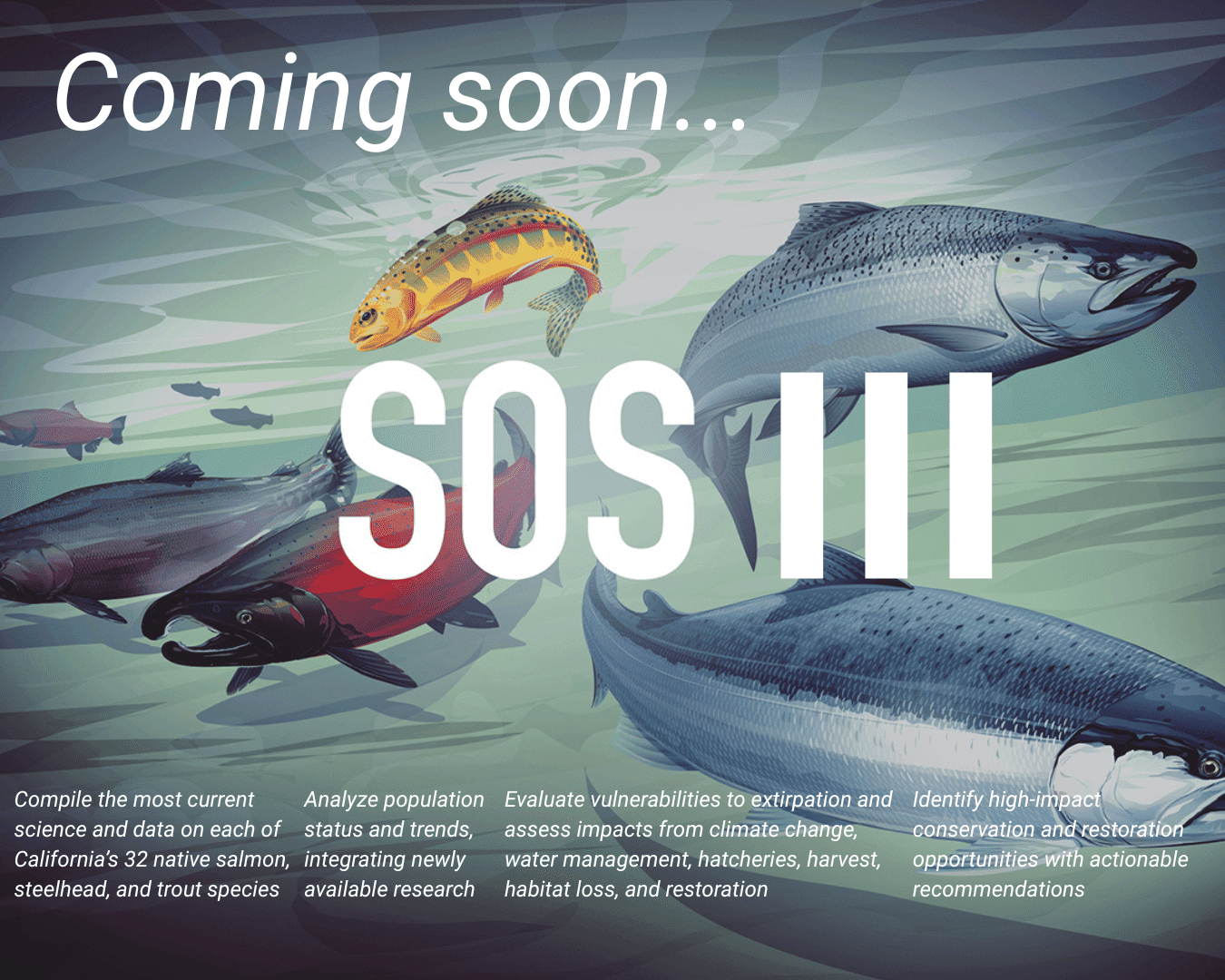
CalTrout’s Science Team attended the conference not only to soak up the newest and best conservation results from the West’s leading fish nerds (like us) but also to announce to this community of fish and watershed professionals our plans to launch the State of Salmonids III (SOS III). At the conference, the team presented a poster explaining how SOS III is a rigorous scientific assessment of the conservation status of every native salmon and trout species in California. The report is meant to be updated regularly as a means of tracking how well each of California’s salmonid populations is faring. The prior version of the report, SOS II, was released in 2017, nearly a decade ago. Now, SOS III will adapt CalTrout’s vision for protecting, restoring, and reimagining California’s freshwater ecosystems to better sustain people, fish, and wildlife to present realities of a warming climate and a more crowded world. This will help meaningfully inform statewide planning and investments.
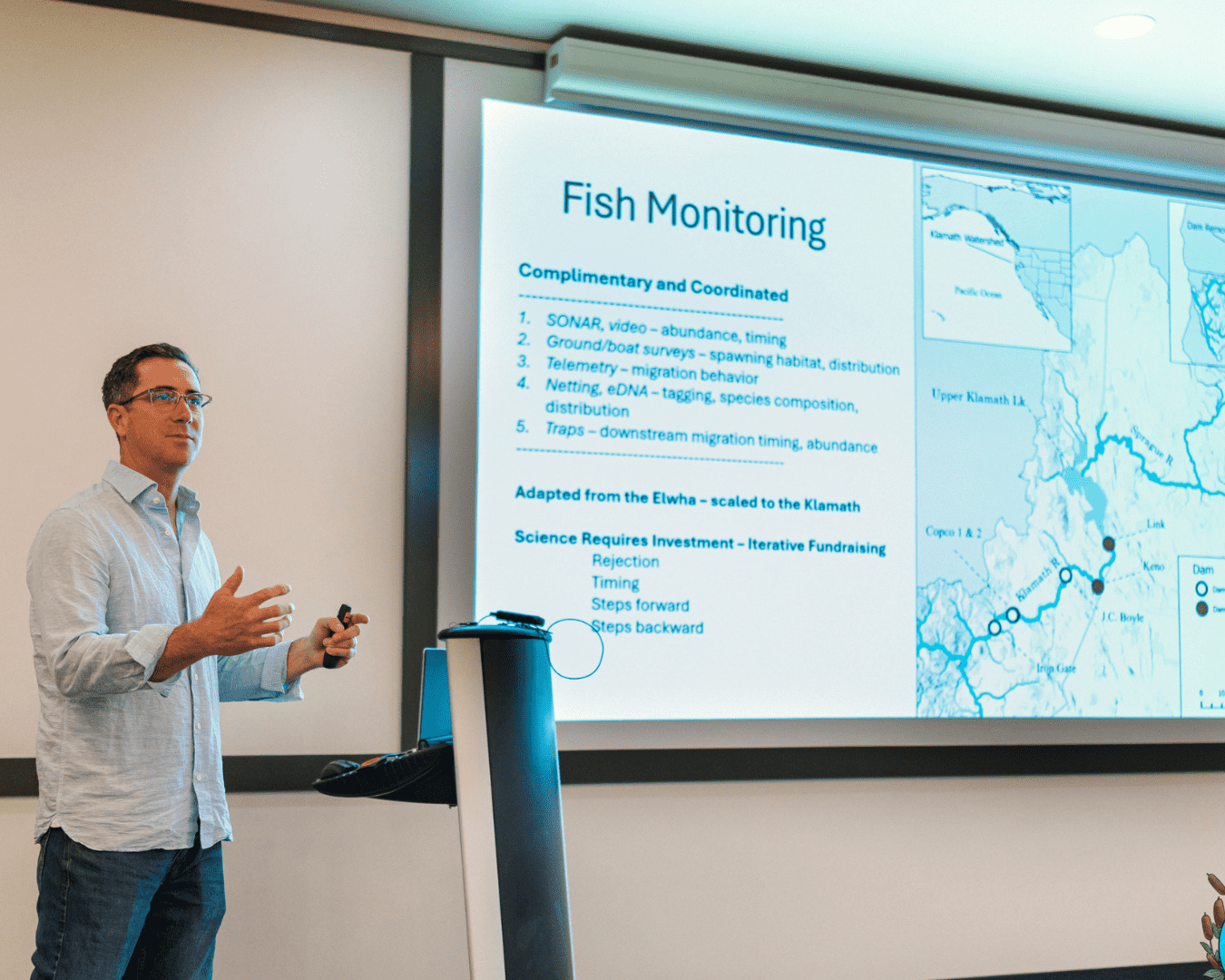
Jacob Katz spoke about what is involved in developing SOS III, including:
- Compiling the most current science and data on each of California’s 32 native salmon, steelhead, and trout species
- Analyzing population status and trends, and integrating newly available research
- Evaluating vulnerabilities to extirpation and assessing impacts from climate change, water management, hatcheries, harvest, habitat loss, and restoration
- Identifying high-impact conservation and restoration opportunities with actionable recommendations
- Communicating findings widely through a multi-media effort, including a peer-reviewed scientific report, an illustrated table book, and a strategic communications effort designed to align agencies, policymakers, community partners, and funders around shared priorities for recovering California’s most iconic fish populations
Holly Swan, Mt. Lassen Regional Manager: Field Tour Lead and Presenter
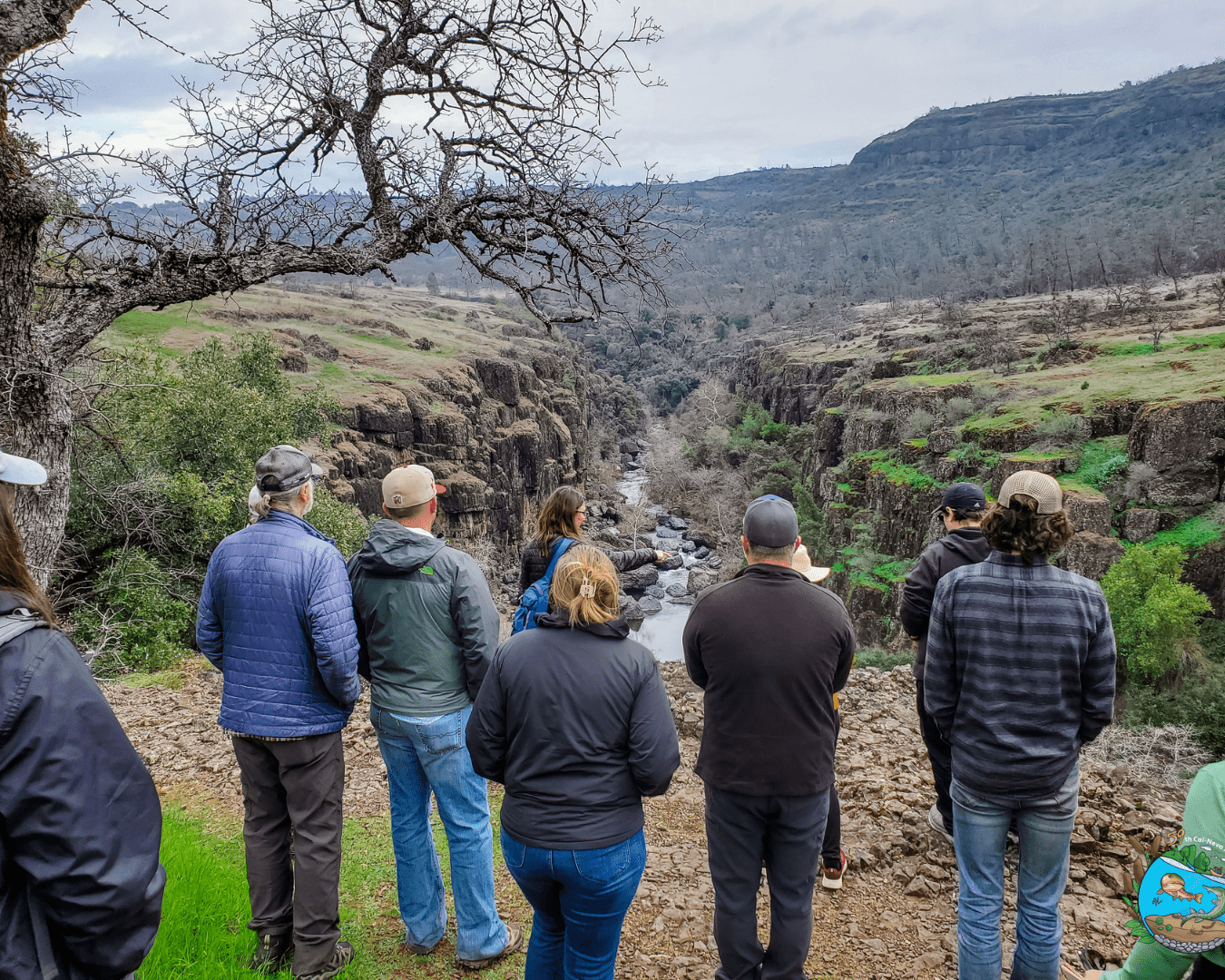
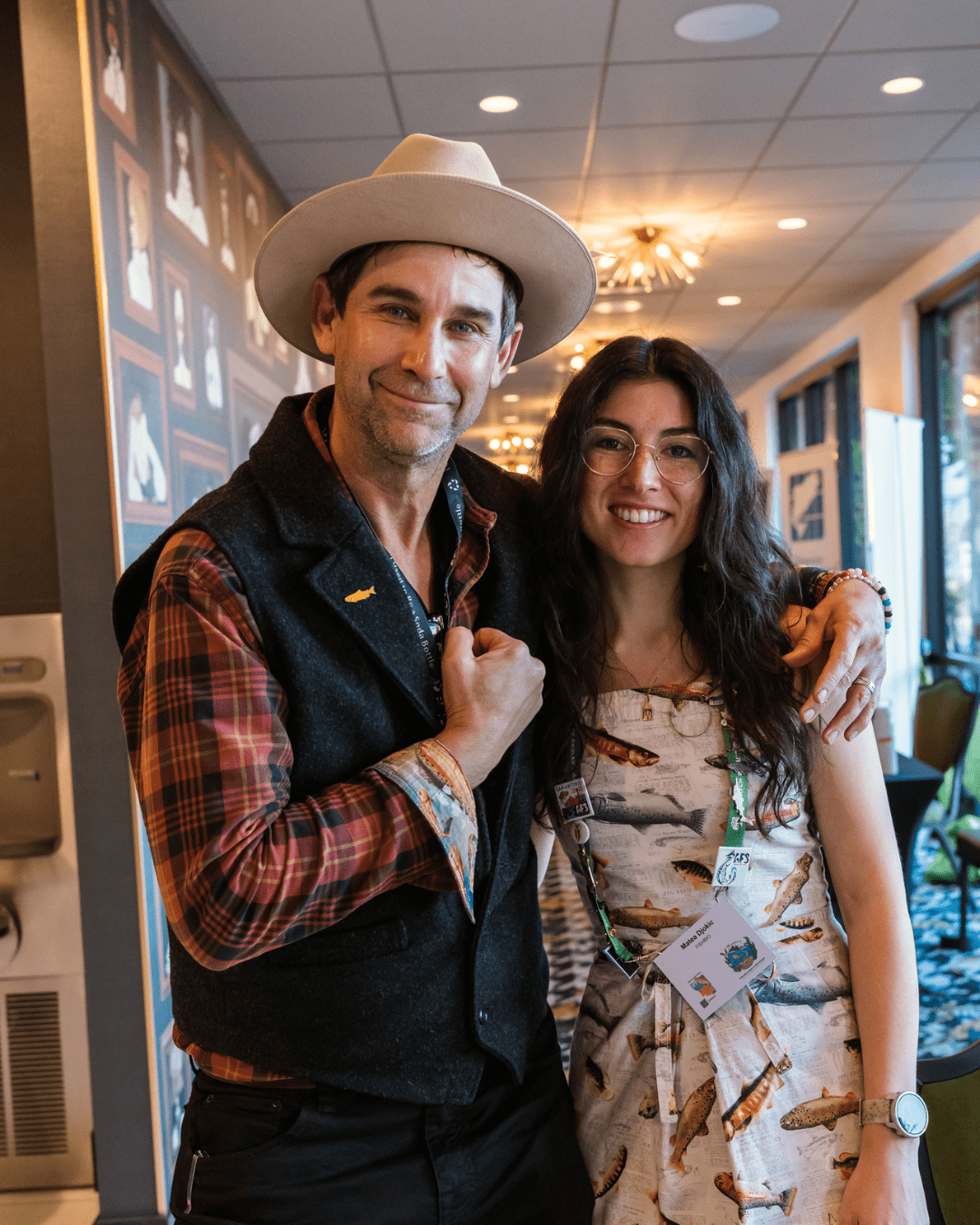
Before the poster presentations started, Holly led a field tour of Big Chico Creek for a group of agency staff and practitioners from the local, state, federal, and private sectors. The tour made two stops: Salmon Hole — where salmonids currently get stuck behind the barrier at Iron Canyon — and an overlook of Iron Canyon itself, where a new CalTrout-led fish passage project is slated for construction this summer. Holly walked the group through the project’s design and construction approach, as well as plans for public education and native fish reintroduction.
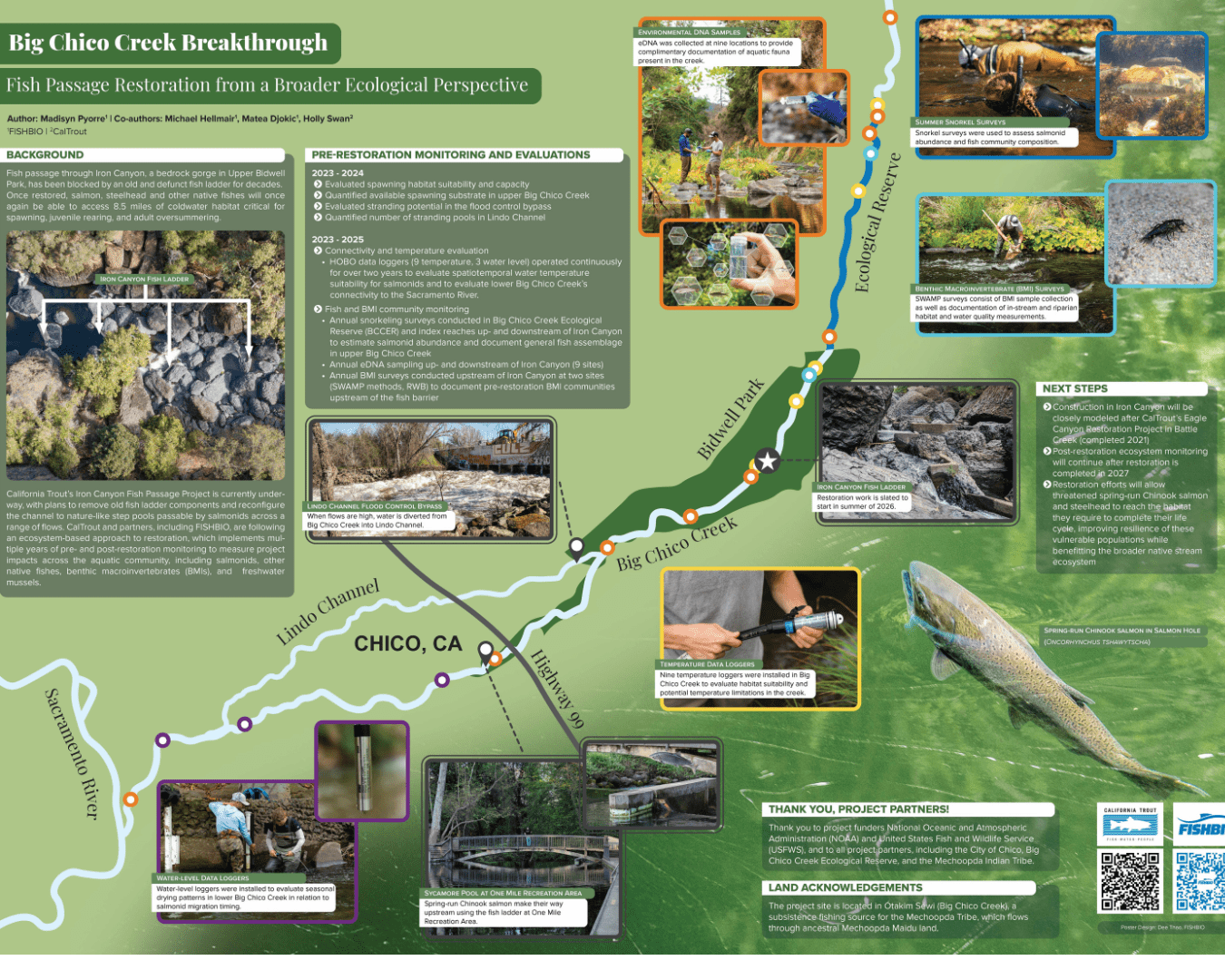
For Holly, the conference came full circle the following evening, when she co-presented at the next evening’s poster session with FISHBIO on fish monitoring work in Big Chico Creek. Many of the tour attendees stopped by to continue the conversation — asking deeper questions about the watershed, the threats facing native fish, and what success for the Iron Canyon project might look like over time.
Marrina Fisher-Nation, Central California Project Manager: Presenter
Marrina presented during the session “Recovering Lahontan Cutthroat in the Walker River Drainage,” a collaborative block that brought together CalTrout and CDFW to share progress on one of the most hands-on aspects of native fish recovery: physically removing non-native trout from headwater streams to support the recovery of native Lahontan cutthroat trout (LCT) populations.
CalTrout has supported LCT recovery in the Walker Basin for more than 15 years. Since 2022, the team has worked closely with CDFW Region 6 to implement dewatering operations on Silver Creek and Slinkard Creek — a flexible, adaptive technique that can be tailored to the unique conditions of individual watersheds. In 2025, a returning field crew built on lessons from previous seasons to advance removal work downstream to a fish barrier constructed by Trout Unlimited. Continuous eDNA monitoring throughout the system confirmed the removal of non-native brook trout and rainbow trout from targeted reaches.
The session also featured presentations on dewatering methodologies, habitat recovery strategies, and the ecological effects of dewatering on benthic macroinvertebrate communities — collectively painting a watershed-scale picture of what LCT recovery looks like in practice.
Lindsay Britton, Central California Project Manager: Presenter
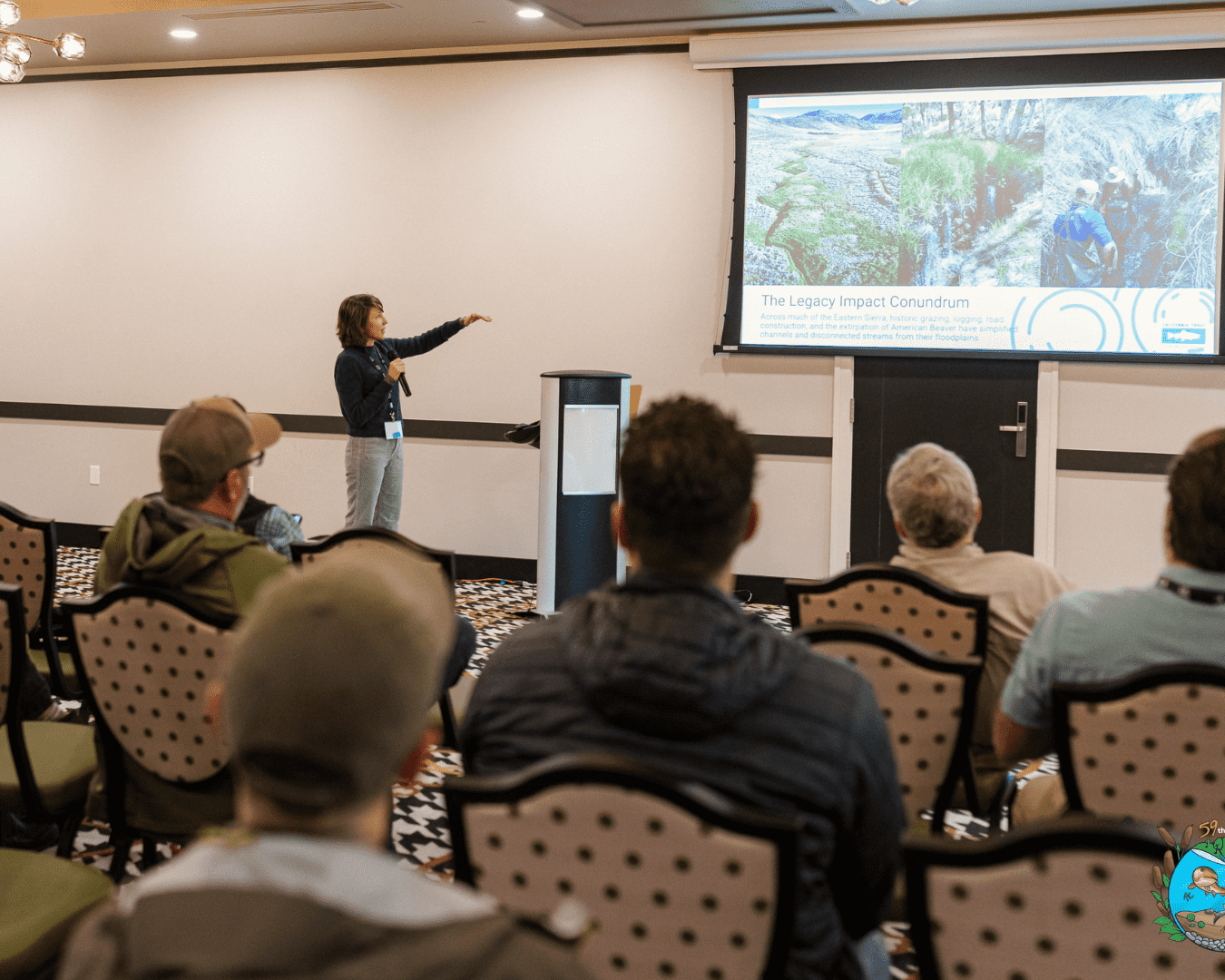
High in the Eastern Sierra, where snowmelt feeds the headwaters of the East Walker River, streams that once ran shallow and incised are slowly reclaiming their floodplains. Meadows are beginning to hold water again. Native vegetation is returning. And in the deeper pools forming behind newly built structures, one of the West’s rarest native trout is finding refuge.
Lindsay joined colleagues from CDFW and CalTrout to share that story at AFS, presenting on restoration work at the By- Day Creek Ecological Reserve — a 460-acre watershed where the CalTrout-CDFW partnership is rebuilding ecological complexity across entire headwater systems.
“We can’t recover native trout without restoring the watersheds that support them,” Lindsay shared.
The goal isn’t just to repair a stream — it’s to restore the natural processes that allow a watershed to heal itself. Healthy headwater meadows store snowmelt, recharge aquifers, and release cold water through dry summers. They buffer floods, improve water quality, and create climate refuges for species vulnerable to warming temperatures. When those systems lose complexity, their ability to provide those benefits declines. When they’re restored, the effects ripple across entire basins.
Long-term, the effort aims to stabilize and expand LCT populations enough to support downlisting and eventually delisting them in the Walker Basin, which would indicate population recovery. The collaboration has also become a model for workforce development, building regional capacity for complex restoration work in the years ahead.
“Restoration at this scale takes many kinds of expertise. But more than anything, it takes strong partnerships and shared commitment.”
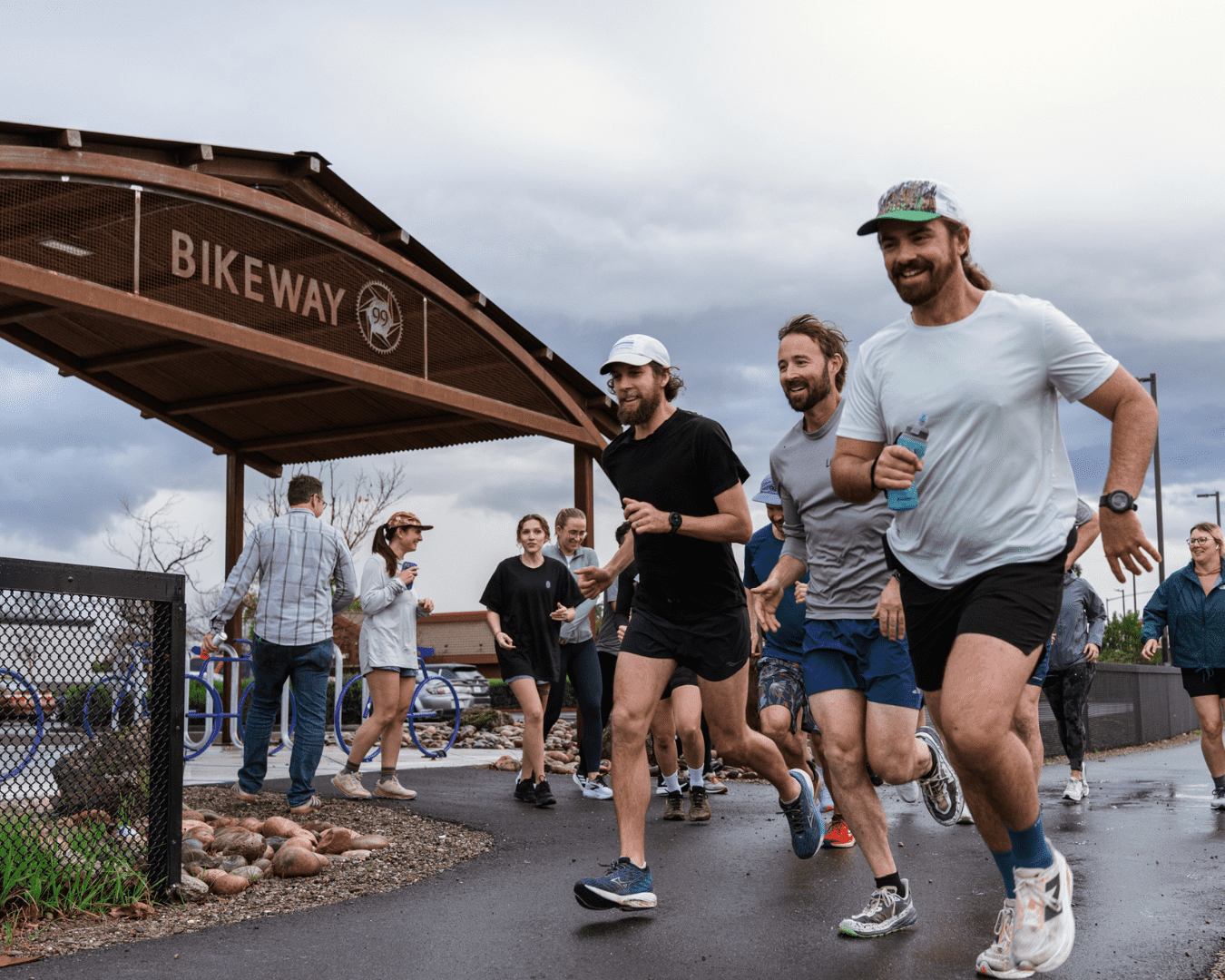
The breadth of CalTrout’s involvement at Cal-Neva AFS highlights our organization’s deep commitment to recovering California’s fisheries across California and our belief that collaboration is essential for impactful and lasting restoration. Whether the subject was dam removal on the Klamath, fish passage on Big Chico Creek, LCT recovery in the Walker Basin, building holistic, scientific species assessments across the state through SOS III, there was a common thread: recovering California’s native fish takes science, partnership, and a willingness to work across scales — exactly what this conference was built to celebrate. We’re proud of what our team brought to Chico, and even more energized by all of the knowledge and connections they’ll be taking home.
All photos were taken by FISBIO.