
CalTrout News
Construction Complete: Prairie Creek Floodplain Restoration at ‘O Rew Marks the Beginning of a New Chapter
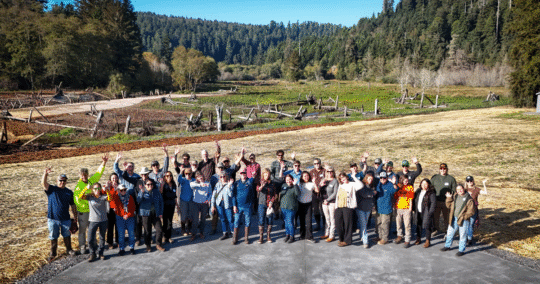
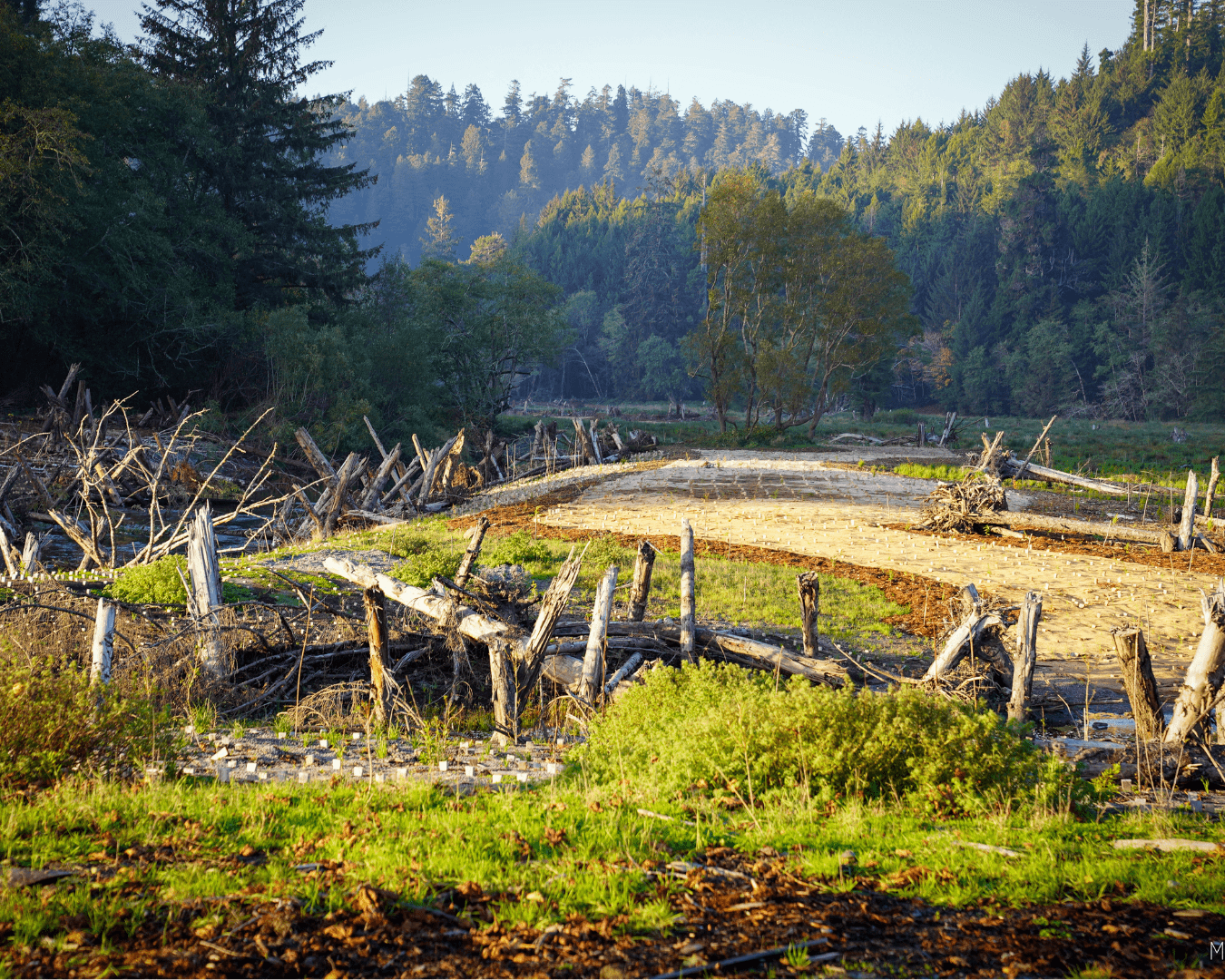
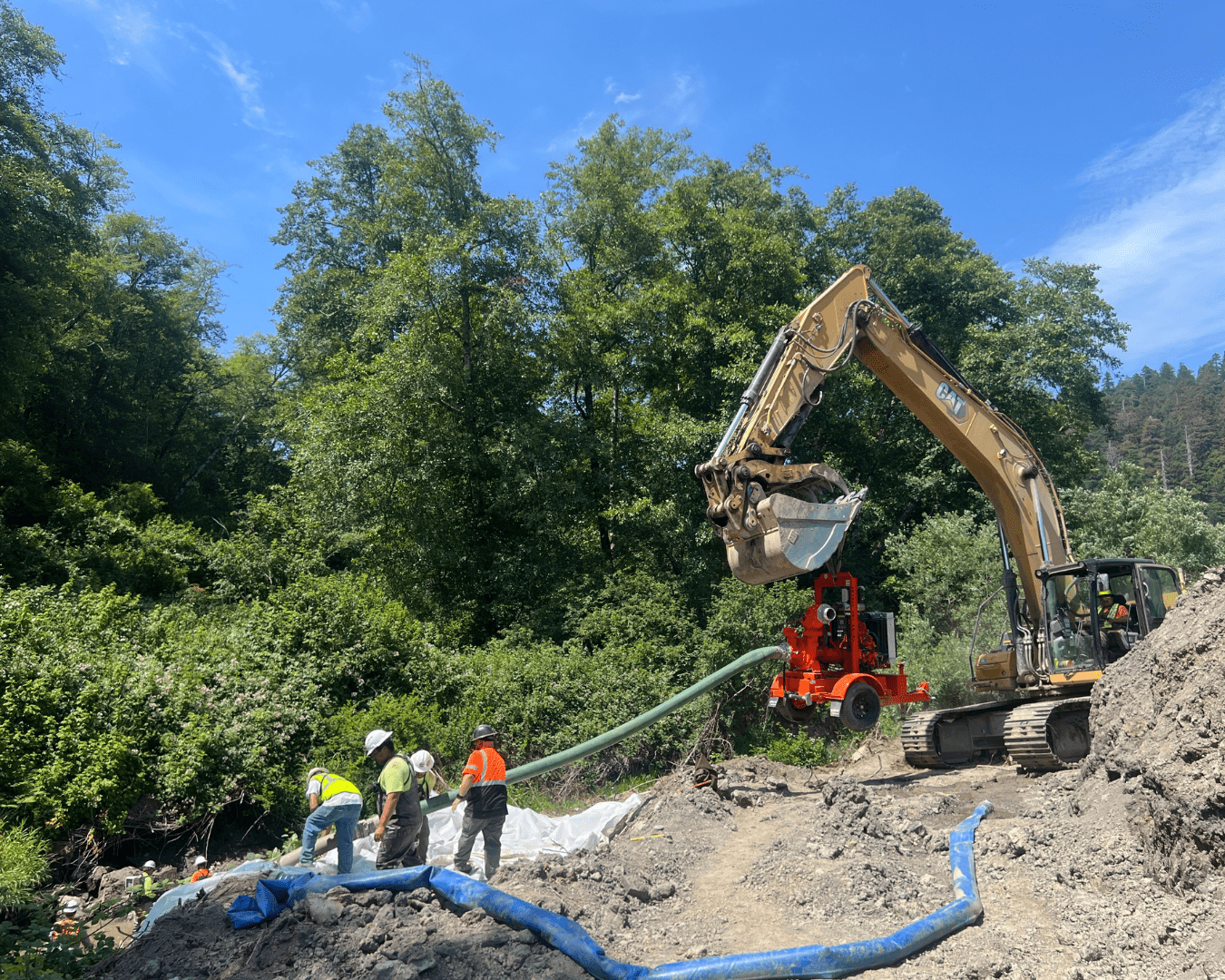
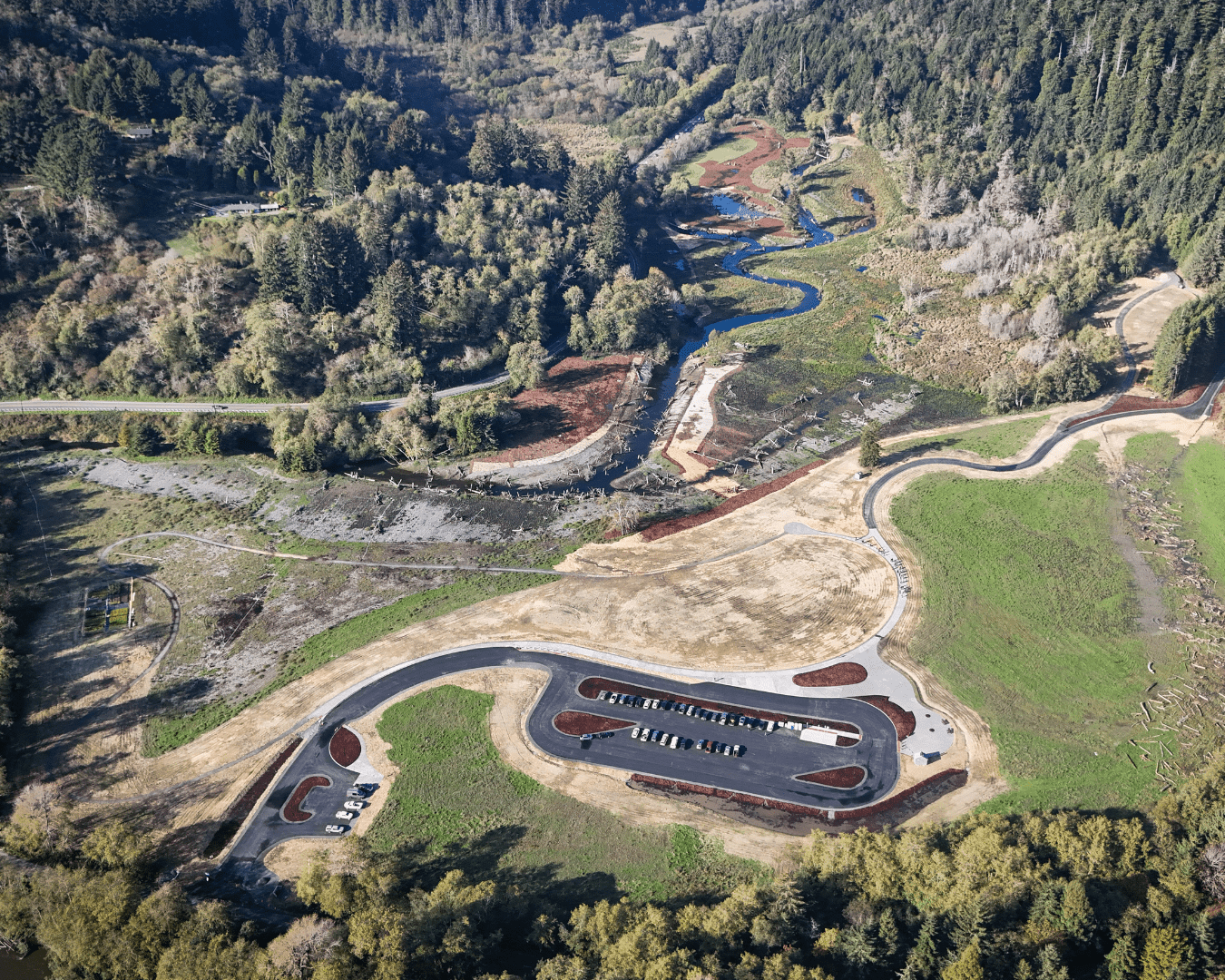
Earlier this month, construction equipment was officially removed from the Prairie Creek Floodplain Restoration Project site at 'O Rew. After five years of construction and more than a decade of planning, this milestone marks the completion of work on a 125-acre ecologically and culturally important property on California's North Coast. Located just 3.5 miles from the ocean in Humboldt County, this project marks the final downstream opportunity to restore floodplain rearing habitat for salmon and steelhead in the Redwood Creek watershed.
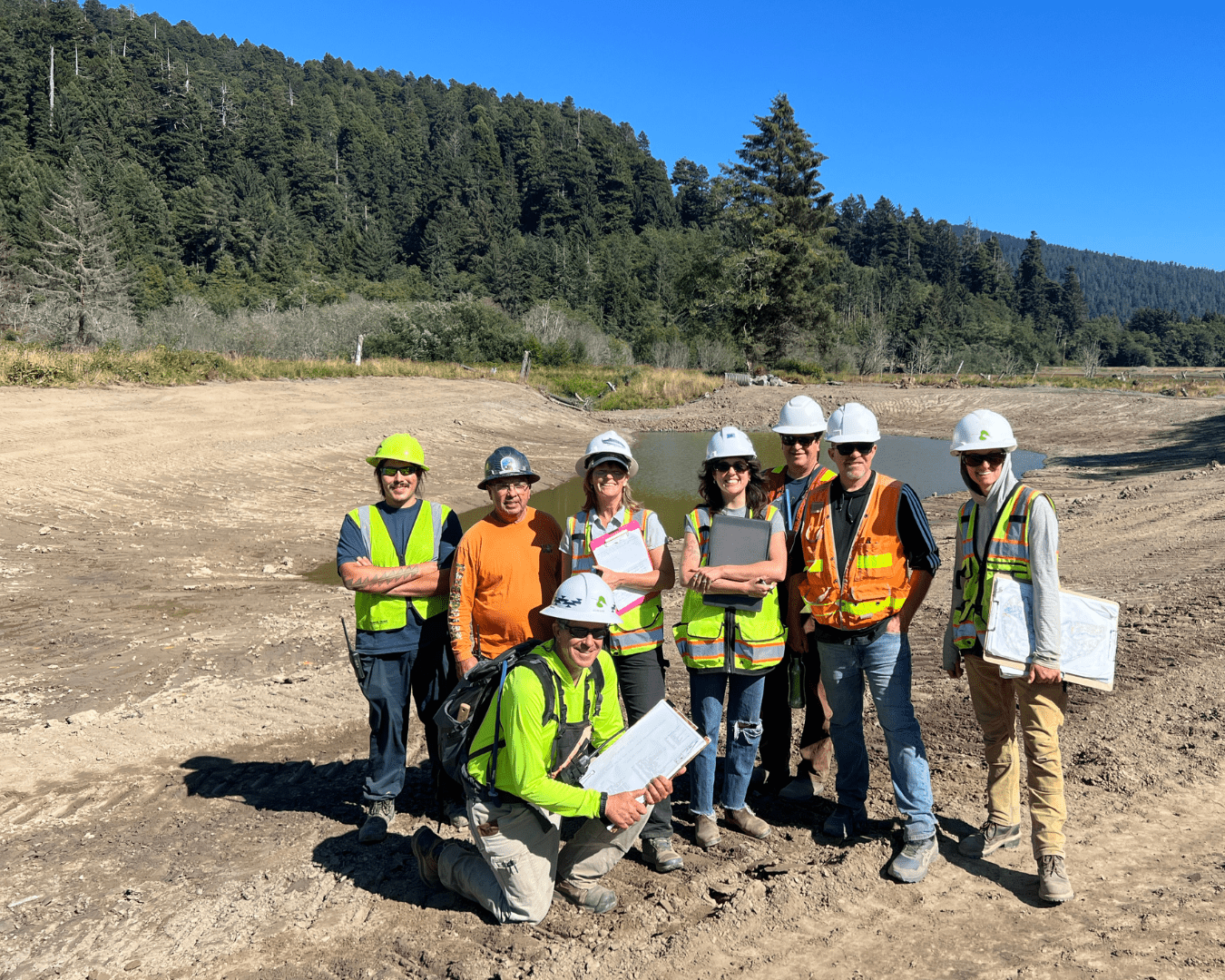
Restoration projects like this one are not about habitat alone. It’s about reconnection – of floodplains and creeks and of people and place. Over the past decade, CalTrout, the Yurok Tribe, Save the Redwoods League, and a team of dedicated local, state, and federal partners have worked side by side to transform this former mill site into thriving wetland and off-channel habitat that supports young salmon and steelhead as they prepare for their journey to the ocean, and welcomes them home to the Redwood Creek watershed to spawn.
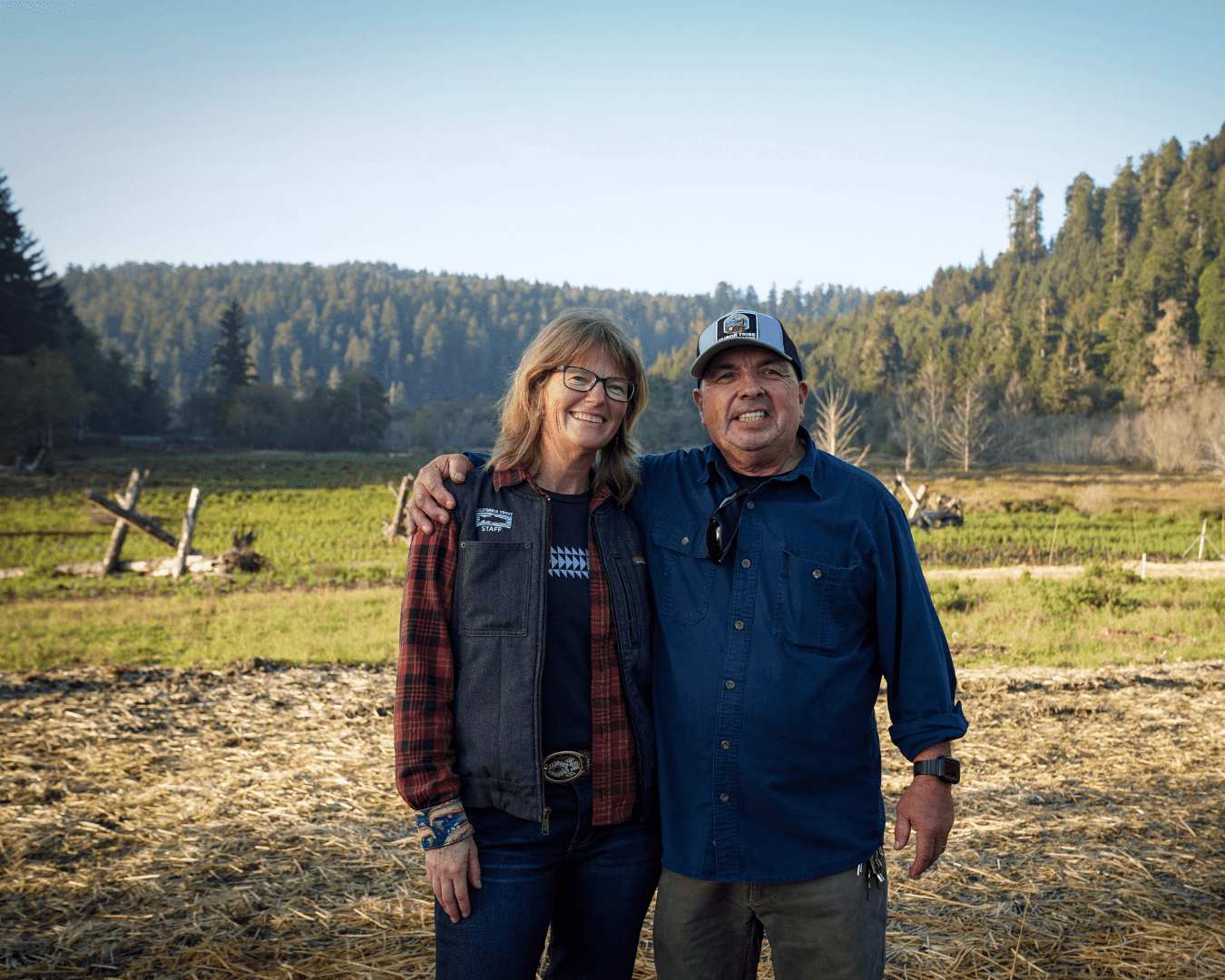
“I’ve spent the last decade of my career pouring my heart and soul into this transformation at ‘O Rew. It’s surreal to see this project wrap up, but I know that its impact will ripple out across the watershed, the broader North Coast community, and the restoration community for decades to come,” said Mary Burke, CalTrout’s North Coast Regional Manager.
Why This Location Matters
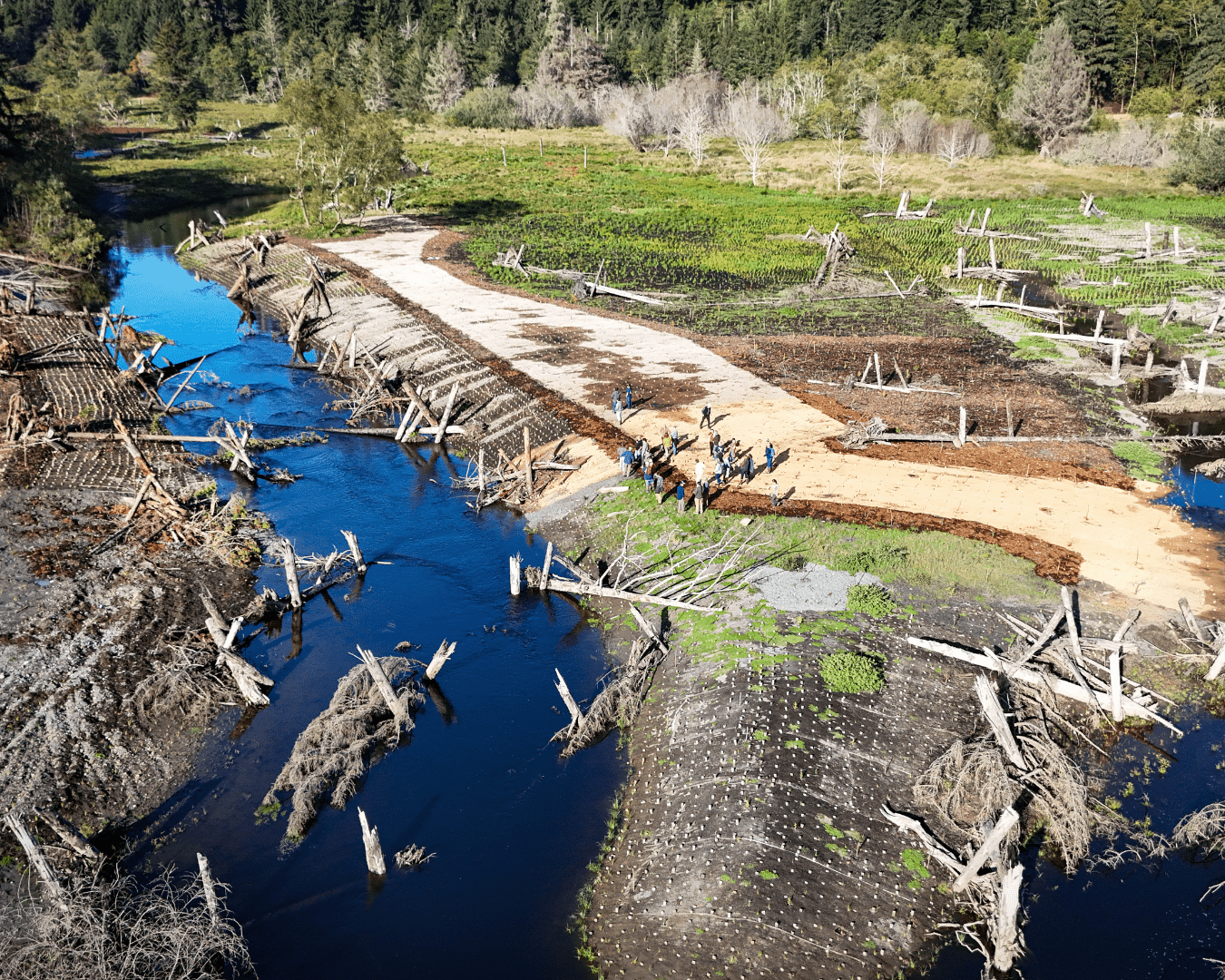
Below this site, three and a half miles of Army Corps flood control levees eliminate virtually all wetlands and backwater habitat all the way to the Pacific. That makes 'O Rew crucial: fish born in Prairie Creek will move downstream through this location and have the chance to benefit from the restored habitat. During high winter flows, young salmon and steelhead need places to escape the mainstem current, feed, and grow before outmigration. This project provides exactly that – a last crucial refuge before the ocean, and the first best place as they return to the Redwood Creek watershed to spawn.
“Over the last century, much development occurred on top of prime juvenile salmon and steelhead habitat along Prairie Creek and numerous other streams in our region, largely because these areas were located on relatively flat terrain that was convenient for building,” said said Barry McCovey, Director of the Yurok Tribe Fisheries Department. “This had a huge negative impact on native fish populations. It was a privilege working with CalTrout, Save the Redwoods, NOAA, and all other partners to bring this section of Prairie Creek back into balance.”
What We Accomplished:
- In 2025 alone, crews safely relocated 15,017 aquatic species during construction.
- Over 20 acres of asphalt from the former Orick Mill Site have been removed, allowing natural hydrology to return.
- Two new backwater ponds and more than 20 acres of wetlands now provide rich aquatic habitat for salmon and steelhead.
- Infused $33 million into the local economy, providing workers with a stable income and even a few new homeowners.
- By the end of January 2026, more than 212,000 native plants will have been planted to stabilize soils, improve habitat, and restore a living mosaic of riparian and wetland vegetation.
This year's revegetation effort – continuing through January – represents an enormous investment in the future health of this landscape, establishing the native vegetation that will stabilize banks, provide shade to outcompete invasive grasses, and create the complex habitat structure that salmon and ecosystems need to thrive.
“It's a bittersweet close to one of the most impactful chapters of my career here at CalTrout so far. ‘O Rew has provided me opportunities to grow in ways I never thought possible,” says Ashley Shannon, CalTrout’s North Coast Project Manager. “I’ll miss our weekly meetings that were full of laughs where we worked through every important detail and watched our collaborative vision come to life on the land. I’m incredibly proud of what our team has accomplished together and cannot wait for what comes next.”
Looking Ahead: A New Chapter for ‘O Rew
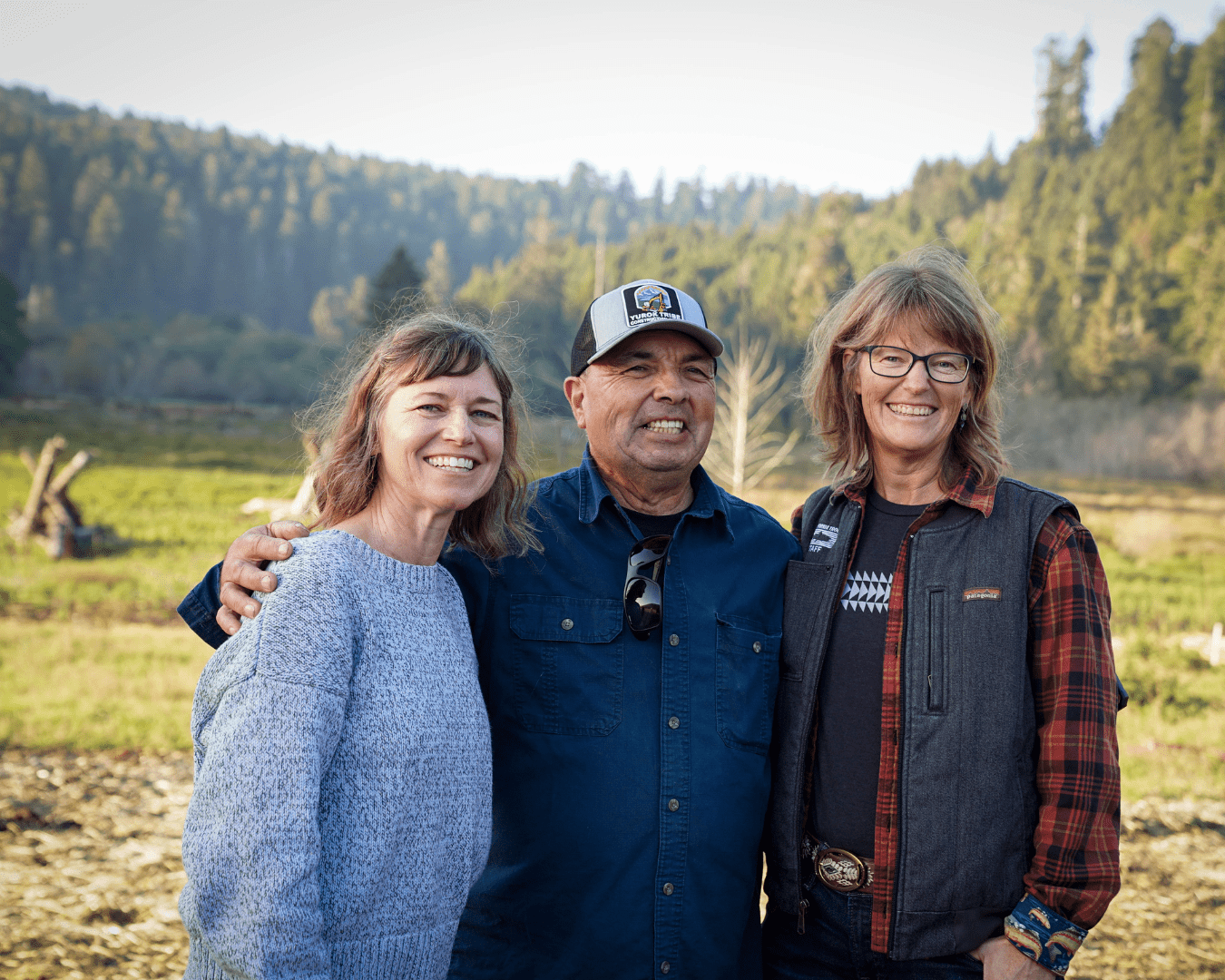
This work is part of a broader, historic shift — one that that considers the historic context of land management and honors Indigenous sovereignty through action. In 2026, the land will officially return to the Tribe, its original stewards.
Additionally, this project implemented a stewardship program funding the Yurok Tribe Fisheries Department Revegetation Crew to care for the site over the next three years. This model is essential to restoration efforts because a project doesn’t end when construction is complete – rather it’s just the beginning to ensure a healthy, balanced ecosystem comes back to life.
Also in 2026, the site will swing open the gates to the public as the new 'O Rew Redwoods Gateway – a gateway to Yurok Country and Redwood National and State Parks. The Gateway will include accessible trails, a pedestrian plaza, parking areas, and interpretive exhibits that connect visitors to the story of this restored landscape and the living Yurok culture that guides its care. A new segment of the California Coastal Trail will run through the site, linking people to the surrounding old-growth redwoods and offering a powerful space for reflection and connection.
"Restoring Prairie Creek and the 'O Rew site is part of a larger effort to reconnect people and the land, rooted in Indigenous knowledge and true partnership," says Jessica Carter, Senior Program Director at Save the Redwoods League. "This project has transformed 'O Rew to become a welcoming place for local communities and to serve as an inspiration for the many visitors it will receive."
A Model for the Future
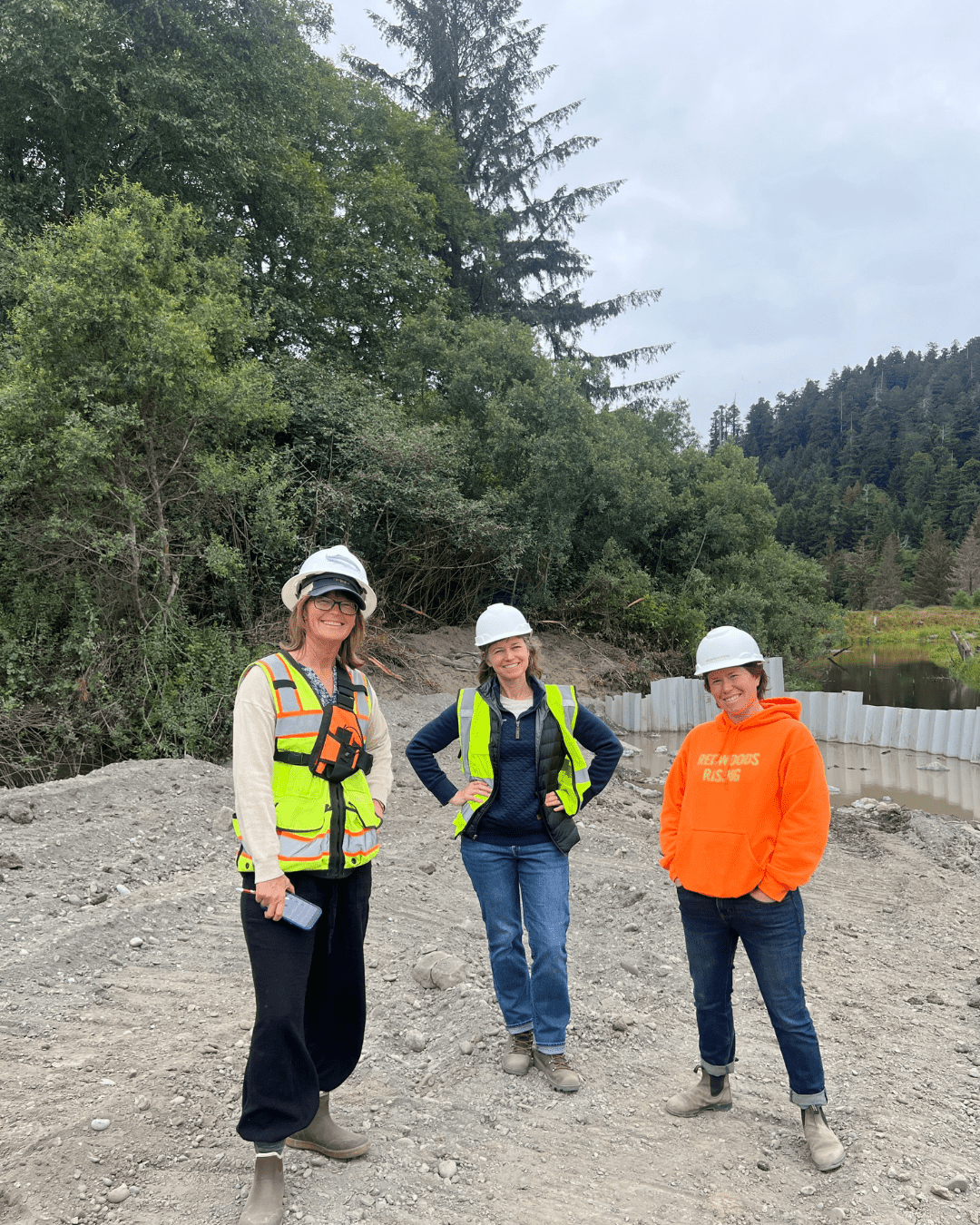
The Prairie Creek Floodplain Restoration Project shows what strong partnerships can accomplish when we reimagine how our communities and landscapes can shift to meet the challenges of our current social and environmental context. This project demonstrates that we can honor the past while building for the future, that we can restore both ecological and cultural connections, and that the best conservation work happens when we work together across organizations, agencies, and communities.
Thank you to the project funders that made all of this possible: Save the Redwoods League, California State Coastal Conservancy, National Oceanic and Atmospheric Administration, Wildlife Conservation Board, USFWS Coastal Program, National Coastal Wetlands Conservation Program, Ocean Protection Council; with state grants funding from Prop 1 and Prop 68.
A Step Closer to Restoring the Entire Watershed
While our work at ‘O Rew may have wrapped up, we’re full steam ahead on efforts to revitalize the entire watershed. In the 1960’s, an Army Corps flood control project led to habitat degradation within the estuary, adjacent wetlands, and lower Redwood Creek. Since the project's completion, the lower estuary has filled with ocean-derived sediment, blocking fish access to critical freshwater tributaries.
Our team is a part of a USACE CAP 1135 project to restore the estuary and is leading the planning for habitat improvement on the estuary tributaries. Currently, the project partners have identified initial concepts that would reestablish Redwood Creek with its historic orientation and reconnect the creek to sloughs, backwater channels, and wetland areas.
Recovering habitat within Redwood Creek estuary has been identified by the National Marine Fisheries Service as critical to the recovery of the SONCC coho population as well as Chinook and steelhead populations. Stay tuned to learn more about our work in the Redwood Creek watershed!
Hear more from Mary Burke, CalTrout's North Coast Regional Manager, who helped lead this incredible project from beginning to end: