
CalTrout News
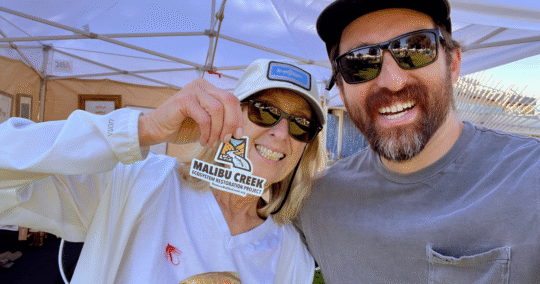

Robin McCormack, Owner & Artist at Thunderbird Design Studio
At CalTrout, we believe collaboration is the key to restoring ecosystems and protecting native fish. We have a rich network of partners, including artists around the state. We were proud to partner with Los Angeles-based Robin McCormack, owner and artist of Thunderbird Design Studio on projects including a logo, encapsulating the multi-year effort to restore Malibu Creek. Below, hear directly from him about what inspires and drives his environmentally-fueled art.
When did you first fall in love with both art and the natural world, and when did you start bridging the two? Was there a lightbulb moment, or did it evolve organically over time?
It was something that has been growing organically over a few years. Looking back, I think my love for art and nature started before I was even born. My father was an art major and had a collection of art prints. My mother grew up in a small mountain town in Japan, where she spent her childhood hiking and skiing. Art and the outdoors were always part of the environment I grew up in.
As a kid, my brother and I would draw copies of Dragon Ball Z and Marvel characters. At the same time, my parents took our family camping every summer from the time we were little kids. Art and nature were part of our family life and always existed as parallel activities that did not fully connect until I was older.
Through high school and college, I worked at a local sporting goods store called Sport Chalet. I got free lift tickets and discounts on fishing gear, which took me outside a lot more. I later studied graphic design and art at Cal State Northridge. After school, I began working as a designer in entertainment advertising. It was exciting work, but during the pandemic in 2020 everything shut down, and I suddenly had more time than ever before. I began thinking about how I could create work for myself rather than just for others. Naturally, I returned to the things that had always brought me joy – fishing and the outdoors. That was really when those two parts of my life began to come together in my work.
Are there specific landscapes, bodies of water, or species in California that particularly resonate in your work?
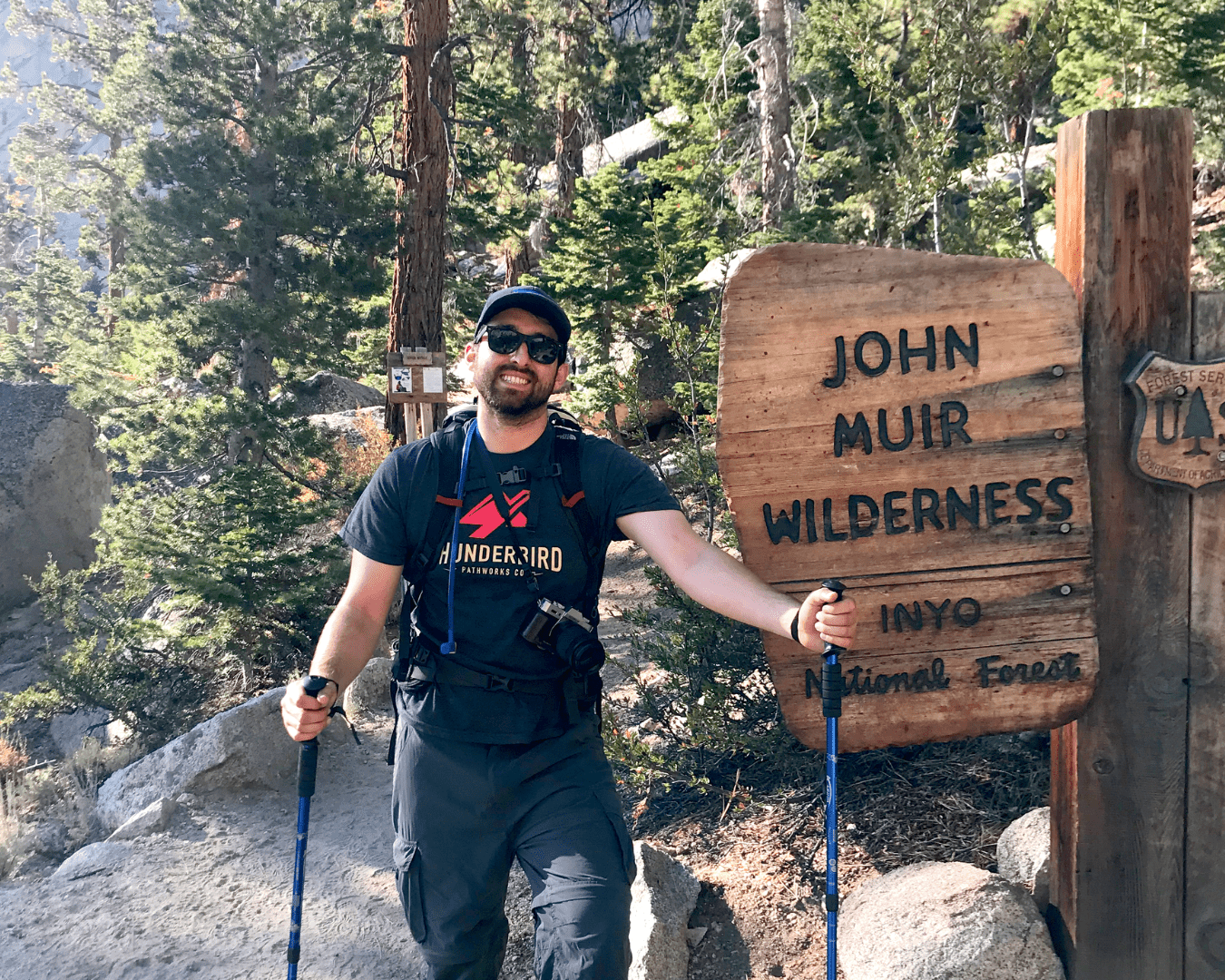
The first pieces that really resonated with audiences were included in a trout-focused series focused on ones that I spent time chasing in the Sierra. They were minimalistic, single-line drawings, similar to the kind Picasso made famous.
I felt that style matched fly fishing really well. The flowing, loose line reflects the movement of the fly line, the current of the stream, and the feeling of slowing down and being present while on the water.
That series began with the Sierra Slam: brook, rainbow, brown, golden, and cutthroat trout. Those species represent both the waters I grew up fishing and the places that continue to inspire my work today.
How did Thunderbird Design Studio come to be, and what does the name represent for you?
There is a bit to unpack here. First off, Thunderbird was the name of the street I grew up on, which always stuck with me. But the seed for what I was creating was planted about a decade ago during a solo road trip to Sedona, Arizona, spurred on by a rough season in life. One of the places I found myself was a site of ancient Palatki cliff dwellings. I remember meeting a white-bearded park ranger. The conversation turned into me expressing feelings of burnout, and he told me that I needed to use my design background to focus on something I was more passionate about, advice that took years for me to follow.
I later learned about the Japanese concept of ikigai, which is the idea of finding purpose where your skills, passion, joy, and values intersect. It was three years after that chat with the ranger before the timing was right and I was ready to start down that path. Thunderbird in Japanese translates to raichō, which is the name for their ptarmigan, a game bird. As someone who enjoys upland hunting, this connection seemed so fitting.
Around that same period, I had a spiritual experience that stuck with me. I was searching for answers and flipped open a Bible someone had gifted me. The passage I landed on spoke about God’s thundering voice. I read for a few minutes, shrugged it off, and went to bed disappointed I didn’t discover any profound wisdom. The next morning, I woke up to booming thunder and lightning, which doesn’t happen very often in Los Angeles.
I noticed all these threads tying together. Since then, I’ve tried to pay better attention to those small coincidences and overlapping moments in life. They feel like whispers, little breadcrumbs pointing me down the path I’m meant to take.
How did you first get involved with CalTrout?
Russell Marlow, CalTrout’s South Coast Senior Project Manager, and I first connected through an organization that used to be called 2% for Conservation. We worked together on some educational pamphlets that focused on the life cycle of Southern California steelhead.
We officially met in person later in Ventura at Patagonia’s annual 5K Salmon Run event. I was running and CalTrout had a booth bringing awareness to the endangered Southern steelhead, work that deeply inspired me.
You created the logo for the Malibu Creek Ecosystem Restoration Project, which CalTrout leads the public engagement effort for and has been supporting for years. What was that experience like, and what did you want the logo to communicate?
I was really excited to be involved with this project. During the experience, I learned a lot more about our historic Southern steelhead and the plan to remove Rindge Dam in order to restore Malibu Creek and the surrounding ecosystem.
Much of my career as a graphic designer involved creating short-term advertisements for products. This project felt very different. It was local to me, it was a place I had a personal connection to, and it was an opportunity to contribute to something that would have a positive impact for generations.
I grew up in the San Fernando Valley, and Malibu was where my family would always go to escape the heat. Malibu Canyon Road was the road we took to get there, and Malibu Creek follows that road for a good portion of the drive to the coast. Every time I went surfing or fishing, I was driving alongside Malibu Creek.
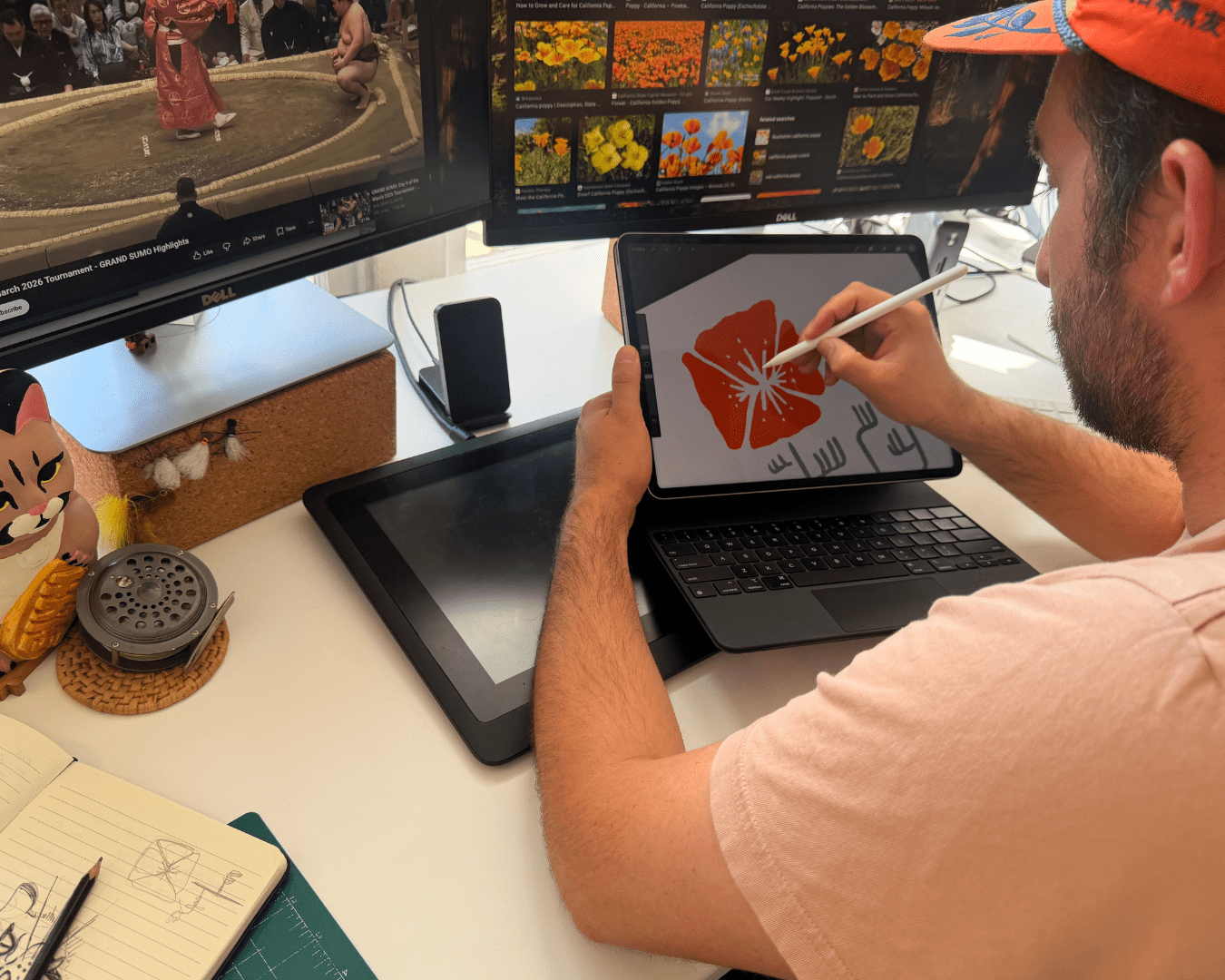
From a design standpoint, the logo was interesting because I didn’t approach it like I would a typical commercial brand. Normally, my goal is to create a simple, distinct mark that represents the brand in the cleanest way possible.
For this project, I wanted the logo to tell the story of the restoration. It almost felt more like designing a seal for a city, where multiple elements come together symbolically. The main elements of the logo are the simplified dam shape acting as a container or frame. It represents the barrier, while also representing a window into the future. Inside that frame, the creek reconnects with its headwaters and the steelhead swims freely through the broken barrier. The mark also needed to feel distinctly Southern California, so the colors were inspired by the California poppy, our state’s flower, local historic architecture, and the natural beauty of the coast.
How do you view the relationship between art and environmental advocacy?
Artwork like the famous John James Audubon’s paintings allowed people to bring the beauty of nature into their homes. We decorate our spaces with things we love, and those choices say something about who we are. In that sense, art can quietly reinforce the things people care about. Looking at it from an advertising background, art helps tell a story that people need to easily understand and feel connected to in order to take action. For me, art is one instrument in an orchestra. The ensemble is the most moving to the general public, and each part and solo can be equally appreciated by those who care to listen more closely.
A more direct way I try to contribute to conservation through what I create is by donating a percentage of my sales to organizations like CalTrout. Inspired by companies like TOMS, I wanted my artwork to reflect the philosophy of leaving a place better than you found it. Wild spaces do not have a voice of their own, so I try to support organizations that help protect and restore these spaces.
None of us are here forever: the least I can do is put a little energy toward improving things for the next generation, enabling them to be inspired by nature like I am. I believe that if enough people start thinking about the world in this way, then we can stop referring to the past as the “good old days” because we are making the world the best it can be now - creating a present of “good old days.”
How can art create pathways for all kinds of people – city lovers, homebodies, digital natives – to feel connected to and invested in protecting wild spaces?
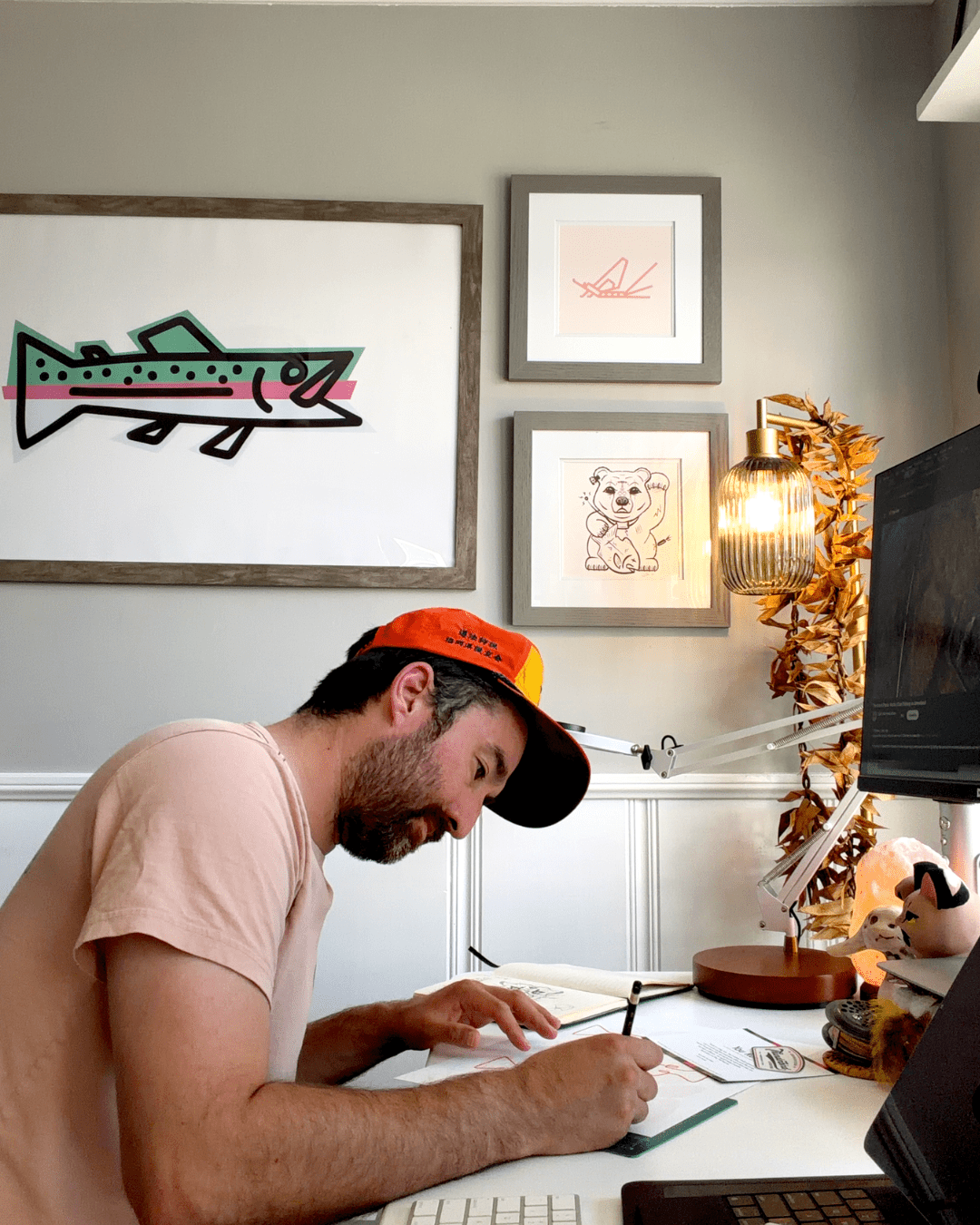
Creating with that intention is an interesting approach. I think we all have a deeply rooted desire to experience and connect with nature. Humans have lived in connection with nature far longer than we have lived in a world revolving around screens. Sometimes we need a reminder that those experiences are still available to us. Often, that reminder comes in small moments, like catching a glimpse of wildlife. Here in Los Angeles, we saw how a mountain lion named P-22 became a local celebrity. People felt a real sense of pride and connection because that animal was part of their city.
Local wildlife also meets people where they are. We tend to imagine the wilderness beginning somewhere deep in the backcountry, but the wild is also right here in our neighborhoods. Skunks, coyotes, raccoons, owls, hawks, and all kinds of animals live alongside us. At this point, my artwork is not intentionally trying to introduce people to nature or conservation. What I create is really about sharing. Sharing what I see, what interests me, and the experiences that shape my work. I mostly make things that feel meaningful to me, and it always surprises me in a good way when people say it also connects with them in personal and unexpected ways.
What upcoming projects are you most excited about?
There are a couple of projects in the works that I am excited about, but it is still too early to talk about them publicly — stay tuned! Beyond that, I set a goal to put together a gallery show and I am really looking forward to making that happen in the near future.
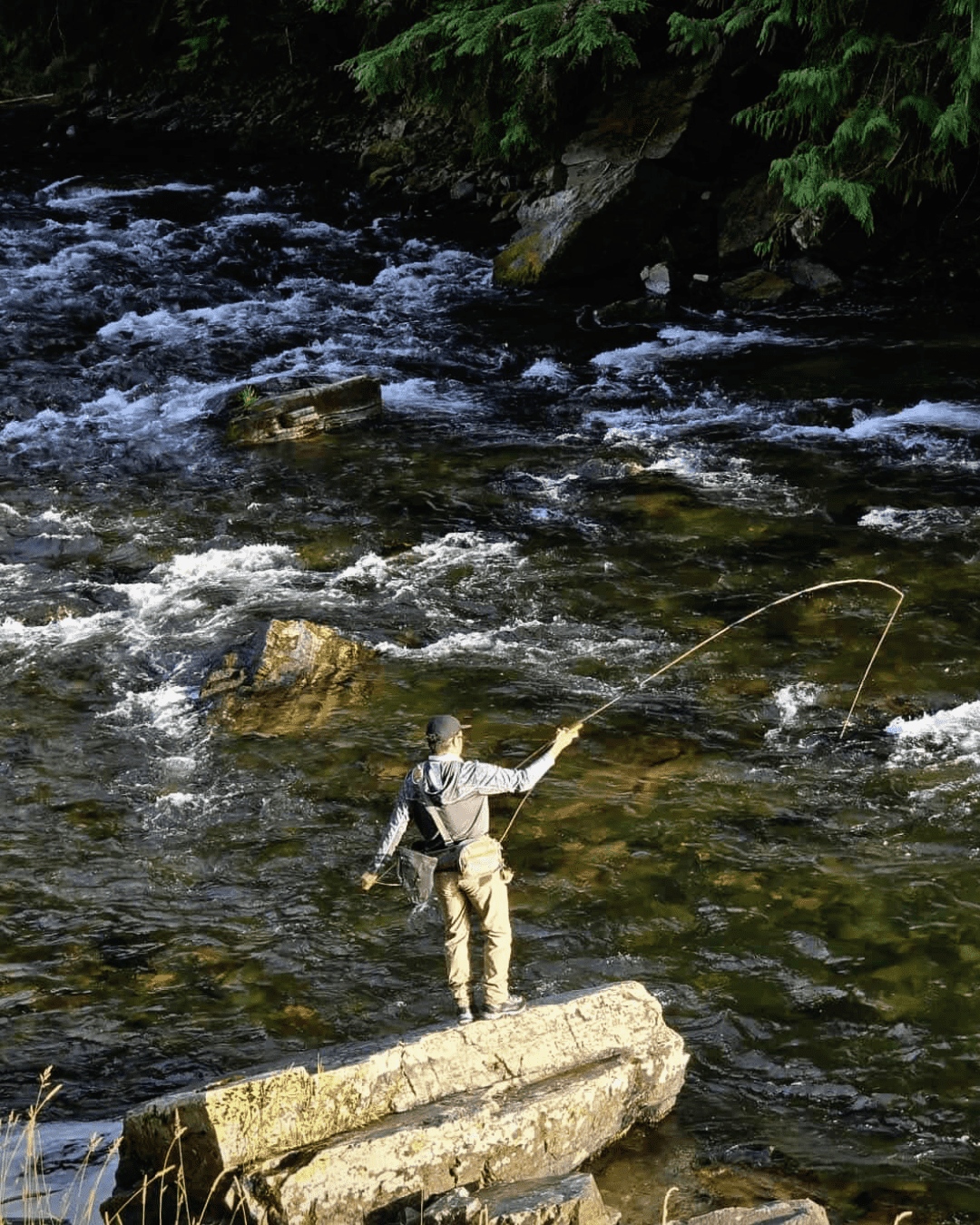
Are there any artists in or out of the conservation space that particularly inspire you or perhaps that you are just a big fan of?
Some quotes from a couple of martial artists that have shaped my process… “Once you understand the way broadly, you can see it in all things.” - Miyamoto Musashi
“Absorb what is useful, discard what is not, add what is uniquely your own.”- Bruce Lee
Also, I love the geometry and playfulness of Charlie Harper’s illustrations. Geoff McFetridge inspires me to think bigger. Saul Bass celebrated a simple, reductionist style that I share as a philosophy.
Do you have a favorite body of water or fish?
The high Sierra creeks are where it all started for me. Swatting mosquitoes between casts with my eyes locked on the elk hair caddis while tiny brook trout race each other to my fly. Sight fishing will always be the most fun for me, so some version of that experience will probably always stand out. I’m excited to fish for bonefish soon, so maybe that will become my new “favorite.”
I have never liked labeling things as my all-time “favorite” because tastes change and evolve. Some people order the same thing at the same restaurant every time. I am more of a sampler. Favorites rarely last, and new places and experiences are too exciting to settle on just one.
Explore Robin's work HERE or follow him on Instagram at @thunderbird_design!
CalTrout is very involved in efforts to remove Rindge Dam and restore Malibu Creek. Malibu Creek watershed is a high-priority Southern steelhead recovery river with federally designated critical habitat. The impoundment behind Rindge Dam is full of sediment with no water storage capacity and poses a recreational hazard to the public. The Malibu Creek Restoration Project will completely remove Rindge Dam and remediate 8 upstream passage barriers. This will reconnect almost 18 miles of aquatic habitat in Malibu Creek and restore critical landscape-scale ecosystem processes central to the long-term function and integrity of the entire system. Learn more about the Malibu Creek Ecosystem Restoration project HERE.