
CalTrout News
Southern California High School Offers a Home Away from Home for Endangered Southern Steelhead
 By Dr. Sandi Jacobson, CalTrout’s South Coast Regional Manager
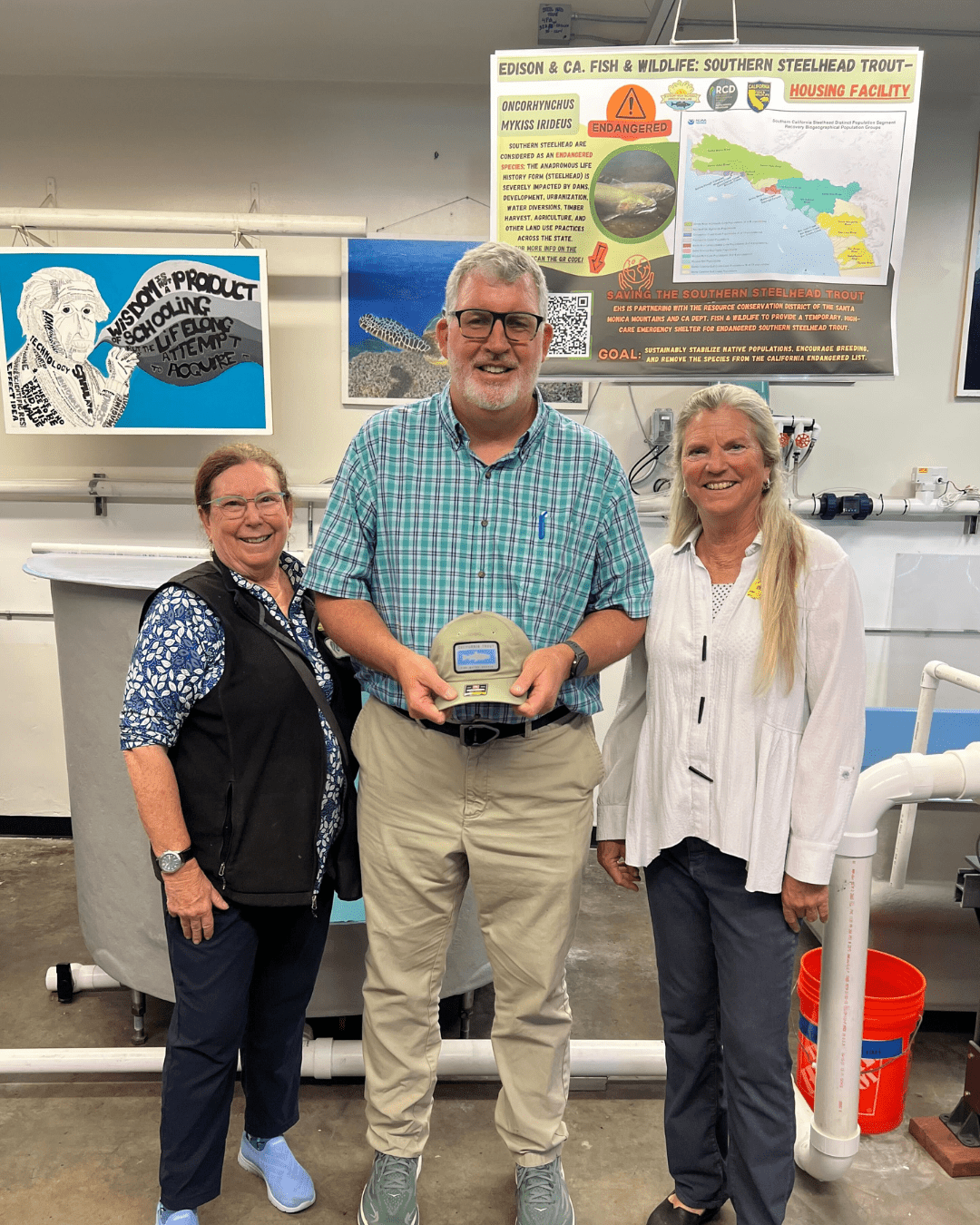
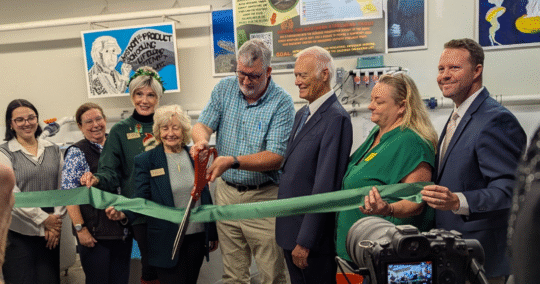
For years, Southern California has been impacted by severe wildfires, which have immeasurable impacts on human communities in addition to threatening local wildlife populations with potential extinction. Endangered Southern steelhead, and their freshwater counterpart rainbow trout, are particularly vulnerable to disturbances like these. After wildfire events, conservation groups often race to respond and rescue what few fish remain in the wild. A new facility at Edison High School in Orange County has opened its doors to protect native rainbow trout of Southern steelhead lineage when future disturbances like this occur. The Edison Innovation Lab gives high school students an opportunity to learn aquaculture and environmental stewardship skills while also playing a huge role in recovering an iconic yet endangered Southern California species.
Often when Californians think about rushing rivers and wild fish, their minds might breeze right over Southern California. However, for millennia, Southern steelhead ran in the tens of thousands in Southern California rivers – well before the region was made up of the bustling cities that exist today. It's almost impossible to not see the impressive spine of mountains that runs through Southern California, whether on a hike or on a freeway.
These mountains are a silent reminder of that abundance, with most remnant populations of steelhead now locked away in mountain streams, cut off from the ocean by a variety of different barriers, and existing largely in their freshwater form – rainbow trout. These rainbow trout largely still possess steelhead genetics meaning if reconnected with the ocean, they could become steelhead once more. Steelhead have great cultural significance, and they also serve as critical indicators of ecosystem health. Their decline has had cascading effects on biodiversity, water quality, and the communities and economies that depend on them.
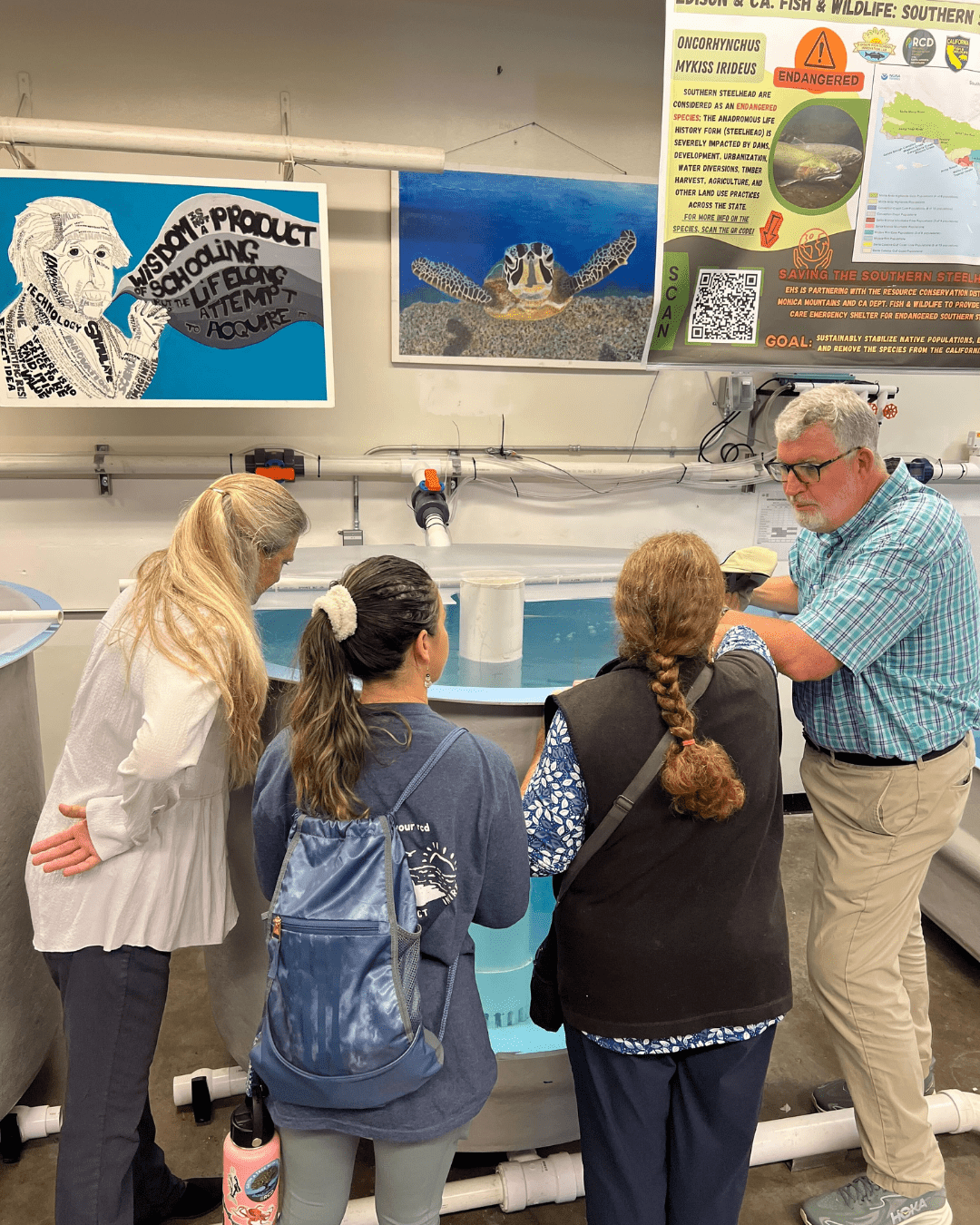
Recovering Southern steelhead across the region will take a collaborative effort: restoring habitat, removing barriers, and proactively protecting fish in the face of emergencies like wildfire and drought. The new trout state-of-the-art holding facility at Edison High School in Orange County is one important part of that effort. With two 500-gallon tanks and an elaborate water purification and pump system, the facility will temporarily hold native trout and steelhead threatened by wildfire and drought. This controlled environment will help keep them healthy, instead of relying on emergency rescues and transfers to other rivers where conditions are more variable.
Led by Edison High School teacher and 2018 California Teacher of the Year, Greg Gardiner, a 27-year science educator and a driving force behind the Marine Aquarium Science Program, this facility is a natural extension of the hands-on, real-world education he has championed throughout his career. Through a strategic partnership with Orange Coast College, the program offers students unique collegiate pathways and professional exposure to the Marine Sciences field. Furthermore, the dedicated Aquarium Staff at Edison High School has been instrumental in fostering student leaders, empowering them with the skills and passion necessary to pursue advanced degrees and successful careers in marine science and environmental sustainability.
Supported by the Huntington Beach Union High School District and propelled by Lead Scientist of the RCD of the Santa Monica Mountains, Rosi Dagit, this facility is now prepared to be a home away from home for vulnerable trout. Dagit has been an unstoppable force for the past twenty years in protecting, monitoring, and translocating steelhead to protect the endangered species while limited fish remain. This effort was accomplished in collaboration with the California Department of Fish & Wildlife, alongside supportive agencies and funders. CalTrout celebrates the hard work that went into creating this new lifeline for our native fish, and we are grateful for years of partnership with both CDFW and Dagit at the Santa Monica Mountains RCD.
With this facility now in place, Southern California can implement a two-pronged approach to protecting Southern steelhead. We can restore their populations by removing migration barriers and improving habitat (efforts that CalTrout is entrenched in across the region), and we can proactively plan for emergencies that threaten to wipe out the few native trout populations that remain (by implementing and using facilities like the one at Edison HS propelled by our partners).
It takes a village to protect this iconic species from extinction. CalTrout is committed to utilizing science-based approaches to protect the Southern steelhead, which are one of the best indicators we have to understand the health of our watersheds. Ultimately, it’s not just about the fish – it’s about all of us, and the actions that restore steelhead restore our watersheds and ensure clean, reliable water for all Californians.
Learn more about the new facility HERE.