
CalTrout News

By Redgie Collins, California Trout VP of Legal and Government Affairs
The Roadless Rule has been one of our country’s strongest conservation tools for more than two decades, protecting over 58 million acres of wild forests nationwide—including nearly 9 million acres in California—from road building and large-scale logging. These protections, largely located in headwaters, keep streams cold and clean, safeguard fish and wildlife habitat. They also ensure we all have access to unspoiled landscapes for fishing, hiking, and connection with nature. Today, however, the rule is under threat of repeal, which could open tens of millions of acres to development and compromise the very places that make California wild.
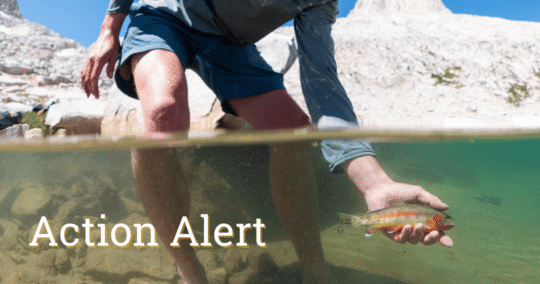
After eight years with California Trout, I recently took a sabbatical to explore wild, roadless landscapes across the West—from California to Oregon and Idaho to Montana. I experienced firsthand the importance of accessing these remote places. While back in California, I ventured into the McCloud River’s roadless stretch, and it was there I caught the biggest fish of my trip: a healthy trout. That fish was a prize, not just for its size but because it was a reminder of what makes roadless, hard-to-access areas so special. It was a reward for those willing to take the extra mile—these wild places are the last refuges for such vibrant, resilient populations.
I’ve seen firsthand how these wild spaces sustain healthy ecosystems, support local economies, and offer essential recreation opportunities like fishing, hiking, and camping. That’s why the Roadless Rule isn’t just a policy—it’s a lifeline for California’s future.
The Significance of the Roadless Rule
Enacted in 2001, the Roadless Area Conservation Measure protects over 58 million acres of our nations wildest land and waterways. In California alone, nearly 9 million acres of forests are protected against road construction, logging, and other development that would fragment these landscapes. These roadless areas serve as critical habitats for native trout, salmon, and other species that depend on pristine streams and nearby forests.
Water Quality and Healthy Ecosystems
California’s water systems often start in these protected lands. When we build roads in these areas, we risk increasing sediment runoff, pollution, and habitat disturbance—threats that jeopardize the quality of water that sustains our fish and communities. The Roadless Rule helps maintain the natural filtration and flow regimes that keep our rivers and streams clean and resilient against climate stressors.
California’s wild landscapes, particularly our roadless areas like the Trinity Alps, the Sierra Nevada, and the Eel River headwaters, are vital for climate resilience. These intact ecosystems help maintain natural flow regimes, support healthy habitats, and ensure that streams stay cool and clean during changing climate conditions.
CalTrout’s Project Work Relies on these Protections
At California Trout, our work on reconnecting habitat within these key watersheds—like our recent efforts on the Eel River dam removal—is centered on restoring connectivity to support resilient salmon, steelhead, and trout populations. Healthy, well-connected forests and streams can better withstand climate stresses and recover more quickly, ensuring these ecosystems continue to provide the clean water and thriving habitats that fish and communities depend on.
Why We Must Stand Up
The threats to California’s roadless areas are ongoing. Currently, the Roadless Rule is being repealed by the U.S. Department of Agriculture (USDA). Without this rule in place, 45 million acres of our public lands could become vulnerable to harmful development.. Such activities would severely compromise fish and wildlife habitats, diminish recreational opportunities, and threaten the wild integrity of these landscapes.
Proposals to reopen these protected lands often cite short-term economic gain, but the true value of these lands extends far beyond quick profits—they are priceless assets supporting biodiversity, clean water, and climate resilience.
At California Trout, we believe in defending these precious places. We’re committed to ensuring the Roadless Rule remains in place—so we, and future generations, can continue to benefit from California's wild heritage.
Take Action: How You Can Help
- Sign our petition urging Senator Rollins and the US Department of Agriculture (USDA) to keep the Roadless Rule in place (below).
- Stay tuned to California Trout’s social media to learn more about how you can support protecting our roadless areas. We’ll be sharing updates and opportunities to get involved.
Together, we can preserve what makes California wild—and what makes it thrive.