
CalTrout News
Southern Steelhead Coalition Nearly Doubles Its Impact Area to Accelerate Watershed Recovery
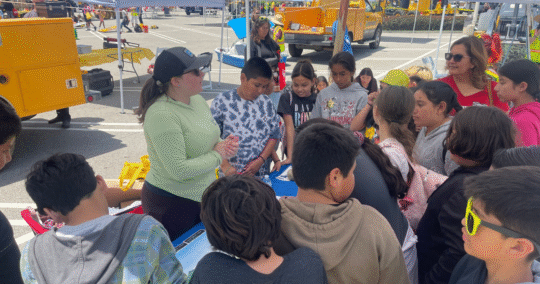
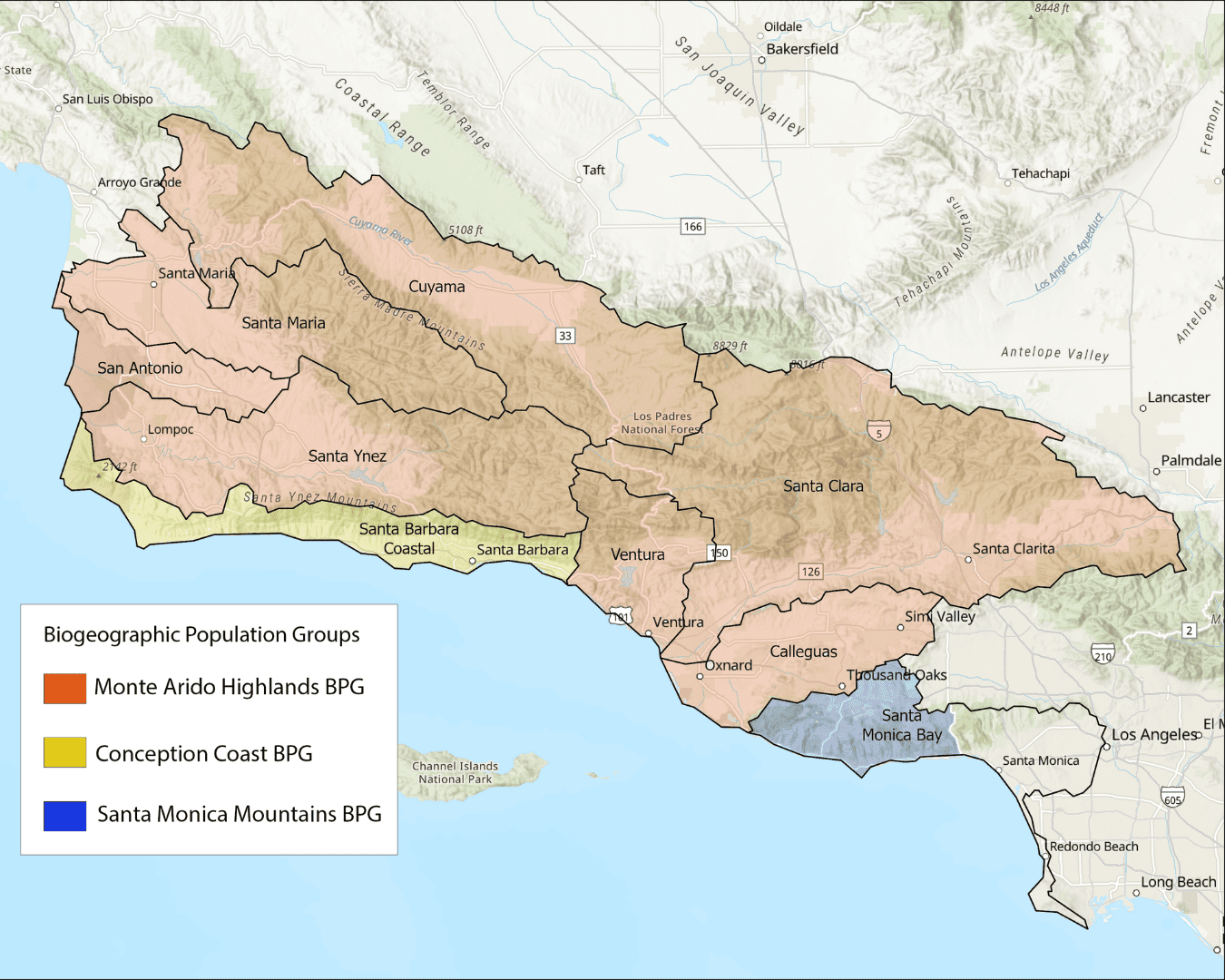
The Southern Steelhead Coalition is expanding its reach across Southern California, nearly doubling the area it covers to advance landscape-scale restoration efforts for the iconic Southern California steelhead, a critically endangered species. The coalition now covers more than 10 watersheds from Santa Maria to the Santa Monica Mountains, coordinating projects across partners through cost-effective strategies to recover this endangered native fish.
The coalition’s expansion is a necessary step towards achieving our collective mission of saving a species that serves as a vital indicator of watershed health throughout the region.
Why Landscape-Scale Recovery Matters
Jurisdictional boundaries often inform human day-to-day activities and communities, but to Southern steelhead – they mean nothing. These impressive fish often journey hundreds of miles during their migrations, traveling across and between watersheds and even through our very backyards to successfully complete their lifecycles. Their recovery requires coordinated action across watersheds – a scope too vast for any single organization to tackle alone.
"Landscape-wide restoration requires covering such a large area of land that it is impossible for one group to do it all by themselves," explains Elizabeth Burns, CalTrout's Southern California Project Coordinator and leader of the Southern Steelhead Coalition. "It requires teamwork unifying people with diverse perspectives and experience."
Building Momentum Through Partnership
The Coalition's monthly meetings have become a hub for knowledge exchange and project coordination, with attendance bringing together upwards of 40 participants – all joining of their own volition. These gatherings bring together specialists from different watersheds, government agencies including California Department of Fish and Wildlife (CDFW), National Oceanic and Atmospheric Administration (NOAA), Tribal communities, restoration practitioners, and more.
This collaborative approach has already yielded tangible results. These meetings have facilitated crucial partnerships, including connecting two organizations working to remove Arundo – an invasive plant that devastates steelhead habitat by sucking up precious water during critical summer dry months. The Coalition has also brought together Tribal organizations interested in monitoring and restoration work, facilitating important conversations that might not have happened otherwise or would have probably resulted in duplicating efforts. All meetings are recorded and publicly available – check them out here!
Expanding Our Reach
Previously, the Coalition primarily served the Santa Clara and Santa Ynez watersheds. With this expansion, the organization can now apply for grants across a much broader area, enabling landscape-scale restoration throughout all parts of the steelhead lifecycle.
"Prior to expanding, we could not apply for grants in areas the coalition did not cover and now we can, which is key for recovering native populations and restoring ecosystem health," Burns explains. "It was a completely piecemeal process before this expansion."
Making Science Accessible
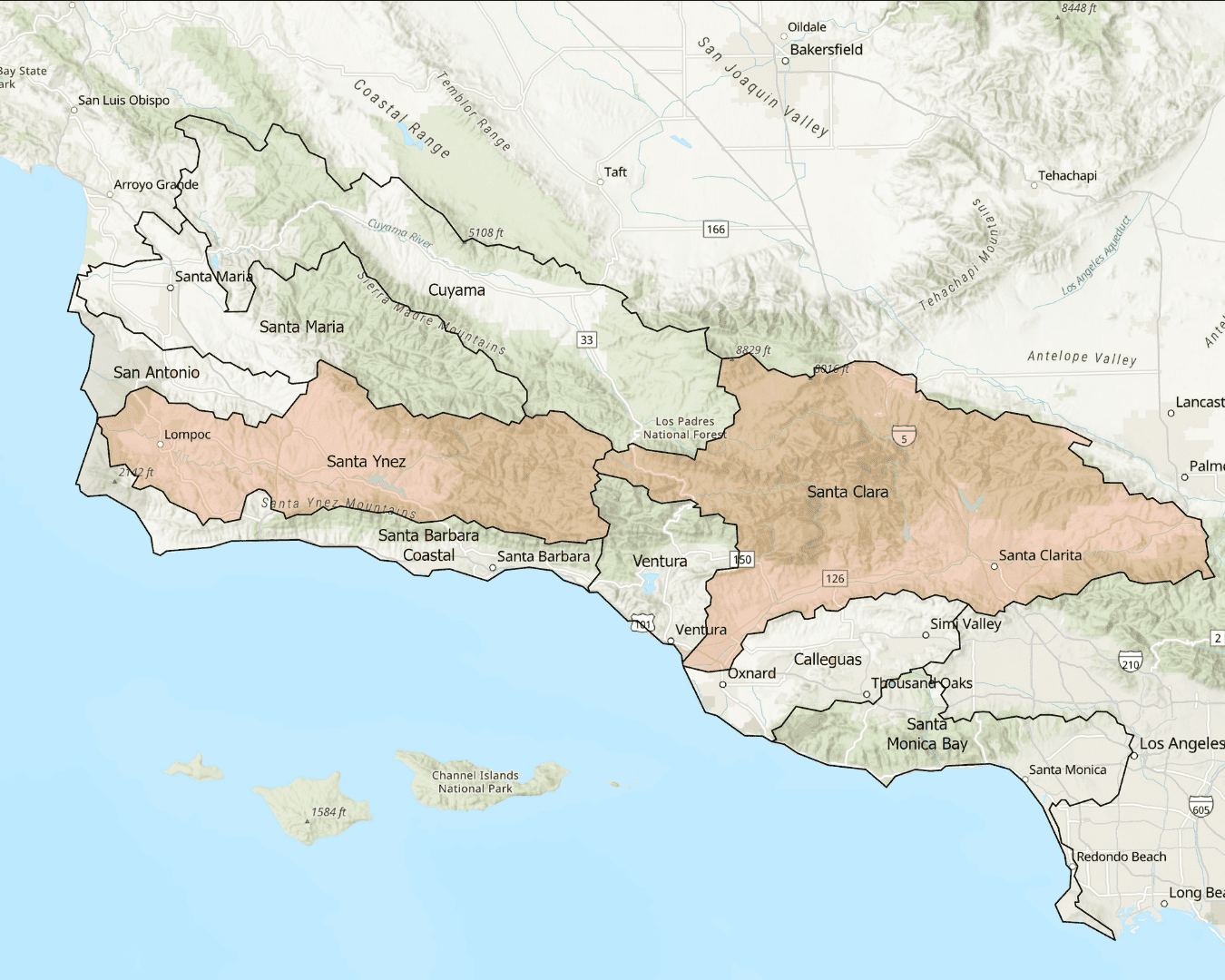
Beyond restoration work, the Coalition is tackling a fundamental challenge: many Southern Californians don't realize that steelhead swim through their backyards. Burns has developed innovative educational approaches, including the Southern Steelhead Lifecycle Game, which makes the complex concept (and pronunciation!) of “anadromy” relatable to children and adults alike.
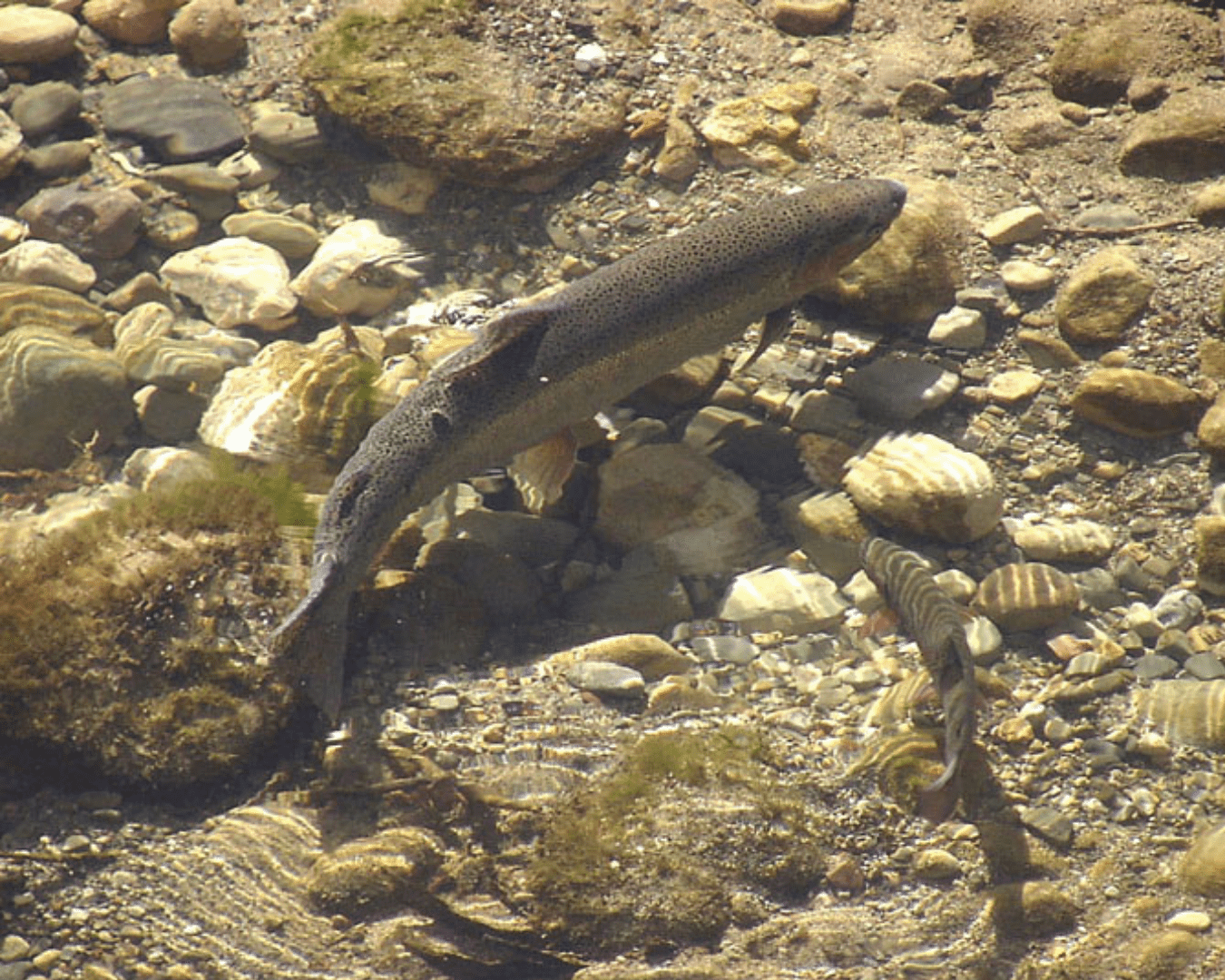
"Like kids, steelhead get freckles or moles (spots) as they get older," she tells young audiences, making connections that help them understand and care about these remarkable fish. These educational efforts are crucial because, as Burns puts it, "people grow to protect what they love."
Watersheds and a Species Worth Protecting
Southern steelhead are iconic and culturally significant — but they also serve as critical indicators of ecosystem health. Their decline has had cascading effects on biodiversity, water quality, and the communities and economies that depend on them. Protecting California’s native fish means protecting our ecosystems, communities, and local economies. More surprisingly, it can also mean protecting good surf breaks, boosting tree growth, and securing clean drinking water – watch the video to see how!
As the Coalition continues to grow and expand its impact, it demonstrates that species extinction is not an inevitable consequence of human development. Through coordinated, landscape-scale restoration efforts, we can create a future where healthy steelhead populations thrive alongside vibrant communities.
The Southern Steelhead Coalition welcomes new members and partners who share our vision of resilient watersheds and thriving steelhead populations. If you love and care about steelhead, then we want to hear from you. There is no “I” in team, and there's certainly no "I” in Southern steelhead recovery.
Check out the Southern Steelhead Coalition webpage to learn more or email southernsteelheadcoalition@caltrout.org to get involved!