
CalTrout News
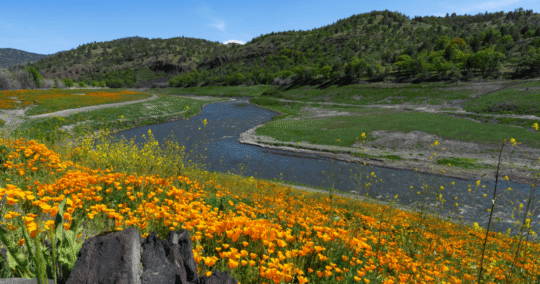
As we head into 2026, CalTrout is larger, stronger, and more impactful than ever. We launched a dedicated science department, invested in our people, and are advancing 11 large-scale restoration projects to construction, some already complete, that are reconnecting habitat, restoring river function, and improving water quality across California.
This has been CalTrout’s most ambitious and impactful year yet, but it certainly wasn’t without its challenges. 2025 was a difficult year in many ways, and conservation organizations like CalTrout are operating in increasingly difficult environments. Rising costs, competition for limited funding, and uncertainty in government support puts pressure on our ability to sustain and grow our work. Along with many of our partners, we navigated federal funding cuts for several critical projects.
Through it all, we've never been prouder of our team and community who tackled these challenges head-on, staying focused, and getting the job done. This kind of uncertainty, while challenging, is nothing new. As a 54-year-old nonprofit, we’ve navigated tumultuous and uncertain times before, including the 2008 recession and COVID-19 pandemic. We’re committed to staying laser-focused on our mission, and, with our community by our side, 2026 promises to be our most impactful year yet. Keep reading to hear about some of our favorite moments from 2025.
1. The Klamath River
Our Klamath River Salmon Monitoring Program detected thousands of Chinook salmon accessing newly reopened habitat — some reaching more than 36o river miles from the ocean into the Upper Klamath Basin for the first time in over a century. Learn more.
2. The Eel River
In July, PG&E officially submitted its License Surrender Application and Decommissioning Plan launching the formal process to remove Scott and Cape Horn dams. But dam removal is just one piece of Eel River watershed recovery. As we enter Phase 2 of our Eel River Watershed Restoration and Conservation Program, we're taking a comprehensive approach, working from source to sea to ensure every link in the watershed will support thriving ecosystems and communities. Learn more.
3. Prairie Creek at ‘O Rew
After a decade of planning, design, and construction, we completed the final phase of construction, moving 175,000 cubic yards of soil to restore 30 acres of floodplains, wetlands, and one mile of instream habitat. Learn more.
4. Alameda Creek
We removed the final barrier on Alameda Creek, reconnecting 20+ miles of salmon and steelhead habitat for the first time in likely 70+ years. Chinook salmon have already been observed migrating above the former barrier. Learn more.
5. The Scott River
We completed two major restoration projects on both the South Fork and mainstem of the Scott River, improving habitat and fish passage and enhancing flows while supporting agriculture.
6. New Science Department
We launched a statewide science department because effective restoration on the ground requires up-to-date science. The new department will produce a third edition of the State of Salmonids Report which will serve as a bedrock for species protection. Learn more.
7. State & Federal Lobbying
We expanded our federal advocacy, engaging top DC lobbyists and policymakers. In California, we guided implementation of Prop 4, a $10 billion climate bond, to support freshwater priorities.
8. Southern Steelhead Symposium
We hosted a symposium focused on Southern steelhead recovery with over 75 attendees coming together to present on and discuss a brighter future for this endangered species.
9. Fish Water People Film Festival
You helped make our inaugural film festival a huge success. Over 4oo+ attendees joined us at screenings across the state with stories of rivers, resilience, and community. Learn more.
10. Engaging Shasta River Students
With CDFW, we hosted 400 students at Big Springs Creek for a week of hands-on education to learn about Chinook salmon and local ecology, inspiring curiosity and stewardship. Learn more.