

California Trout is deeply concerned by the repeal of the federal endangerment finding, a decision that departs from decades of scientific consensus and raises serious implications for the health of our wild fish, rivers, communities, and climate.
At California Trout, we know that the climate crisis is real. Climate change is the primary threat to our organization’s mission of revitalizing waters for resilient wild fish and a better California — and human activity is the principal cause. The endangerment finding has long reflected the best available science showing that climate pollution poses risks to public health and welfare. Rolling it back does not align with the realities Californians are already experiencing: more extreme heat, intensified droughts, floods, and wildfires, shrinking snowpack, and warming waters.
“The endangerment finding reflects decades of rigorous scientific research showing that climate change poses clear risks to both human and ecological systems,” said Darren Mierau, Director of Science at California Trout. “Science continues to demonstrate that warming temperatures, altered hydrology, and declining snowpack are already reshaping California’s rivers and with them our native wild fish. Moving forward, it’s critical that we continue to rely on sound science to guide climate and water policy to protect California’s freshwater ecosystems and the animals and people that depend on them.”
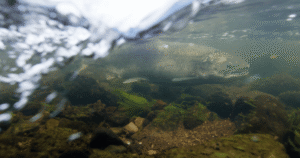
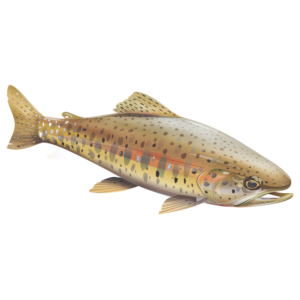
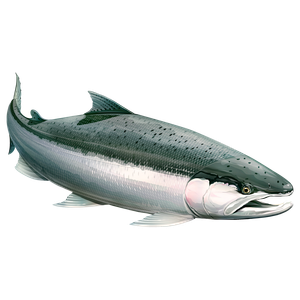
Beyond impacts to human communities, best available science tells us that if current trends persist 45% of California salmonids are likely to be extinct in the next 50 years. Climate change is the major, overarching threat affecting salmonids in California. It is considered a critical or high threat for 27 of 31 species (87%) according to CalTrout’s State of the Salmonids II Report. The majority of salmonid species in California currently face, or are likely to face, extinction from climate change if present trends continue due to a lack of access to cold water and low and variable stream flows. Without climate action, we will all but certainly experience extinction events for our iconic wild native fish. Salmon, steelhead, and trout are not only iconic species—they are indicators of watershed health, and their fate is inseparable from the future of California itself.
The repeal weakens a key legal foundation for addressing greenhouse gas emissions in the United States. As climate pressures grow and water systems face mounting challenges, maintaining strong, evidence-based environmental protections will be essential for both people and natural ecosystems.
“Eliminating the endangerment finding is bad policy ,” said Redgie Collins, Vice President of Legal & Government Affairs at California Trout. “Decisions on climate action must be grounded in science and law, not the political whims of those in power.”
California Trout remains committed to grounding our work in science-based solutions that safeguard cold, clean water and build resilience for fish, wildlife, and communities. We will continue to partner with other conservation leaders across California to defend climate action and ensure our rivers have a fighting chance in a warming world.
Our Investment in Science: New Statewide Science Program and SOS III
In early 2026, CalTrout announced the launch of State of the Salmonids III (SOS III), a comprehensive, once-a-decade scientific assessment of the status of all 32 native salmon, steelhead, and trout species in California. Building on previous assessments released in 2008 (SOS) and 2017 (SOS II), SOS III will deliver the most current, credible, and transparent evaluation of salmonid population health across the state—at a time when California’s rivers and streams are undergoing rapid transformation.
“The State of the Salmonids has become the gold standard for understanding the condition of California’s native salmon, steelhead, and trout,” said Curtis Knight, Executive Director of California Trout. “At a moment when our rivers are changing faster than ever, SOS III will give decision makers, communities, and partners the clear-eyed science they need to focus resources where they can still make the biggest difference.”
SOS III is a rigorous scientific assessment of every native salmonid species in California, and it will outline a vision for how California can protect, restore, and reimagine the freshwater ecosystems that sustain people, fish, and wildlife. Final products will include a peer-reviewed scientific report, an illustrated table book, and a strategic communications effort designed to align agencies, policymakers, community partners, and funders around shared priorities for action.
“SOS III is about turning data into direction,” said Darren Mierau, CalTrout’s Director of Science. “By compiling the most current science and applying a transparent, repeatable methodology, we can track long-term trends, identify where species are most vulnerable, and highlight where our conservation work can turn the trajectory toward species recovery.”
SOS III builds on a proven methodology used in prior assessments in 2008 and 2017—one that is vetted, replicable, and trusted across agencies and academic institutions. Updating the assessment will allow California to respond more effectively to accelerating climate impacts, better direct public and private investments, and align efforts around the most urgent opportunities for salmonid recovery.
The project is a cornerstone of CalTrout’s new statewide science program, which integrates cutting-edge research, collaborative partnerships, and clear communication to advance freshwater biodiversity conservation across California. Read our full statement on SOS III here.