


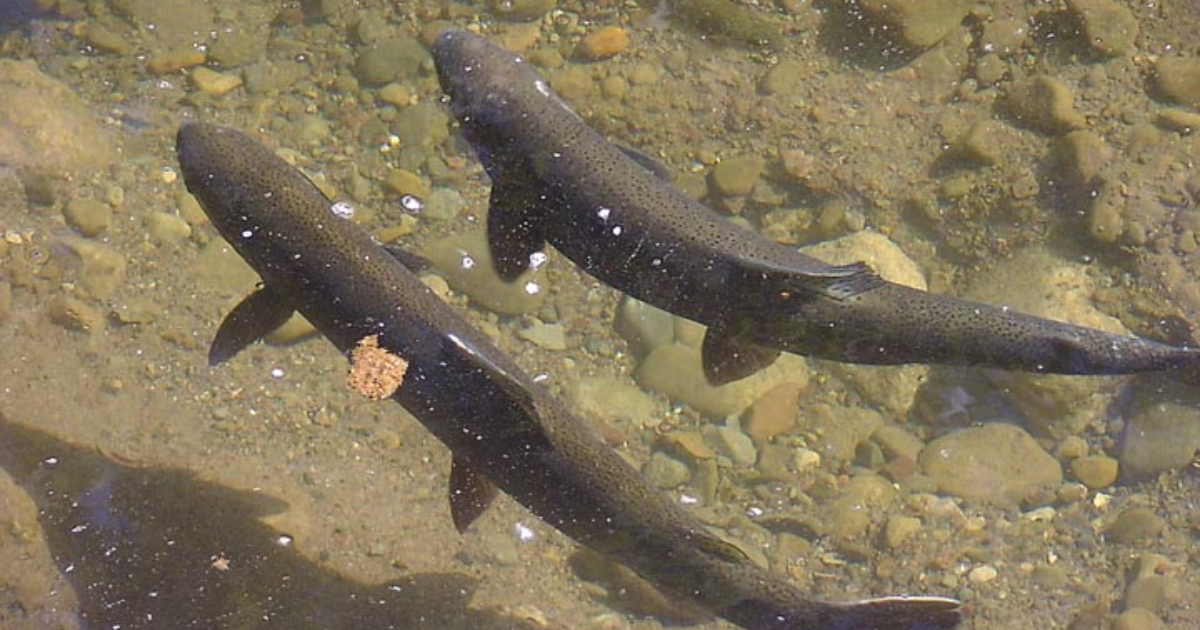
Southern steelhead are running out of time and, often, out of water in Southern California’s rivers. Once abundant in rivers from the Santa Maria to Tijuana River, these remarkable fish have been pushed to the brink of extinction by decades of habitat loss, water diversions, and a worsening climate crisis. Experts estimate that there may be less than 500 adult Southern steelhead that exist on any given year. Now, just two years after critical legal protections have been put in place, those protections are under attack.
This June, CalTrout will be in the Los Angeles Superior Court defending a landmark listing of Southern California steelhead as endangered under the California Endangered Species Act (CESA). We are fighting alongside our partners at the Center for Biological Diversity and the Wishtoyo Foundation on behalf of the fish that can’t speak for themselves and the communities that rely on them.
A Species on the Brink
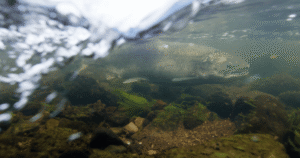
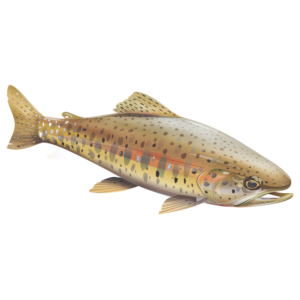
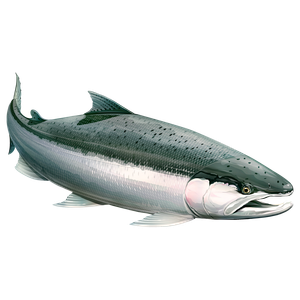
Oncorhynchus mykiss, the species that gives us both rainbow trout and steelhead, is one of the most ecologically and culturally significant fish in California. In Southern California, steelhead once returned each fall to rivers that cut through chaparral and canyon country, connecting the mountains to the sea. They are a keystone species: their bodies carry marine nutrients deep into inland watersheds, feeding entire riparian ecosystems upon their return.
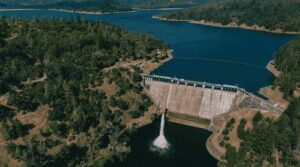
Today, that ecological legacy is under threat. Southern steelhead have disappeared from roughly 60% of the watersheds they historically occupied in Southern California. In key rivers, annual returns now number in the single digits. The species faces an unrelenting barrage of threats: loss and degradation of stream habitat, excessive water diversions, the genetic homogenization caused by hatchery operations, barriers to migration, along with the compounding blows of drought, wildfire, and rising temperatures driven by climate change.
What the Science Says
In January 2024, the California Department of Fish and Wildlife (CDFW) completed an exhaustive, peer-reviewed Status Review of Southern steelhead (Southern California O. mykiss). The review drew on over 250 scientific sources and was rigorously evaluated by five independent expert reviewers, including scientists from the National Marine Fisheries Service.
The conclusion was unambiguous: Southern California steelhead, in both their anadromous (ocean-going) and resident (freshwater) forms, are in serious danger of extinction. The science propelled action.
In April 2024, the California Fish and Game Commission unanimously voted to list below-barrier Southern California O. mykiss as endangered under CESA, the strongest protection available under state law. CalTrout, which had petitioned for this listing back in June 2021, was proud to see years of scientific advocacy translate into meaningful legal protection for this species.
Watch the video to learn why healthy Southern steelhead are essential to a thriving California for all of us!
Now, Those Protections Are Being Challenged
Despite the strength of the science behind the listing, United Water Conservation District, a Ventura County water agency, has filed a lawsuit seeking to overturn the Commission’s decision. CalTrout stands strongly behind the listing by the Commission and the scientific analysis by the Department and have joined the litigation to defend the listing. Removing the current protections would not only threaten the survival of steelhead, but it could undermine the integrity of the CESA process itself.
Why This Matters: Beyond Southern Steelhead
Southern steelhead are not just fighting for their own survival; they are a test case for whether California’s environmental laws can do what they were designed to do: protect imperiled wildlife based on the best available science, even when that science is inconvenient for other interests.
But it’s not just about the fish – the health of this species is directly tied to the health of human communities. Steelhead are a keystone species, meaning they hold a particularly critical role in maintaining the health of the Southern California ecosystem and food web. As an indicator species, their decline has had cascading effects on biodiversity, water quality, and the communities and economies that depend on them.
A healthy Southern California river with steelhead is a river that supports clean drinking water, mitigates the devastating impacts of climate change, and allows us to enjoy the recreational activates central to the Southern California lifestyle.
With climate change accelerating the collapse of freshwater habitat across the West, this is not the time to weaken protections. It is the time to enforce them.
Stand With Southern Steelhead
The hearing is scheduled for June 15, 2026, in the Los Angeles Superior Court. CalTrout will be there, alongside our partners, arguing that science must be the foundation of species protection.
We will keep you updated as the case unfolds. Follow along with CalTrout as we fight to ensure that Southern California’s steelhead have a fighting chance at survival and that California remains at the forefront of the national environmental movement by honoring our existing protections.
Hear directly from our team about the importance of the landmark decision to list Southern steelhead as endangered under California’s Endangered Species Act in our Fish Water People Podcast episode!