
CalTrout News
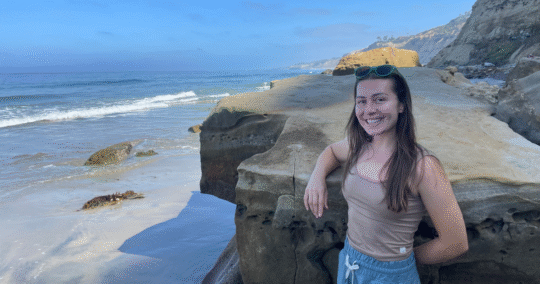
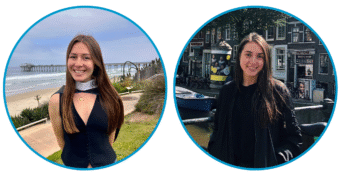
Kamryn McLeran, Marine Scientist and Wildlife Biologist (left) and Claire Bergerson, CalTrout Communications Manager
Born and raised on Southern California beaches, Kamryn has always been drawn to water and wildlife. Like most 18-year-olds, she had no idea how to turn her passion into a career. Fast– forward through an undergraduate degree in Wildlife, Fish, and Conservation Biology at UC Davis, a stint as an aquatic toxicologist (and many other wildlife– related roles), and a Master’s Degree at Scripps Institution of Oceanography, and Kamryn has found her place at the intersection of technology and conservation.
For her capstone project, Kamryn partnered with CalTrout- South Coast office to develop an innovative, cost- effective robotic tool for water quality monitoring that can be used by non-specialists – from nonprofit organizations to county and state agencies – to test their local bodies of water. Her work prioritizes both cutting-edge technology and community education, creating accessible solutions for environmental monitoring and restoration efforts.
CalTrout’s Communications Team was was lucky enough to chat with Kamryn about her experience as a scientist, the journey that got her here, and her exciting research with CalTrout.
Hi Kamryn, nice to meet you! Could you please share a little bit about where you're from, your background, and how you came to partner with CalTrout as part of your Master's Program?
I was born and raised in Southern California, and attended UC Davis for my undergrad, where I studied Wildlife, Fish and Conservation Biology. I was always drawn to environmental science, but like most 18-year-olds, had no clue what I wanted to do specifically. So, the wildlife biology realm kept me in that broad field, where I had many different jobs – from working with frogs and snakes and birds to working in the marine realm.
After undergrad, I worked as an aquatic toxicologist in the Bay Area for a little over a year before I realized that I wanted to go back to get my Master's Degree at Scripps. Partnering with CalTrout was possible because of a very lucky connection. Nate Yancheff, CalTrout’s South Coast Project Manager, actually had gone through my same graduate program and was part of an alumni panel. I reached out to him to see if there were any opportunities with CalTrout. It just so happened that Sandra Jacobson, CalTrout’s South Coast Regional Director had a project idea that was ready to advance to the next stage – I think they had just secured some funding for it – so I was able to jump in and help out with that. It was kismet!
What inspired you to pursue Graduate School at Scripps, focused on marine biodiversity and conservation?
Most people from SoCal will say there’s a natural affinity towards everything water and wildlife because the beach is a huge part of our life. So that, plus I studied abroad in Australia during college through a marine biology program. I got to study the Great Barrier Reef from a marine biology and environmental science perspective, which was just incredible. That was right before COVID, and my wheels were already turning as I thought, "What am I going to do? I'm almost done with college."
Once I returned home and began work as an aquatic toxicologist, I knew the world of water was one I wanted to stay in. My program at Scripps was great because it's geared for students who want to learn as much as they can in a short time, so they can get back out into the field and apply their learnings. As much as I love research and working in a lab, I really wanted to get back out and start working again rather than continuing in academia.
How did you first hear about and get involved with CalTrout?
CalTrout works very closely with UC Davis so the name was brought up by my professors a lot and I heard only good things. CalTrout had been in the back of my head when I started the post-graduation job hunt.
Then CalTrout was brought back up when I chatted with Nate about different opportunities for my master’s research. All I knew at the time was that I've heard good things, I like what they do, and I support their mission. Everything just worked out really well timing- and opportunity-wise.
Could you share with me a little about the research work you did with CalTrout and the tool you created for your Capstone project? How will the tool be used?
When I met with Sandi to learn about the project idea, it was still early in the research and development stages. The main idea was that we wanted some sort of robotic tool that could do water quality surveys in our coastal lagoons, freshwater ponds, or really any body of water throughout the state. Our four criteria were that it needed to be cost-effective, accurate, reliable, and user-friendly.
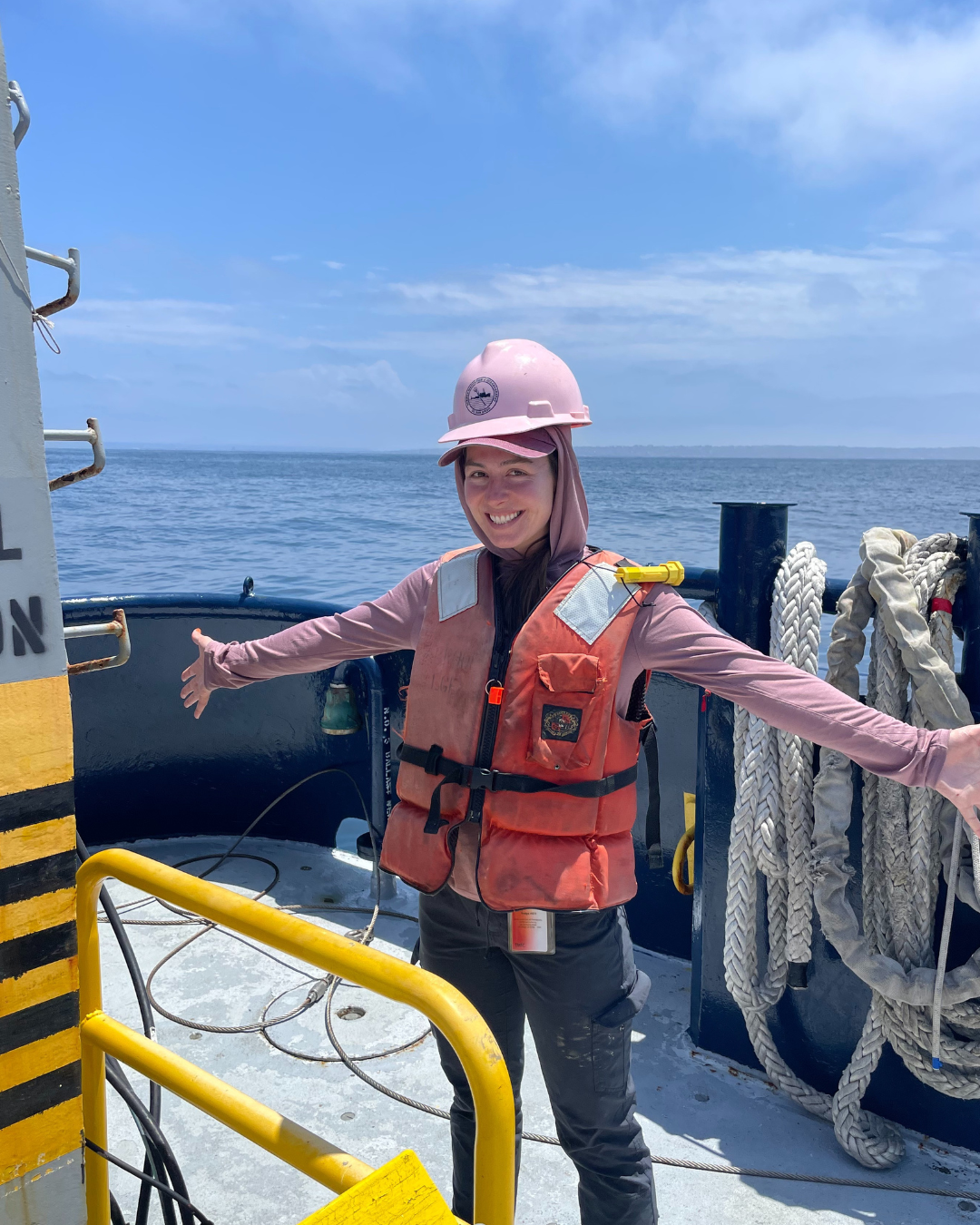
I reached out to various tech and robotics companies to come up with a plan. I worked with two main companies. One of them was Blue Robotics which does aquatic robotics and underwater drones, and they make something called a USV – an uncrewed surface vessel. It's basically like a floating boat that drives on its own and connects to your computer. You can drive it with a controller or draw a route on a map, and it'll follow that path. Then I worked with a different company for the water quality sensors – we wanted sensors that could collect pH, temperature, conductivity, and dissolved oxygen data. Our next phase is optimizing the data collection and communication pathways and are still in the process of determining the range of capacities of this technology.
My capstone project ended with a technical memo that walked through everything we chose – the different companies, tools, and gear we put into the boat. I also did a community outreach part that involved creating a lesson plan for high school-aged kids. I collaborated with Buena Vista High School near our study site in Carlsbad and taught my lesson to five different classes. We got the students out of the classroom and into the lagoon where they could learn the concepts, use sampling tools, collect data, and see how the boat helps with that process.
"As much as I love research and working in a lab, I really wanted to get back out and start working again rather than continuing in academia."
Was anything about the process surprising or unexpected?
It was pretty unexpected how affordable this technology actually is. When you think of marine robotics and aquatic robotics, it's usually incredibly expensive – like hundreds of thousands of dollars – and it's usually for military uses or big university equipment for large studies. But with Blue Robotics, not only were they an amazing team to work with and really collaborative, but the tool itself is only a few thousand dollars, not hundreds of thousands.
It was very unexpected to find something that was actually accessible. The goal would be to have a unit that works reliably that could allow people to purchase it on their own, but we have many steps to go before we get there. When I was giving my Capstone talk at the end of the year, it was really fun to see some parents in the audience who were like, "Oh, I live by a lake, and the lake's really dirty, and I would love to use this." That's exactly the point – if the tool works reliably, hopefully in the future there will be different ways it can be used. My memo is going to be public, and CalTrout was really open about wanting this data to be available to everyone. Long-term, we are hoping this will help support conservation efforts statewide.
Why is this work and tool important?
There's two parts to this: the technical side and the community involvement side, because we can't have one without the other. High-tech projects are great, but they are most beneficial when people are engaged and excited. Anytime I spoke about the research, people would say, "Oh, I can see that being used for this type of monitoring or for this."
In the future, the exciting part is that this tool might be able to be used for many different things. Hopefully, you are able to take off the water quality sensors and put different probes on to do different types of monitoring or testing. The near-term add-on is a camera which seems feasible in the next few months! Being able to work with people in a tech-heavy and science-heavy field was just really exciting, especially in this chapter of my career.
This is still an ongoing project too. The end of my capstone was just the start! We're looking to secure more funding and see how far we can take it. Right now, our main focus is the Buena Vista Lagoon in Carlsbad, but once we get some studies done, we hope to host community workshops and events where the boat is doing its survey while we have a screen up so everybody can see in real time what's happening. They can be at the visitor center watching the boat collect data and see what it looks like underwater. I’m continuing to work with CalTrout as a Consulting Project Manager and just really excited about all the potential.
"If you have a passion for the space, there is going to be a little niche pocket for you and your skill level. You will be met with equally passionate people who have turned something that might seem insignificant to someone else into their life’s work."
Do you have a favorite body of water and a favorite memory associated with it?
Ooh, I'll share one saltwater favorite and one freshwater favorite. For saltwater, while I do love the Southern California coast, I have to go with the Northern California coast, around the Humboldt area. It's just this beautiful little pocket. I took a solo trip with my dog up there a few years ago and fell in love with it. You can't get better than the redwoods and the rivers up there. There aren't as many people as in Southern California, and it's just so serene.
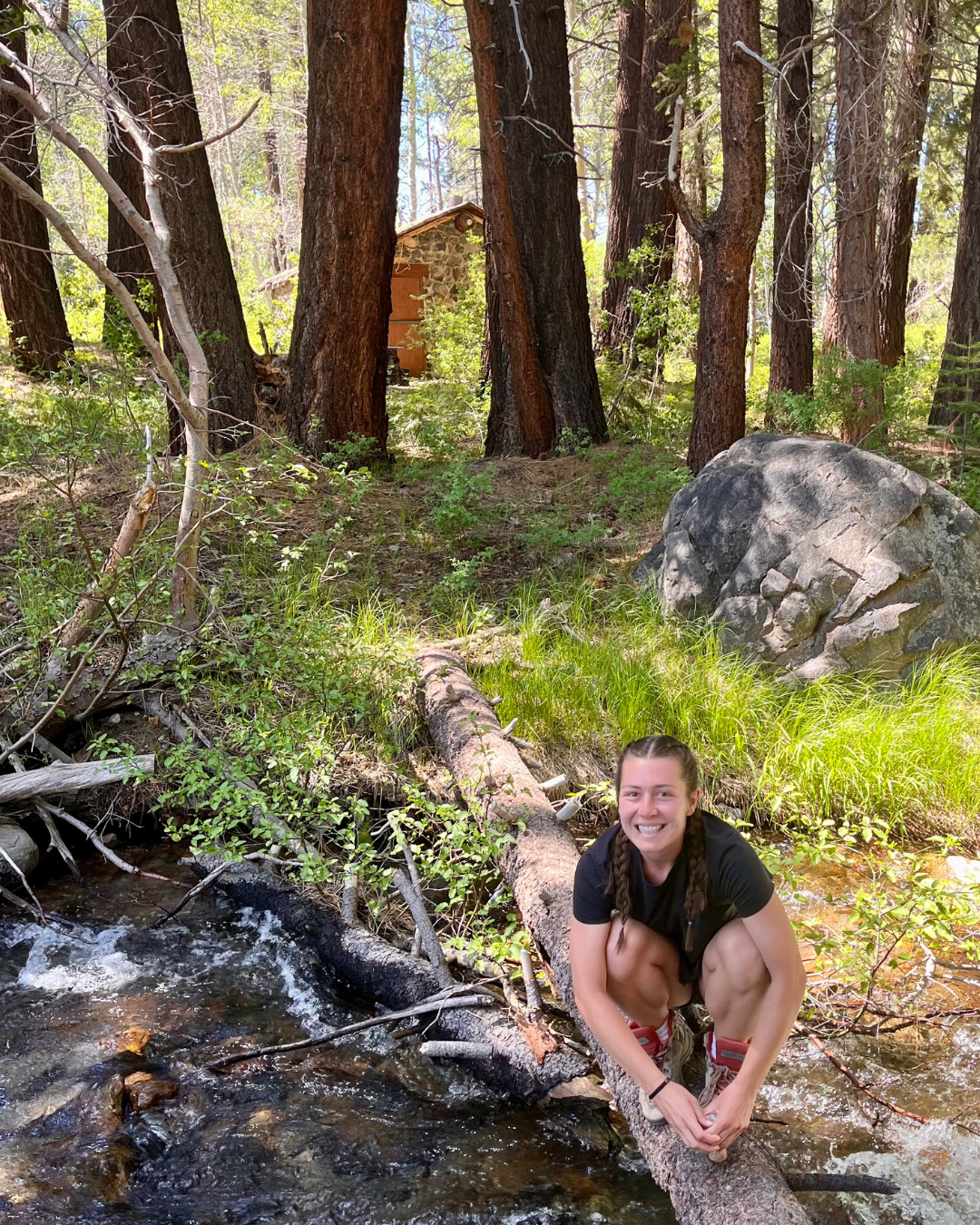
For freshwater, it would be Convict Lake, which is near the Mammoth area. It's a tiny little lake that's tucked away, but my family's been going there since my grandpa stumbled upon the lake when my dad was just a few years old. I’ve been going there since I was little, and now my nephews get to come with us. It's really incredible to see that this little, tiny lake looks the exact same year after year. It’s such a special spot of connection for my family.
Do you have any advice for younger folks hoping to pursue a similar academic or career path?
The environmental science field is SO broad, which I didn’t realize going into it. If you're interested at all in it, there is a place for you here. Some jobs require a college degree, some don’t. Some are lab-focused, some are field-focused, some are both.
If you have a passion for the space, there is going to be a little niche pocket for you and your skill level. You will be met with equally passionate people who have turned something that might seem insignificant to someone else into their life’s work. It is just the most exciting, ever-evolving, welcoming community of curious people.