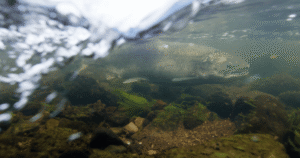
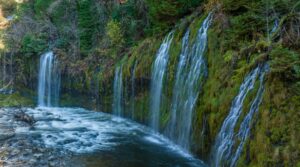

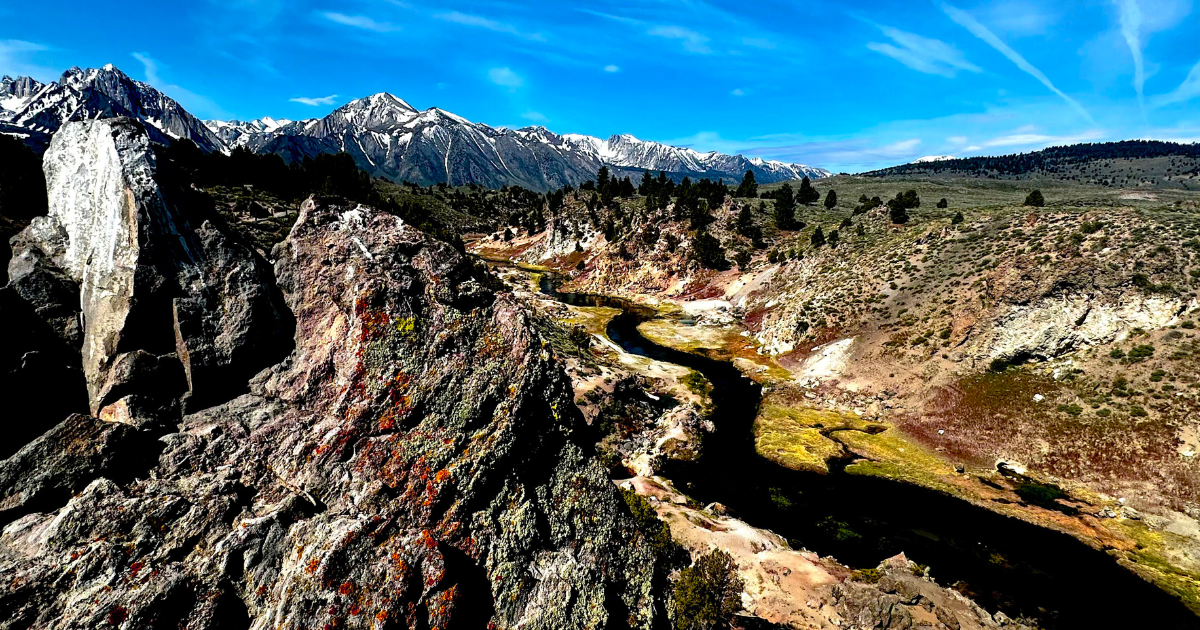
The Hot Creek Geologic Site — a natural wonder containing hot springs within a river gorge — is under threat, and we need your help. KORE Mining, a Canadian mining company, has resubmitted an application for exploratory drilling near the headwaters of Hot Creek in the Eastern Sierra that could lead to harmful open pit mining near this important watershed and fishery.
This isn’t the first time potential mining operations have threatened the highly sensitive Hot Creek watershed. Four years ago, KORE Mining was granted a Categorical Exclusion to drill at the Geologic Site. Together, local organizations took KORE Mining and the Inyo National Forest to court and won. Unfortunately, the current administration has removed environmental protections and safeguards that were in place previously to allow communities to comment on proposed exploratory drilling projects — a decision that has silenced the people being most impacted.
Furthermore, local governing bodies like the Mono County Board of Supervisors and Mammoth Lakes Town Council have not had the opportunity to voice concerns because there have been no formal announcements of proposed plans and no public comment period. As members of these communities and advocates for our public lands, we deserve the right to submit comments and concerns about KORE Mining’s project at Hot Creek.
This project will create lasting and irreversible impacts on the area. It will affect its ecology, our access to public lands, and harm the Eastern Sierra’s tourist-based economy. Hot Creek is one of the greatest natural and recreational resources in the Eastern Sierra, and we must protect it. Our health, our ecosystems, and our economy rely on a healthy Hot Creek. Without full disclosure of the proposal to the community and an adequate comment period, we are being disenfranchised from the stewardship of public lands in the community in which we live and work.
CalTrout is actively working with partners to designate Hot Creek an Outstanding National Resource Waters (ONRW). This designation is one of the strongest legal mechanisms available to protect water quality under the Clean Water Act and would permanently protect Hot Creek’s existing water quality. While we will continue to work towards this designation, we cannot wait to stop this threat in its tracks.
We’ve used our voice to protect this essential watershed once before; let’s join together to do it again!
Learn more about the proposed drilling and the reasons we must come together to stop it in the NEW VIDEO by Friends of the Inyo and the No Hot Creek Mine coalition!
For the latest news about Hot Creek and ways to help protect this important waterway and landscape, check out No Hot Creek Mine!
Here’s how you can help:
- Click on the button below to open the Inyo National Forest “Contact Us” page.
- Scroll down to the “Ask a Question or Provide Feedback” section
- Copy and paste the following action alert email
- Feel free to personalize the message! Share your concerns and why YOU want to protect Hot Creek.
Suggested language to use in the comment letter:
Subject: Opposition to Exploratory Drilling at Hot Creek
Attention Mammoth District Ranger Fred Wong,
- Hot Creek is one of the Eastern Sierra’s greatest treasured natural and recreational resources. [Add your personal connection to the area, whether it is personal memories, impacts your livelihood as a guide or business owner.]
- I oppose the exploratory drilling adjacent to the Hot Creek Geologic Site because this project will create lasting and irreversible impacts on the area including access to public lands, significantly impacting our tourist-based economy, and impacts to already threatened species such as the Bi-State Sage Grouse and the Tui Chub.
- The unique water quality of Hot Creek will also be impacted. It is important to note that Hot Creek is a tributary of the Owens River which provides drinking water to the City of Los Angeles.
- Without full disclosure of the proposal to the community and an adequate comment period, we are being disenfranchised from the stewardship of public lands in the community in which we live and work.