
By Caroline Ruppert,
CalTrout Member since 2019
My Perspective
I’ve always loved science. I’ve been notoriously known for poking around in tree roots, holes in the forest floor, and tide pools alike. Whenever my family dragged me on a road trip to the oceanside, I made sure to find a tide pool to investigate before we headed home. It seemed only natural that my curiosity for the inhabitants of the tide pools would follow me into my education. As soon as I had the chance, I took a class on marine ecology and I knew from that point on this was exactly what I wanted to study.
My parents didn’t always share the same love for scientific exploration in nature as I did. They were content to watch from the side, typing into their blackberries. They felt this sort of helplessness because they knew nothing about the nudibranchs and chitons I hammered on about ad nauseam. So they began looking for people who understand what I was talking about to help foster my growth and desired to get out and learn more.
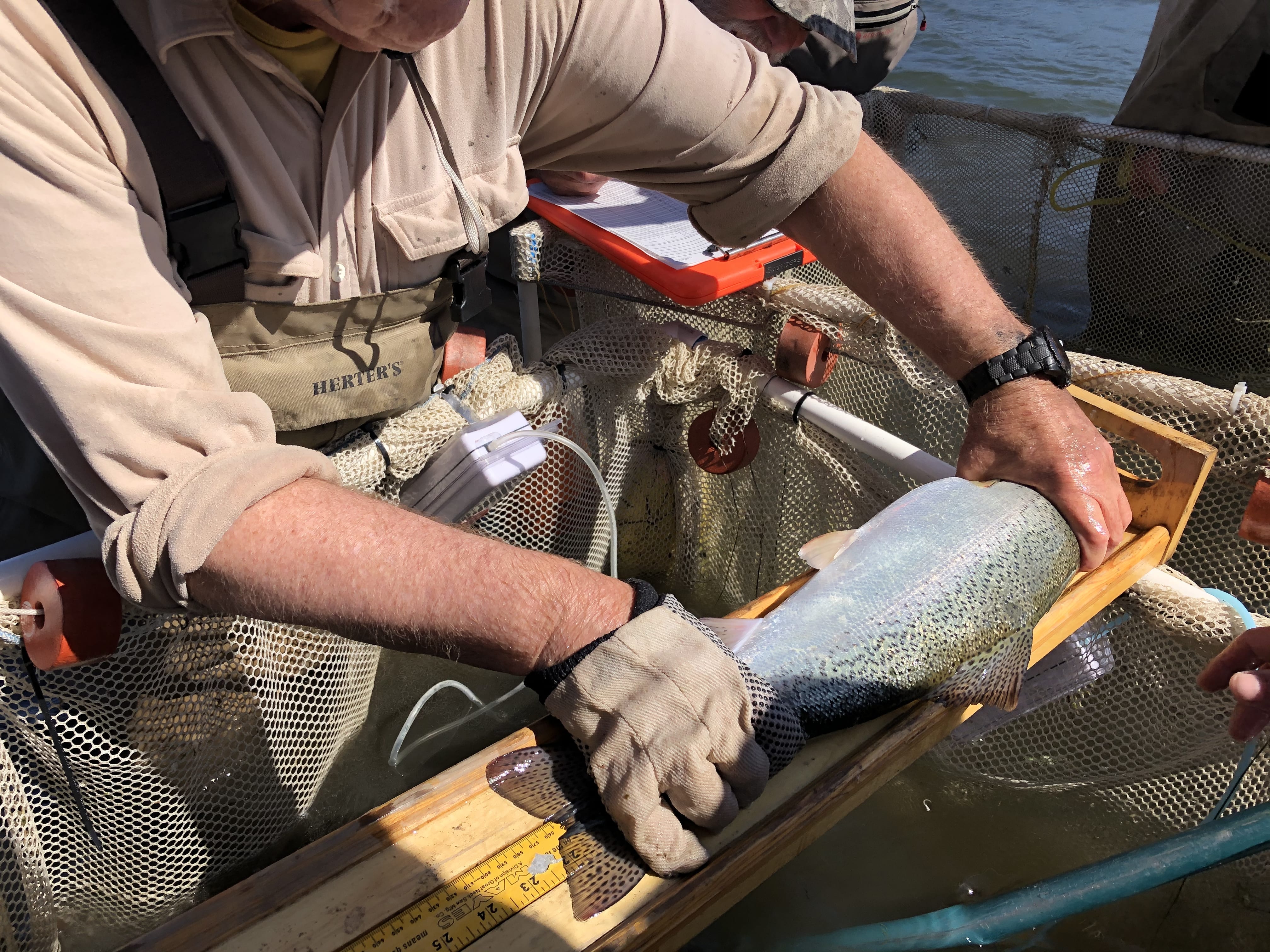
CDFW Field team measuring captured salmon. Photo: Patrick Samuel

And that’s how we discovered CalTrout. It all started out of this unique link between my love of marine creatures and my dad’s passion of fly fishing - both genres supported by science.
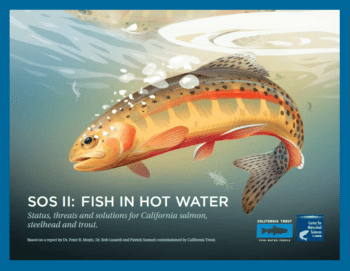
As my dad emailed me CalTrout’s links and videos, then brought home publications, such as SOS II: Fish in Hot Water.
CalTrout’s numerous science based initiatives throughout California were initially just an inspiration to me, but then I was offered an opportunity to experience one of them first hand.
Photo: Patrick Samuel
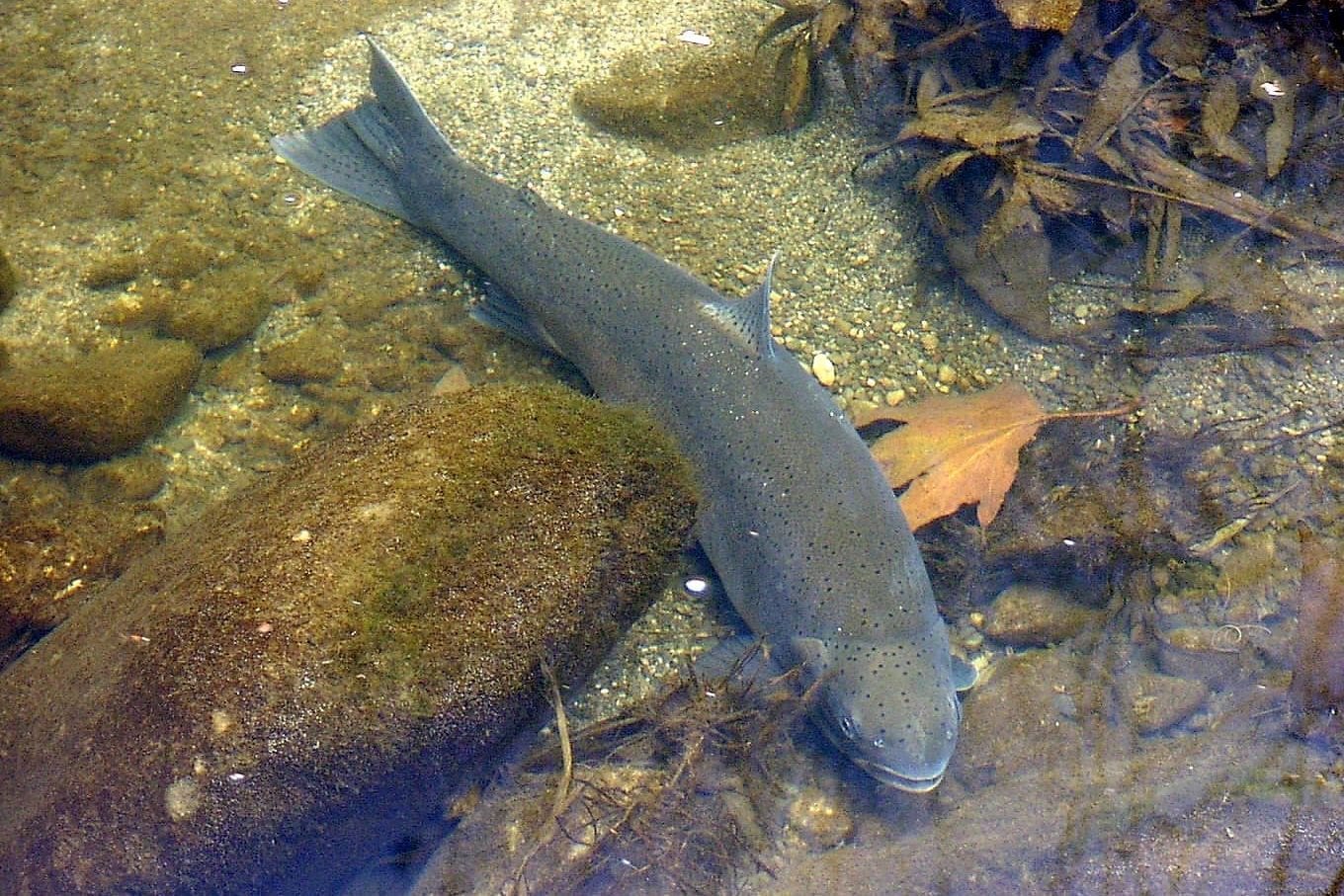
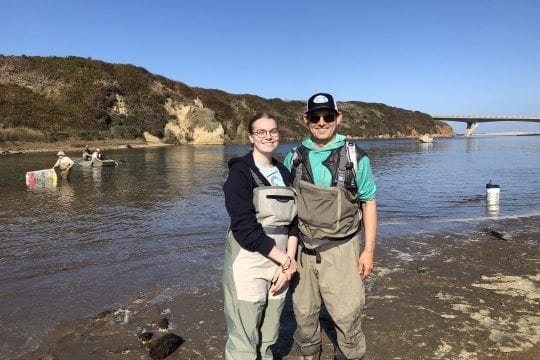
We accompanied Caltrout Bay Area Manager, Patrick Samuel just south of San Francisco, along the California Department of Fish and Wildlife (CDFW), to gather data about steelhead trout as part of the Pescadero Marsh Revitalization project.
It was an amazing experience accompanying them as they collected critical data in the marsh and I learned a lot in the process.
At the intersection of fresh water and the ocean, marshes can provide an opportunity for accelerated growth for steelhead prior to entering the ocean.
It is a different version of the rice fields used to grow the CalTrout sponsored “Floodplain Fatties” my dad always brings up as we cross over the causeway on I-80 on our way to Tahoe.
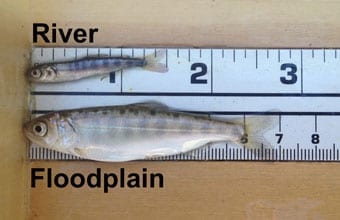
"Floodplain Fatty" Photo: Jacob Katz
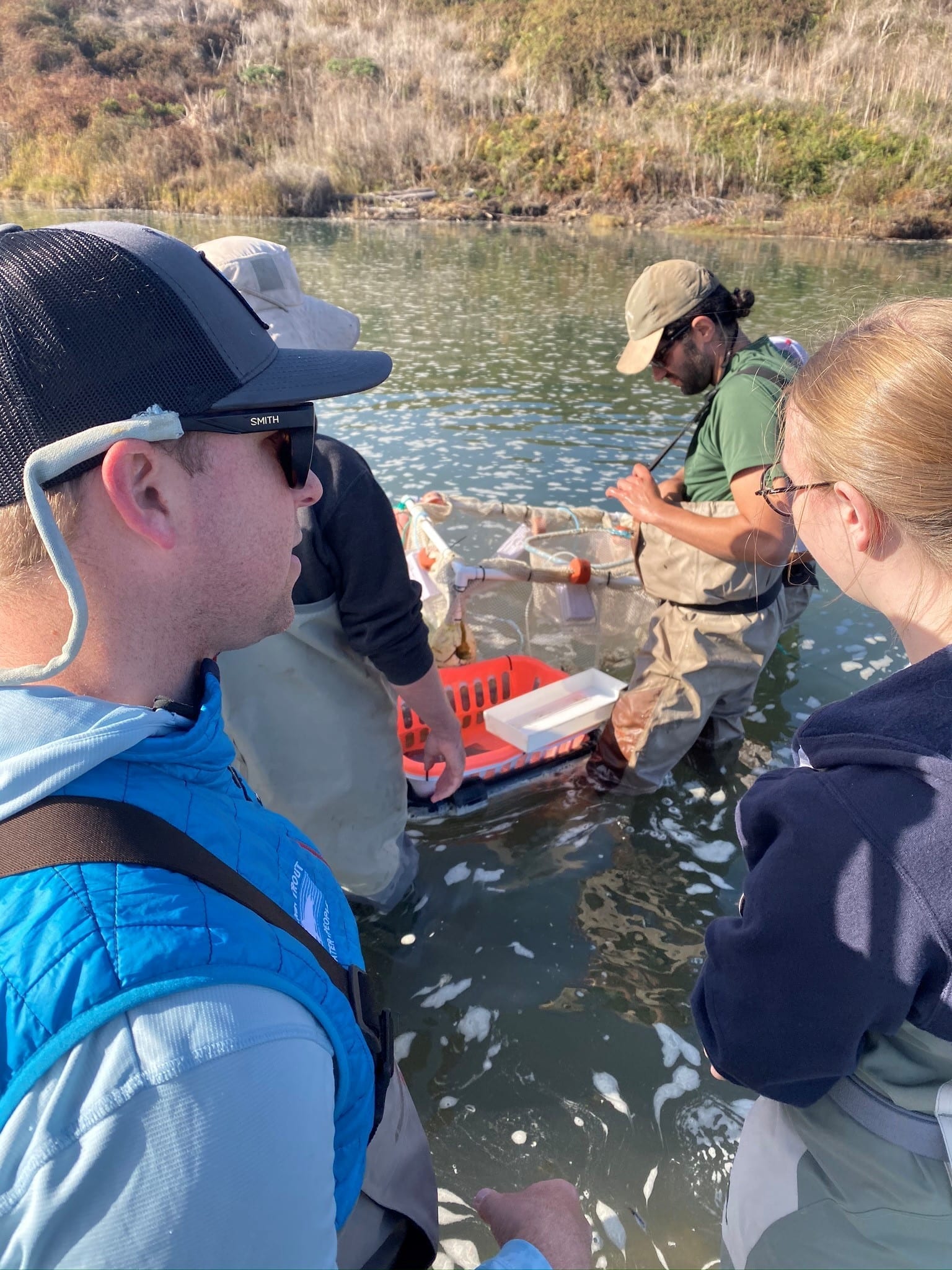
Patrick Samuel, Caltrout Bay Area Manager, chatting with Caroline Ruppert.
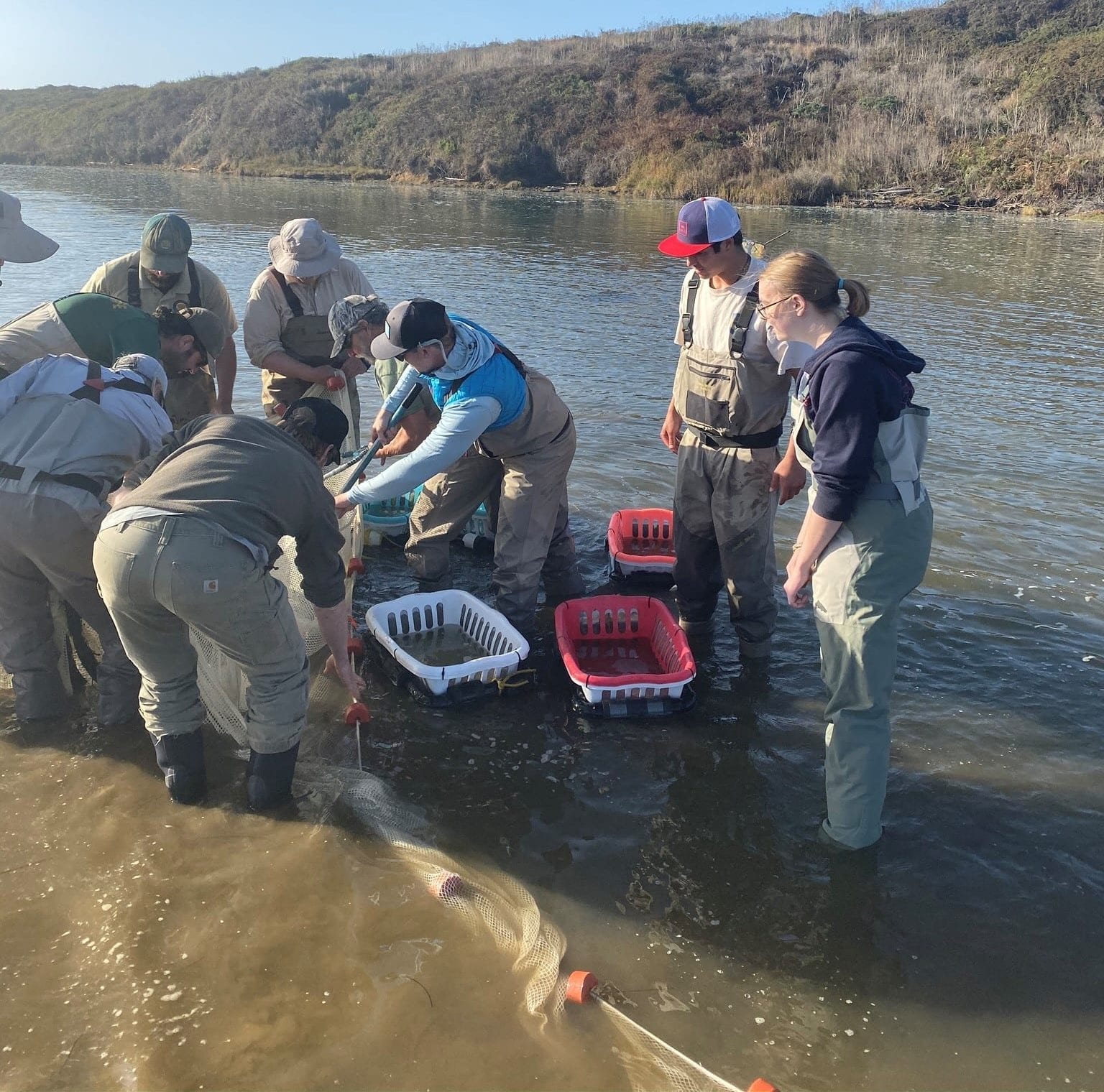
Our efforts that day focused on the recollection of steelhead tagged during earlier sessions. We supported the large seine as the CDFW staff rowed across the lagoon in an effort to trap as many steelhead as possible.
We then slowly began to evenly pull in both ends of the netting to create a wall across the water and forcing dozens and dozens of fish into the well of the seine. Once we had pulled the seine tight we took smaller hand-held nets and scooped the fish into semi-submerged laundry baskets.
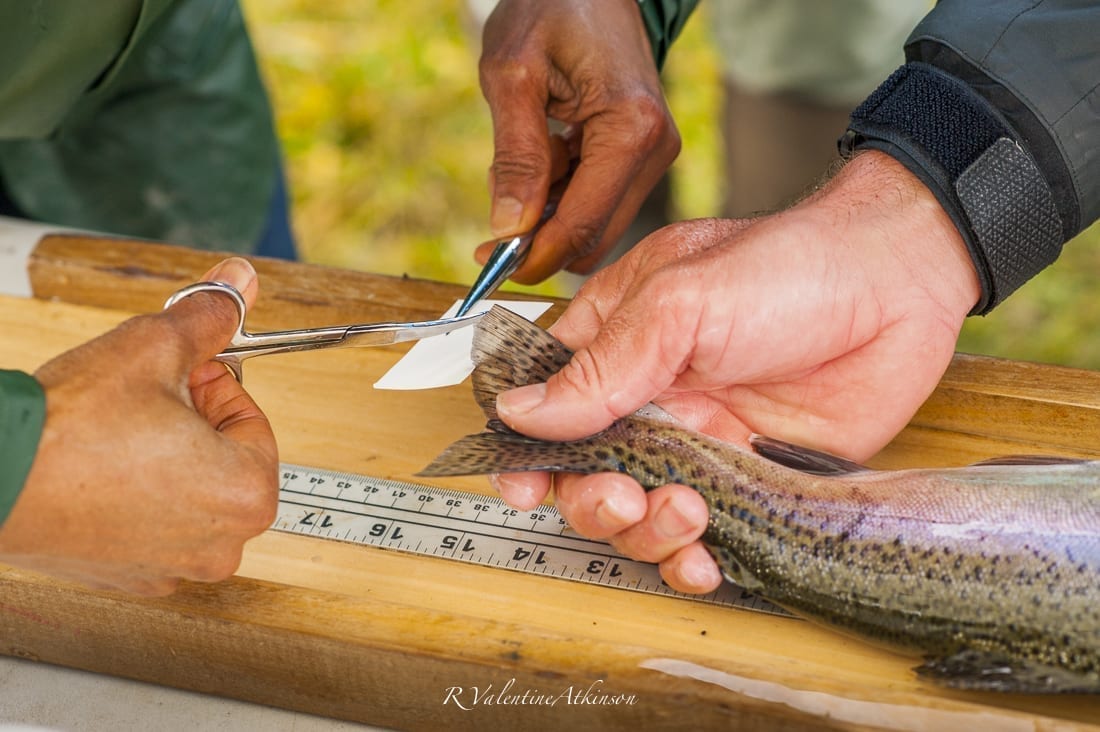
We then separated out the non-steelhead fish and moved the remaining steelhead into a deeper netted pen in the lagoon. After we had collected a large enough group, they started the process of scanning and measuring.
Any tagged steelhead beeped when wanded by the device and usually scale samples were taken.
Field team observing what was captured in the seine. Photo: Patrick Samuel
"Experiencing CalTrout’s work directly in the field, with an expert like Patrick, brought CalTrout’s mission to life and further cemented my love of science as well as my hope to further my efforts to make a difference in the world we, and trout, live in."
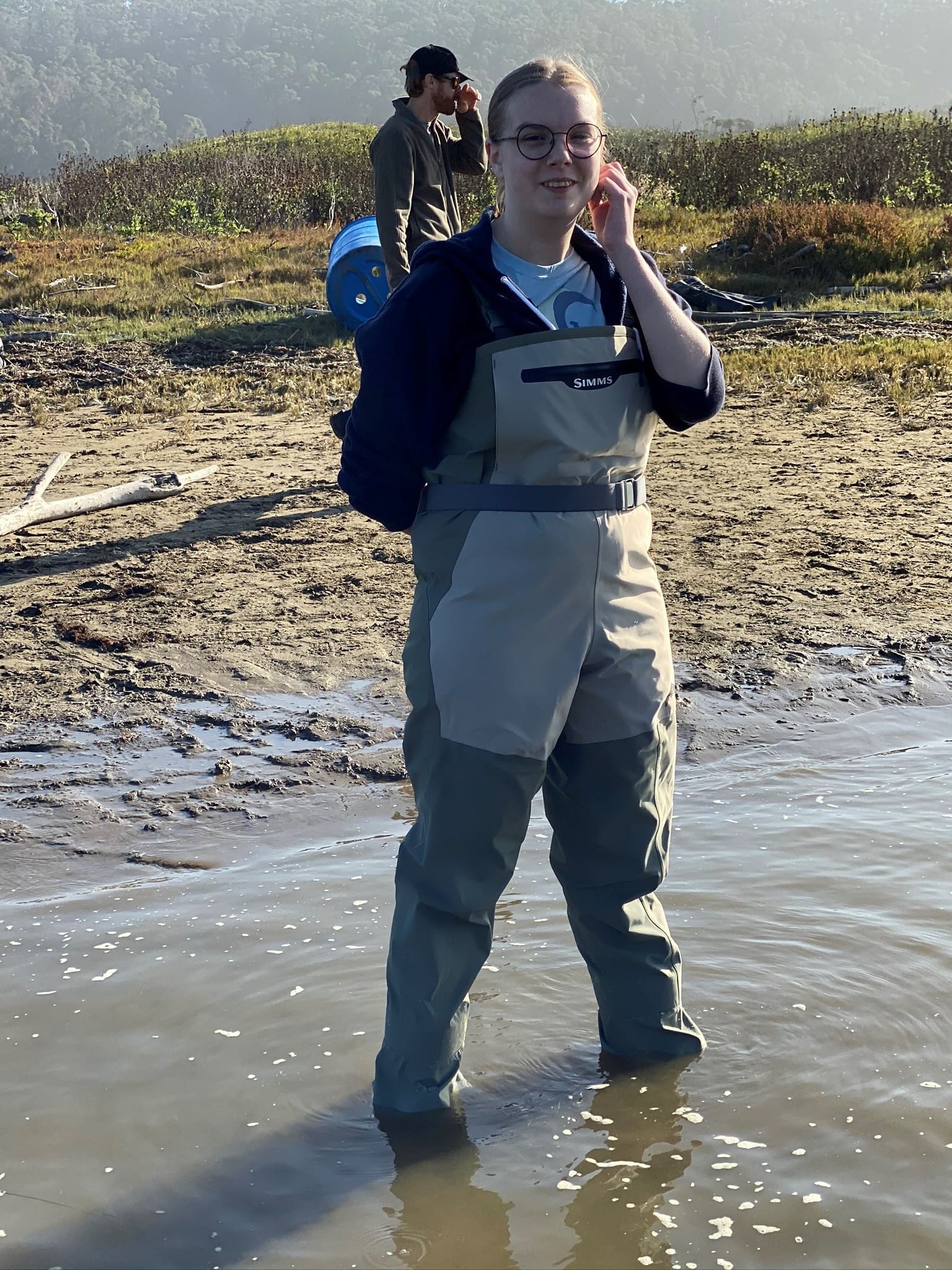
Caroline Ruppert
Articles
My Perspective: Caroline Ruppert
Partner Profile: The PPIC Water Policy Center
Spot Check: Southern California Steelhead
Science into Action
Using Sonar to Count Fish on the Eel River
Craig’s Corner
Reflections: The 2019 Photo Contest Winners
The California Environmental Flows Framework