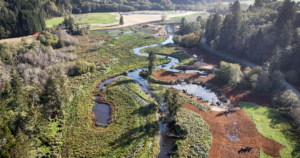
Here’s another of our interview series, this one with Mount Shasta Region Conservation Director Andrew Braugh, who is largely focused on the region’s spring creeks, especially the restoration and protection of Hat Creek and Fall River.
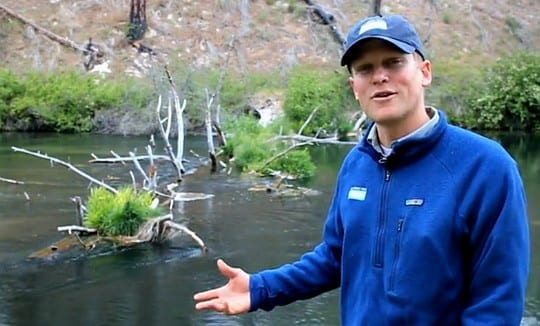
Tell us a little about yourself and your region.
My name is Andrew Braugh and I’m CalTrout’s Mount Shasta Conservation Manager. Currently, I’m focusing on the restoration of two of Northern California’s premier spring creek fisheries: Hat Creek and Fall River.
These spring-fed systems are special because they generate large volumes of cold, clean, nutrient-rich water. More specifically, the spring systems all around Mt. Shasta tend to produce elevated levels of nitrogen and phosphorous. Why are these nutrients important? Because they grow fish, bugs, and aquatic plants much faster than most surface-fed streams.
Spring creeks also tend to generate more constant flows year-round because they are fed by groundwater, whereas as surface-fed streams depend more on precipitation and snow runoff. We’re really lucky to have both Hat Creek and Fall River in our region. They are fascinating systems to work on; we’re making progress on some challenging issues. The fishing is unforgiving but rewarding when you finally land that 20 incher on 7x!
What are the critical issues facing Hat Creek and Fall River?
Hat Creek and Fall River both suffer from sediment issues that seem to have really disrupted their entire food web cycles. Over the last 20-25 years both systems have experienced a major influx of fine sediment that blanketed their stream beds and altered their natural aquatic plant life cycles.
This may or may not be related to the terrible Eurasian watermilfoil outbreak in the Fall River that started around 2002. Excessive sedimentation like this can originate from various natural or anthropogenic sources such as flooding, channel straightening, and bank erosion from unrestricted cattle.
The problem with low gradient, slow-moving spring creeks is that they usually don’t have the large flood events needed to flush excessive sediment out. So once it gets in there it’s stuck! But it actually moves faster than most people think; we’re finally seeing the tail ends of both sediment slugs in Hat and Fall.
More importantly, we’re starting to see aquatic vegetation growing again, which is really positive. There has been a lot of talk about dredging both systems but with these new signs of life — and stable fish populations — I suggest we try to help nature do its thing.
Stabilizing streambanks, managing cattle better, restoring native terrestrial and aquatic vegetation — all these things will improve habitat conditions and increase the carrying capacity of both fisheries to hold larger and more abundant wild trout.
Tell us about your favorite place in your region.
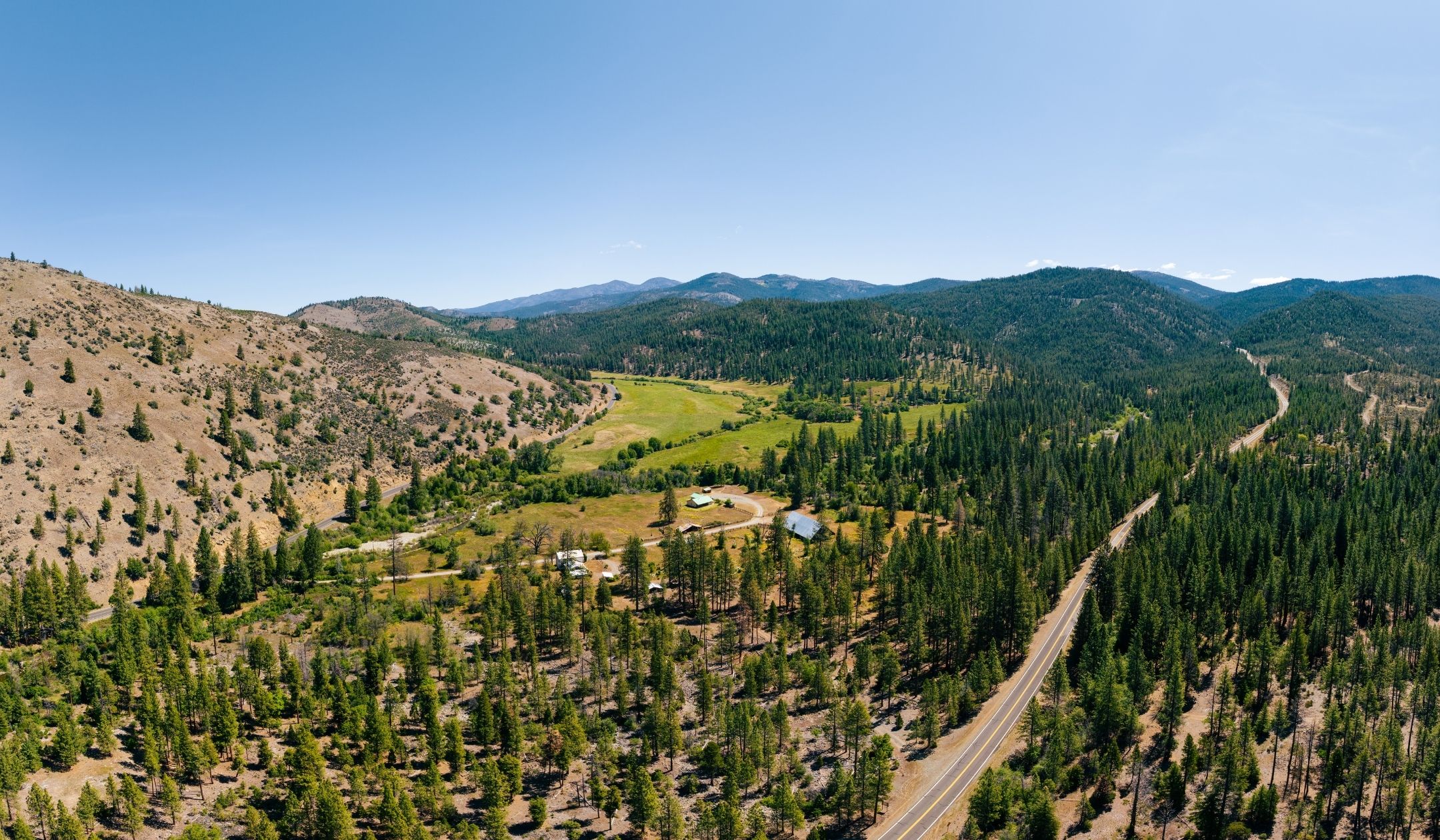
The Hat Creek Wild Trout Area has become my new favorite place on earth! We obviously have big plans for this place and I can’t wait to get started on our restoration plans.
I’m really impressed with CalTrout’s initiative and commitment to Hat Creek. Dick Galland and I were talking the other day about our ten and twenty year restoration vision and I got goosebumps just thinking about the legacy of fly-fishing here and the impact our organization will have.
There’s no place better than sundown up on the hill above Carbon Flats. I can picture the restored canopy hanging over the river, bald eagles grabbing lunkers from the stream, maybe even a few anglers fishing there again!
https://caltrout.org/wp-content/uploads/2012/06/drewtreelaydown.jpg