Report of the Annual California Golden Trout Coordination Meeting
Tim Bartley, SWC-FFF
Howard Kern, Trout Unlimited
Mark Drew, Caltrout
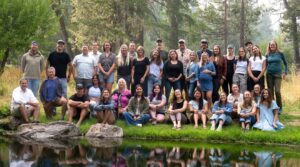
The annual coordination meeting for California golden trout was held at the California Department of Fish and Game (DFG) Region 2 office in Rancho Cordova on March 16, 2011. Attendees included technical staff from DFG, U.S. Forest Service, and U.C. Davis, as well as representatives of nongovernmental agencies.
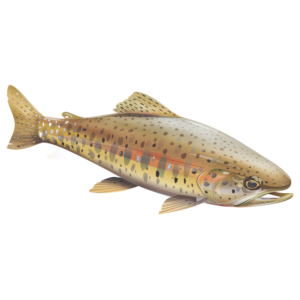
The survival of California golden trout as a distinct species depends on the mitigation of three distinct threats: degradation of the natural habitat of the fish, predation and competition by nonnative brown and rainbow trout, and hybridization with nonnative rainbow trout.
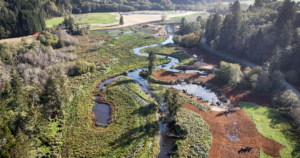
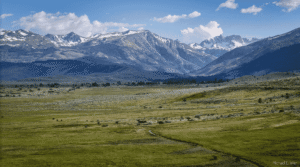
1. Degradation of the natural habitat of the fish. The creation of the Golden Trout Wilderness represents an attempt to protect that habitat. However, the designation of the wilderness area does not preclude other uses of the land. Livestock grazing, which is still allowed on the Kern plateau, has an ongoing impact on the ecosystem. The impact of grazing has been the subject of previous publications (Knapp and Matthews, NAJFM, 1996) which reported detrimental effects on riparian vegetation and fish populations in this area. The U.S. Forest Service has initiated a program that “rests” some of allotments used for grazing. In addition, at least one rancher has participated in a more intensive grazing management program. Much of the morning session of the meeting was devoted to a review of studies evaluating the restorative effects of these programs on the meadow and riparian habitat. Preliminary results indicate no clear differences in the rested versus grazed allotments at this time. Improvements, as well as downward trends, have been recorded in both rested and grazed areas. In areas where the cattle continue to graze under the new management system, more improvements overall have been measured, when compared with a traditionally grazed allotment. Model areas for future testing have been established, and baseline data have been collected. However, decisions to continue the monitoring will depend on available funding. The ranchers will still graze using the “new” grazing management system to continue to improve the golden trout habitat.
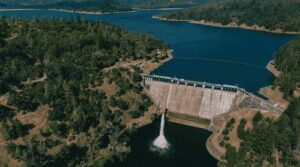
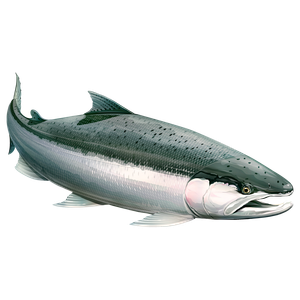
2. Predation and competition by nonnative brown and rainbow trout. Stocking of brown and rainbow trout within the Golden Trout Wilderness has been discontinued for some time. In order to eliminate nonnative fish from the remaining habitat of the California golden trout, a series of fish barriers have been constructed in the South Fork Kern River drainage. The Schaeffer and Templeton barriers are structurally sound, and are tested annually to determine if any fish have crossed the barriers. Monitoring has shown that these barriers are effective at preventing downstream fish from moving upstream. The “Strawberry Connection,” a man-made diversion constructed years ago, has been considered a weak link in the barrier system, since fish potentially could circumvent the uppermost barrier, particularly in high water. However, monitoring indicates that no fish have bypassed the barrier. Several measures are taken annually to reduce the risk of circumvention. Also, with habitat changes in the past ten years, it appears that this risk has almost been eliminated.
DFG and Forest Service staff suggest that a new barrier below Kennedy Meadows in the Dutch John Flat area would be beneficial, especially to eliminate the risk of people tossing rainbow or brown trout over the Schaeffer barrier. A Dutch John barrier would improve the isolation of upper stretches of the Kern River and expand the protected habitat of the California golden trout. However, the proposed barrier would be located in a relatively inaccessible area and would be expensive to build. The proposed location is within the designated Wilderness and Wild and Scenic River, both protective actions meant to perpetuate the longevity of the California golden trout. Both Acts contain language which would allow consideration of a barrier to promote golden trout habitat, but the Acts do restrict structures within the free-flowing river and in the Wilderness. Further research is needed to determine the feasibility and need for such a structure.
3. The third threat to California golden trout is hybridization with nonnative rainbow trout. Golden trout will cross breed with rainbow trout. Years ago, California golden trout were harvested from upper reaches of the Kern River drainage, and transplanted into Cottonwood Lakes. The fish from Cottonwood Lakes were subsequently used to stock lakes, rivers, and streams throughout California and the western United States. Unfortunately, it has since been discovered that the golden trout from Cottonwood Lakes had hybridized with nonnative rainbow that were also present in the lake. In addition, hybridization has also occurred with stocked rainbows that have been co-introduced to targeted lakes and streams. The result is that the golden trout that you (and I!) think we catch in a high Sierra lake is very likely a rainbow-golden hybrid. An extensive program has been underway, using modern genetic techniques, to characterize populations of California golden trout in order to identify sources of “pure goldens” for preservation. In-basin populations have been evaluated genetically using single nucleotide polymorphism and microsatellite DNA markers. UC-Davis will report later this year on additional genetic results of this long term program, including a new genetic study of selected out-of-basin golden trout populations and a Genetic Management Plan for the species.
As a final important note, there will be an entry to the Federal Register by October, 2011 in response to the 2001 petition by Trout Unlimited to list the California golden trout as an endangered species. The decision for the California golden trout will be either Not Warranted, Warranted but precluded, or Warranted. The direction of further recovery efforts will be based on this decision.