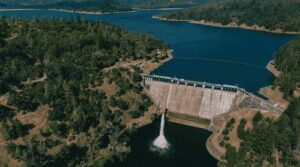

Every summer, the Klamath River becomes the victim of toxic algae blooms, courtesy Iron Gate and Copco reservoirs — two of the four reservoirs targeted for removal under the KBRA/KHSA agreements.
The lakes turn a pea-soup green, the water board posts signs on the lake and river, and people (and pets) are discouraged from touching the water (reactions range from skin irritations to potential liver damage).
This press release from the Karuk Tribe tells us it’s happened yet again:
Happy Camp, CA – In what has become an annual ritual, water quality officials are posting the Klamath Reservoirs and River with warnings to avoid contact with the water due to blooms of the toxic algae Microcystis aeruginosa. Posted areas include Copco Reservoir, Iron Gate Reservoir, and the river itself downstream to Turwar on the Yurok Reservation. Microcystis aeruginosa secretes the toxin microcystin with is a known tumor promoter and liver toxin. Expsoure to high levels of microcystin can lead to organ failure and death. In response to the recurring blooms, officials from the California Water Quality Control Board and the Office of Environmental Health and Hazard Assessment formed a Blue Green Algae (BGA) Work Group. The BGA Work Group recently published a document to provide guidance to local health officials dealing with toxic algae blooms. According to the BGA Work Group Document, when the probability of adverse health effects are high, typical actions by local authorities includes “immediate action to control contact with scums including prohibition of swimming and other water contact activities.” The blooms occur in the summer as the shallow, nutrient rich water trapped behind the dams heats up and thus provides an optimal environment for the algae to bloom. For years, down river Tribes, fishermen, and conservation groups have called for the removal of the dams to restore runs of salmon that are in dramatic decline and alleviate the toxic blooms.
Happy Camp, CA – In what has become an annual ritual, water quality officials are posting the Klamath Reservoirs and River with warnings to avoid contact with the water due to blooms of the toxic algae Microcystis aeruginosa. Posted areas include Copco Reservoir, Iron Gate Reservoir, and the river itself downstream to Turwar on the Yurok Reservation.
Microcystis aeruginosa secretes the toxin microcystin with is a known tumor promoter and liver toxin. Expsoure to high levels of microcystin can lead to organ failure and death.
In response to the recurring blooms, officials from the California Water Quality Control Board and the Office of Environmental Health and Hazard Assessment formed a Blue Green Algae (BGA) Work Group. The BGA Work Group recently published a document to provide guidance to local health officials dealing with toxic algae blooms.
According to the BGA Work Group Document, when the probability of adverse health effects are high, typical actions by local authorities includes “immediate action to control contact with scums including prohibition of swimming and other water contact activities.”
The blooms occur in the summer as the shallow, nutrient rich water trapped behind the dams heats up and thus provides an optimal environment for the algae to bloom. For years, down river Tribes, fishermen, and conservation groups have called for the removal of the dams to restore runs of salmon that are in dramatic decline and alleviate the toxic blooms.
The battle to restore the Klamath remains fully in effect; more information is available at KlamathRestoration.org.