
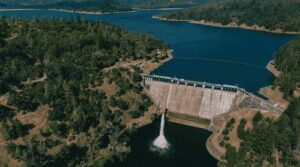







Pacific Power is in the process of removing the White Salmon River’s Condit Dam (see explosive dam removal video below), and while the video of the base of the dam being dynamited are interesting, it’s the story behind the dam removal that’s most telling.
This from Oregon Live:
Condit Dam needed to go, just like other dams on the Sandy, Hood and Rogue rivers that have been breached in recent years. Like those dams, and like those on Washington’s Elwha River that are now being demolished, Condit was doing more harm than good, generating a paltry 14 megawatts of electricity, enough for about 7,000 homes, while blocking salmon and steelhead from dozens of miles of clean and cold spawning habitat. By the time the last chunks of concrete are taken out, it will cost about $32 million to get rid of Condit Dam; it would have cost its owner, PacifiCorp, three times that much to install safe fish passage.
Condit Dam needed to go, just like other dams on the Sandy, Hood and Rogue rivers that have been breached in recent years. Like those dams, and like those on Washington’s Elwha River that are now being demolished, Condit was doing more harm than good, generating a paltry 14 megawatts of electricity, enough for about 7,000 homes, while blocking salmon and steelhead from dozens of miles of clean and cold spawning habitat. By the time the last chunks of concrete are taken out, it will cost about $32 million to get rid of Condit Dam; it would have cost its owner, PacifiCorp, three times that much to install safe fish passage.
[youtube]http://www.youtube.com/watch?v=-gJtvLnLJhU[/youtube]
The Klamath dams face a similar economic reality; Pacific Power faces upwards of $450 million in upgrades to keep them — only to have them operate at a $20 million annual loss.
With removal costs to ratepayers capped at $200 million, the destruction of the four Klamath Dams becomes an economic and business question — not a political fight (as many removal opponents would have us believe).
In fact, Pacific Power recently stated as much in its presentation to the Siskiyou County Board of Supervisors:
Reiten said that retro-fitting the existing dams to comply with regulations and qualify for re-licensing would cost rate payers about $450 million. However, the company has negotiated a $200 million cap on rate payer contributions to the removal process, he said on Thursday.
“It comes down to an economic calculation, trying to cut the best deal for customers,” Reiten said. “Keeping the facilities the same is not an option.” On the question of replacement power, the team stated that the Klamath dams constitute a maximum of 2 percent of Pacific Power’s energy portfolio. Therefore, the team said the company does not feel it will be difficult to find economical replacement power. “We would prefer to use renewable sources for replacement but we’ll go with the best economic option,” said Reiten.
Reiten said that retro-fitting the existing dams to comply with regulations and qualify for re-licensing would cost rate payers about $450 million. However, the company has negotiated a $200 million cap on rate payer contributions to the removal process, he said on Thursday.
“It comes down to an economic calculation, trying to cut the best deal for customers,” Reiten said. “Keeping the facilities the same is not an option.”
On the question of replacement power, the team stated that the Klamath dams constitute a maximum of 2 percent of Pacific Power’s energy portfolio. Therefore, the team said the company does not feel it will be difficult to find economical replacement power.
“We would prefer to use renewable sources for replacement but we’ll go with the best economic option,” said Reiten.
There it is. The Klamath Dams will come out because they’re privately owned, and they no longer make anything approaching financial sense for their owner.