March 5, 2012
Mark Stopher
Environmental Program Manager
California Department of Fish and Game
601 Locust Street
Redding, CA 96001
Re: California Trout Comments on Proposed Suction Dredge Regulations
Dear Mr. Stopher:
California Trout (CalTrout) is providing comments on the Department of Fish and Game’s (Department) proposed suction dredge regulations. We appreciate the Departments recent efforts to incorporate public comments and propose improved suction dredge regulations.
We remain concerned about the impacts of suction dredging, even when new and improved regulations are adopted, on specific streams. Most notably we are concerned about the impacts of suction dredging on coho salmon streams, designated state Heritage and Wild Trout waters, and popular blue-ribbon trout fisheries.
CalTrout is encouraged by the passage of AB 120 in July 2011. This legislation suspends the issuance of permits until the Department has completed an Environmental Impact Report and adopted new regulations. AB 120 includes two other important provisions:
1) The bill requires the Director of DFG to certify that the new regulations fully mitigate identified significant environmental impacts.
2) The bill requires a fee structure that allows for suction dredge permit costs to fully cover the costs of administering the program. The checkbooks and bank accounts of this state’s hunters and anglers should not be used to underwrite a program that harms the very species we pay licenses to fish.
Background
CalTrout members use and enjoy the rivers of California to pursue their passion of fishing for California’s diverse trout, steelhead and salmon. Angling stimulates local economies and is an important driver of local economies in many rural areas.
California Trout’s mission is to protect and restore wild trout, steelhead and salmon and their waters throughout California. California Trout is supported by approximately 7,500 members and approximately 60 affiliate organizations representing approximately another 10,000 members. California Trout is headquartered in San Francisco and operates 5 field offices throughout the state.
The current state of California’s trout, steelhead and salmon is bad and worsening. Suction dredge mining impacts only exacerbate that declining trend, and those impacts must be considered in the context of the current status of our state’s fisheries. The diversity of salmonids (trout, steelhead, and salmon) in California is truly remarkable. Our state is the southern end of the range of all anadromous (oceangoing) trout and salmon species. It is also home to many distinctive inland forms of these fish, such as three golden trout subspecies of the southern Sierra Nevada. California’s dynamic and varied geology, climate, and size, as well as proximity to the nutrient-rich California current just offshore, all contribute to this amazing diversity of coldwater fish.
The sobering fact is, if present trends continue, 65% of California’s salmonids will be gone within the next 100 years, and maybe sooner. There are 13 different kinds of steelhead and salmon in California that may be gone by the year 2100.2 Coho salmon and southern steelhead are the most at-risk, where returning adult numbers in some watersheds are in the single digits. Seven of California’s nine resident trout species are in trouble, mostly because they are endemic to a few streams in small isolated areas, where they are vulnerable to hybridization with introduced species as well as to impacts from grazing, old logging roads, and other factors.
The “fish don’t lie.” And, what they tell us is that they are not doing well. In his expert report on suction dredging, Dr. Peter Moyle states “in my professional opinion, suction dredging should only be allowed in areas where it can be demonstrated there will no immediate or cumulative impact on the anadromous fishes. It should be assumed there is harm, unless it can be proven otherwise.”
Below we highlight specific comments on the proposed regulations.
Specific Comments
Comment 1: The issuance of suction dredge permits must be considered on a stream-by-stream and a permit-by-permit basis.
The DSEIR assumes a statewide approach to the issuance of suction dredge permits. This approach does not take into account the many site specific and stream specific variables to adequately determine impacts of the action (see e.g., comment 3 regarding the McCloud River). We believe the issuance of 1600 streambank alteration permits is a better model, where each permit is subject to CEQA with site specific, negotiated terms and conditions.
We concur with the Karuk Tribe and others that compliance with Fish and Game Code §§ 5653, 5653.9 as well as the California Environmental Quality Act (CEQA) require: (1) the adoption of regulations that comply with CEQA and (2) a determination upon the issuance of each permit that the permitted activity will not cause deleterious impacts to fish. In addition, the Department’s regulations must clearly state that the Department has the right to revoke, suspend, or refuse to renew a permit should it discover evidence showing that deleterious impacts are occurring, or will occur to fish.
Comment 2: All Department of Fish and Game designated Heritage Wild Trout Waters should be closed to suction dredging.
The California Fish and Game Commission (Commission) established the Trout and Steelhead Conservation Management Act in 1977 thereby codifying into law the Wild Trout Program. In doing so, the Commission essentially recognized the importance of high quality habitat for the maintenance of wild trout populations.
The Policy states: “All necessary actions, consistent with state law, shall be taken to prevent adverse impact by land or water development projects affecting designated Wild Trout Waters.”
There are over 40 designated Heritage and Wild Trout waters, representing the most pristine and popular trout and steelhead angling destinations in the state. There is absolutely no question that this state’s anglers love and care deeply about the future of these designated waters. Heritage and Wild Trout that would remain open to suction dredge mining include: Truckee River, Upper and Lower Owens River, McCloud River, Hot Creek, and the Upper Sacramento Rivers. These streams represent some of the top angling destinations in the state. A healthy Upper Owens River, for example, is of critical importance to the economics and ecology of the area.
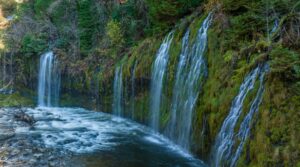
We highlight the need to close all Heritage and Wild Trout waters by making the case for one—the McCloud River.
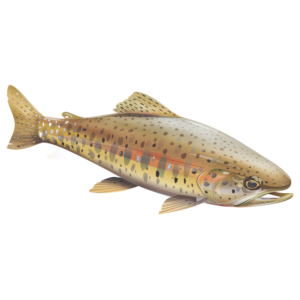
The entire McCloud River watershed should be closed to suction dredge mining. We base this recommendation on 1) the protection afforded by the Public Resources Code for the McCloud as a state Wild and Scenic River, 2) the designation by the Fish and Game Commission of the McCloud River as a Wild Trout Water, 3) the status of the river as one of the state’s most popular angling destinations, 4) the presence of rare McCloud River redband trout, a state Species of Special Concern, and 5) the identification of the McCloud River by the National Marine Fisheries Service (NMFS) for the reintroduction of winter-run Chinook and spring-run Chinook salmon, both federally-designated endangered species.
The McCloud River has protection equal to state Wild and Scenic River status through Public Resources Code Section 5093.5-5093.70. This protection directs ‘[a]ll state agencies exercising power under any other provision of law with respect to the protection and restoration of fishery resources shall continue to exercise those power in a manner to protect and enhance the fishery….[.] Suction dredge mining activities would clearly conflict with the state legislature’s statement that the ‘continued management of river resources in their existing natural condition represents the best way to protect the unique fishery of the McCloud River.
The DSEIR recommends closing the McCloud River from the southern boundary of section 36, T38N, R3W (the bottom of The Nature Conservancy Property) upstream to McCloud Dam. We strongly support this closure. This section of the river is a designated Wild Trout water by the Department of Fish and Game and is one of the most popular fly fishing destinations in California. Incorrectly, the reason stated in the DSEIR for closing this section of the McCloud River is the protection of redband trout, yet McCloud redband trout only occur in tributaries to the Upper McCloud River above McCloud Reservoir. Redband trout are a California Species of Special Concern. To adequately protect the redband trout, suction dredge mining should be banned in the entire upper watershed of the McCloud River above McCloud Reservoir. We embrace the logic in the DSEIR of protecting red band; however, we propose applying that logic to the facts and extending the ban to the entire upper watershed.
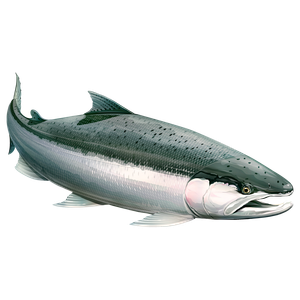
Moreover, in June 2009, NMFS issued a final biological opinion on the Bureau of Reclamation’s operations of Shasta Dam. As a result, NMFS issued a Reasonable and Prudent Alternative (RPA) requiring the Bureau to pass listed winter-run Chinook salmon, spring-run Chinook salmon and steelhead above Shasta Dam. The McCloud River and the Upper Sacramento River are the two rivers targeted for reintroduction above Shasta Dam. The Department should close both of these waters to suction dredge mining to limit potential impacts to these endangered species given the potential event of reintroduction, which, if it occurs, would undoubtedly force the cessation of dredge mining anyway.
As the McCloud River focus indicates, California’s Heritage and Wild Trout waters are recognized as important areas for the preservation of clean, cold water and the fish indicator species that they harbor. The importance and value of the 39 other designated waters in addition to the McCloud establishes sufficient grounds for the Department to ban suction dredge mining from them.
Comment 3: User fees do not cover the costs of the Departments suction dredge permitting program.
California’s budget crisis could not be more severe. State agencies are searching for ways to cut programs and save costs. The suction dredge mining permitting program is subsidized by the California taxpayers due to the costs of running the program outweighing the revenue generated by fees. Legislative analysis of SB 670 in 2009 highlight the funding discrepancy; the suction dredge permit program costs DFG about $1.3 million to operate compared to annual estimates of $375,000 of revenue. We do not see how the program is fiscally justifiable given the declining status of trout, steelhead and salmon, their importance culturally and economically, and the current fiscal crisis of California.
DFG has acknowledged in previous years that the current fees for suction dredge mining permits are inadequate to cover the full costs of the program. Under the new proposed regulations these shortfalls would continue at an estimated $1.5 million per year. In the past, some or all of these subsidies have come from the Fish and Game Preservation Fund—a budget that is primarily built by fishing and hunting license sales. This money should be used to protect and restore economically valuable fisheries, not subsidize their destruction. The checkbooks and bank accounts of this state’s hunters and anglers should not be used to underwrite a program that harms the very species we pay licenses to fish.
Comment 4: Suction dredge mining should be closed in streams that meet one of the following criteria:
1) All river segments with historical gold mining activities in which mercury was utilized;
2) River segments listed as impaired under 303(d) of the Clean Water Act due to turbidity, water temperature, sediment, or mercury;
3) All river or stream segments designated as components of the National Wild and Scenic Rivers System or deemed eligible for protection by federal agencies. Federal rivers are to be managed to protect their specific outstandingly remarkable scenic, recreation, historical/cultural, fish/wildlife, ecological, geological, and other values. In addition, water quality on federally protected rivers must meet or exceed federal criteria or federally approved state standards for aesthetics, fish and wildlife propagation, and primary contact recreation5
4) All rivers protected pursuant to provisions of the California Wild and Scenic Rivers Act (Chapter 1.4 (commencing with Section 5093.50) of Division 5 of the Public Resources Code). DFG has a responsibility in its permitting process to protect the free flowing character and extraordinary values of state designated rivers;6
5) All river or stream segments designated by the Fish and Game Commission as Wild Trout Waters or Heritage Trout Waters, or deemed suitable for designation pursuant to Section 1727 of the Fish and Game Code;
6) All river segments that provide critical, potential, and historical habitat for federally or state listed threatened species or endangered species, “Special Animals” (e.g. species at risk, special status species, species of special concern) and candidate/proposed species);
7) Rivers in Key Watersheds as identified by the Northwest Forest Plan;
8) All stretches of rivers in which miners’ off-river activities (hauling supplies, camping, taking dredges on or off river, refueling, emptying sluices, sorting concentrates, etc.) will likely cause negative impacts to the immediate environment because it results in activities such as trampling of sensitive or culturally significant plants, impacts to cultural resources; fuel spillages, or handling of hazardous materials.
Conclusion
CalTrout appreciates the Department’s efforts to improve suctions dredge regulations. True progress has been made to mitigate the impacts of suction dredging on California’s streams. Further, we believe a fee structure must be implemented that fully covers the costs of the program. California’s anglers, hunters and taxpayers should not be required to subsidize the suction dredge program.
Sincerely,
Curtis A. Knight
Conservation Director
California Trout
701 S. Mt. Shasta Blvd
Mt. Shasta, CA 96067
(530)926-3755
(530)926-3267 (fax)
cknight@www.caltrout.org