“Given our history and connection to these streams, CalTrout feels a strong responsibility to reverse the current decline”
by Drew Braugh, Mt. Shasta Conservation Manager
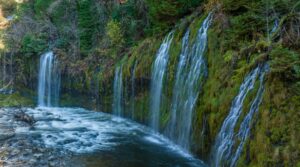
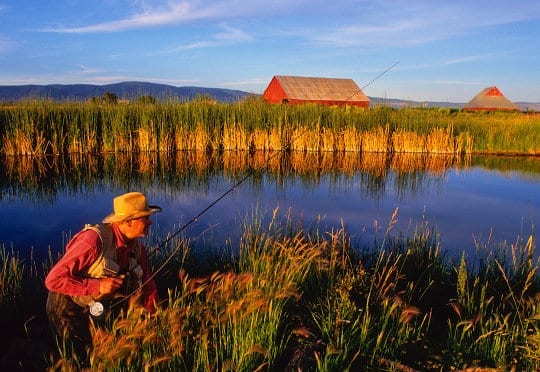
Few streams typify the “spring creek” fly fishing experience better than Northern California’s Hat Creek and the Fall River. Known for their crystal clear water, exceptional scenery, and challenging angling, these streams exemplify what spring creek fisheries are all about.

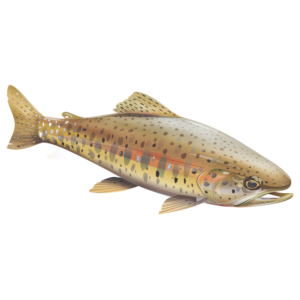
In 1971, CalTrout worked with the Department of Fish and Game to designate Hat Creek as the state’s first protected “Wild Trout Area” (WTA). Thanks to the new management guidelines set up under the WTA, Hat Creek quickly became one of California’s most productive fly fishing waters and notable accomplishments in CalTrout’s 40-year history.
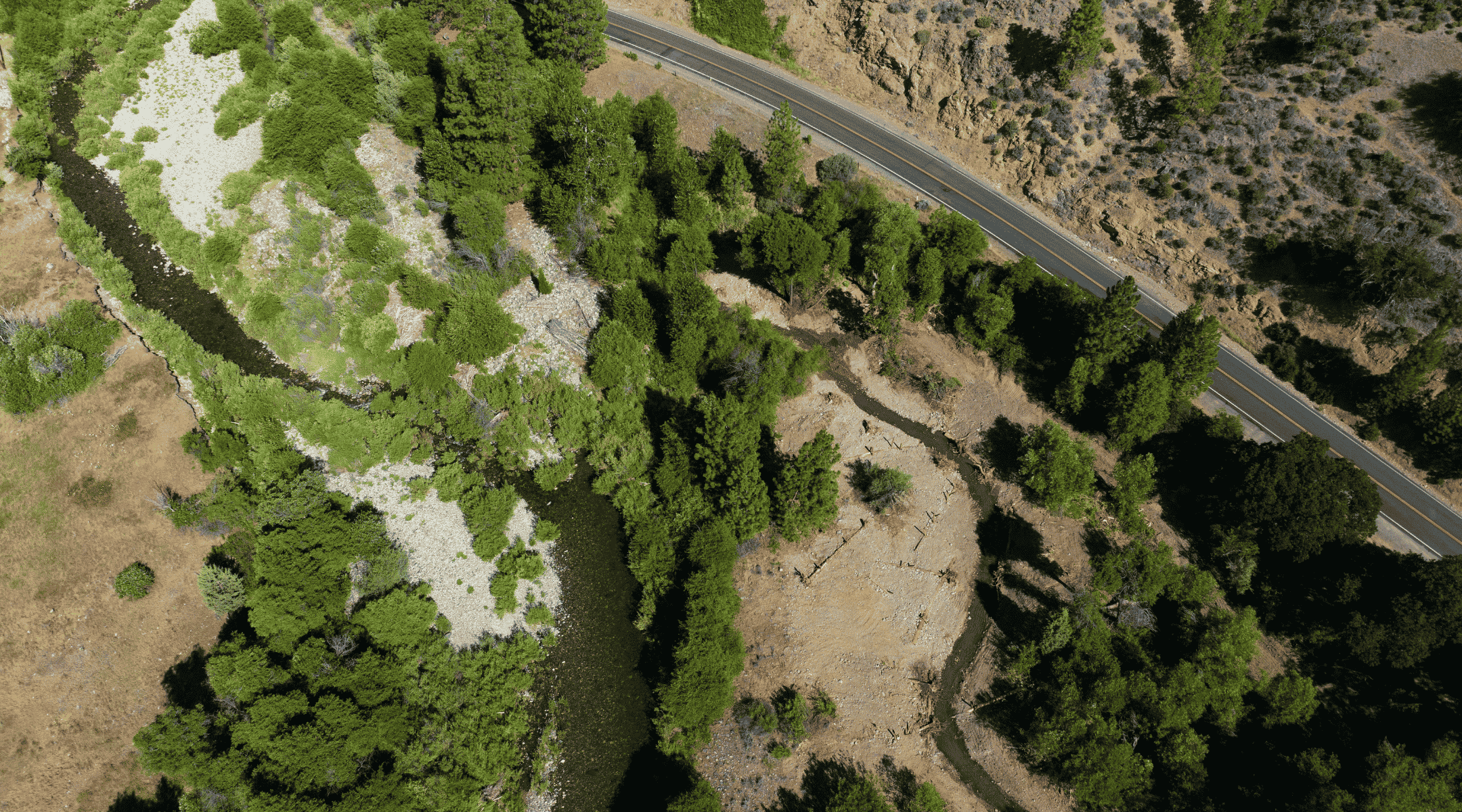
Unfortunately, now more than 40 years later, habitat conditions in both Hat Creek and the Fall River have once again begun to deteriorate. Both rivers are suffering from habitat degradation caused by over- sedimentation and the collapse of native aquatic plants.
Sedimentation, Plants Causing Decline
In the Fall River, invasive Eurasian watermilfoil continues to outcompete and overtake native aquatic plants, which in turn negatively affect macroinvertebrate food sources and overall fish populations.
In sizeable areas of Hat Creek, aquatic vegetation has almost completely disappeared, taking with it important sources of food and shelter.
Given our history and connection to these streams, CalTrout feels a strong responsibility to reverse the current decline. This summer, we plan to begin a comprehensive long-term campaign to restore these fisheries by improving critical habitat, managing invasive species and installing monitoring systems that will track changes in conditions over time.
The purpose of this effort is to protect the extraordinary recreational and ecological values of Northern California’s most important “spring creek” wild trout fisheries – Hat Creek and Fall River – for future generations.
In both cases, CalTrout is working to bring together a group of public and private stakeholders to develop viable long-term solutions.
For Hat Creek, these stakeholders, known as the Hat Creek Resource Advisory Committee (Hat RAC), include the California Department of Fish and Game, PG&E, the UC Davis Center for Watershed Sciences, the Regional Water Quality Control Board and other key groups.
Restoration Efforts Underway
Already, the Hat RAC has developed a draft restoration plan and secured over $100k for implementation and monitoring.
On the Fall River, we will be partnering with the newly formed Fall River Conservancy (FRC).
Together, CalTrout and FRC are designing a two-year pilot program that will utilize the milfoil weevil (small beetle) as a biological control for managing highly invasive Eurasian watermilfoil found throughout the Fall River.
Over the next two years, CalTrout aims to restore more than 15 miles of spring-fed, cold-water habitat in Hat Creek and the Fall River while boosting wild trout populations by more than 1,000 fish per mile/per stream.
Additionally, we will monitor water quality for specific parameters including temperature, dissolved oxygen, bacteria and excessive nutrient loading.
To read more about our efforts to protect Hat Creek and the Fall River visit our website at www.caltrout.org/initiatives/blue-ribbon-waters.