CalTrout appreciates the opportunity to comment on the Bureau of Reclamation’s Draft Feasibility Report for Shasta Lake Water Resources Investigation.
CalTrout is primarily concerned about:
- The raising of Shasta Dam would further inundate up to three miles of blue ribbon wild trout fisheries on the Upper Sacramento and McCloud Rivers. The McCloud River has given enough. Two dams on the river block access for anadromous fish, divert over 80% of its flow and flood miles of habitat.
- The McCloud River is protected under the state Wild and Scenic Rivers Act. The CA Legislature has found and declared that the McCloud River ‘possesses extraordinary resources in that it supports one of the finest wild trout fisheries in the state’. The free flowing waters of the McCloud are legally protected–rolling back these protections sets a dangerous legal precedent.
- Central Valley salmon recovery requires a comprehensive approach. The Draft Feasibility Report focuses on a single species (winter-run Chinook salmon) and one of many stressors to this species (water temperature below Shasta Dam). It’s telling that NMFS Draft Recovery Plan does not identify Shasta Dam raise as a preferred action to improve Central Valley salmon and steelhead.
Further Inundation of Blue Ribbon Waters
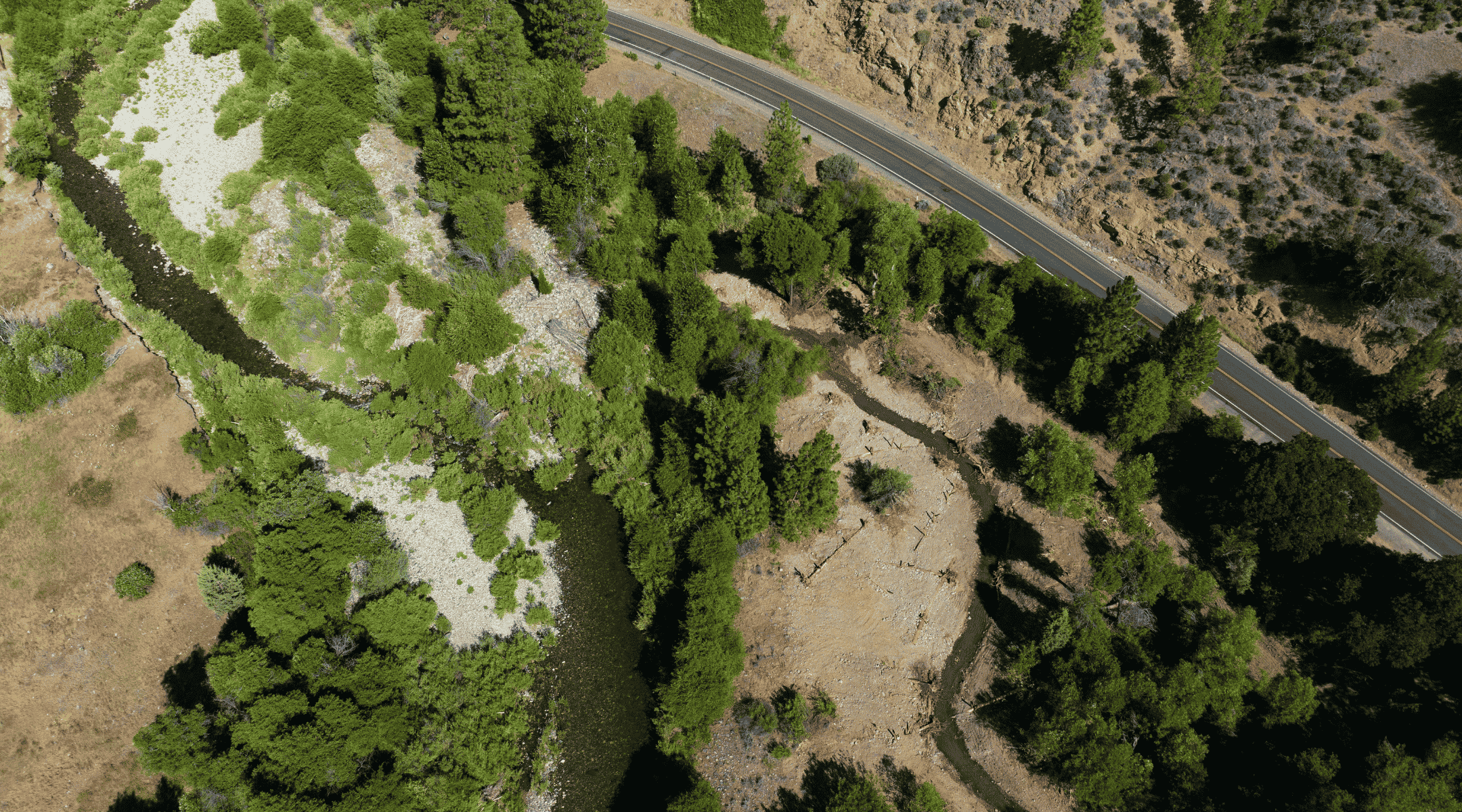
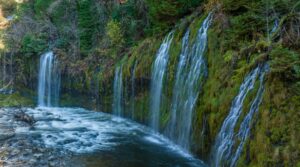
A Shasta Dam Raise would inundate miles of wild trout habitat in two of the state’s most popular and pristine trout fishing destinations — the Upper Sacramento and McCloud Rivers.
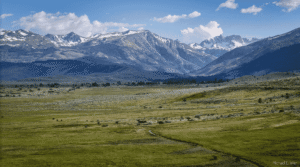
The McCloud River ranks as one of the most famous and revered trout streams in the world and is one of the few remaining great wild trout rivers in California. The McCloud is a designated Wild Trout Stream by the California Department of Fish and Game and is home to the renowned rainbow trout that was stocked around the world and continues to be notable for its beauty. Anglers come from around the world to fish in the pristine waters and remote, rugged canyon of the McCloud and its world famous fishery is of great economic benefit to the local economy. Surveys estimate that between 7,000-14,000 visitors come to the lower McCloud River, primarily to fish and camp.
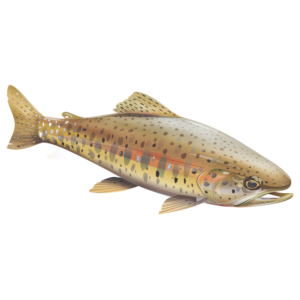
In the late 1800’s, fisheries experts and anglers from around the world looked to the McCloud River as the quintessential trout, steelhead and salmon river. Almost 200 miles from the ocean, this 77 mile long river had the biggest, toughest most hard fighting steelhead and resident rainbow trout. It contained a unique species of trout – the redband trout, the only California occurrence of the aggressive bull trout, a spring-run, fall-run Chinook salmon and a salmon with a life history developed nowhere else in the world – the winter –run Chinook salmon. The fish from the McCloud are the seed stock for trout and salmon around the world.
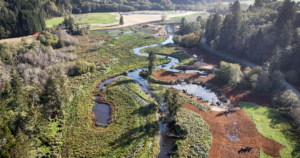
A Shasta Dam raise would inundate approximately another 3,550 of the McCloud River—or about 3% of the remaining free flowing river between McCloud Dam and Shasta Reservoir. During high pool miles of habitat would be flooded, sediment deposition would destroy spawning habitat and slack water habitat would favor non-native fish predators from Shasta Lake at the expense of native trout. During low pool an ugly bath tub ring would replace what is now healthy riparian habitat and scenic river canyon.

Specific information is lacking concerning the river reach that could
periodically be inundated if Shasta Dam and Shasta Lake were enlarged
because the lands along this part of the river are privately owned and
access for biological and other surveys has been limited; therefore,
general information concerning the lower McCloud River as a whole is
provided for some resource areas. This section also includes a brief
description of the current transition reach (see Figure 25-1) because
the reach of the river that would be newly inundated would likely take
on the characteristics of the existing transition reach.
Specific information is lacking concerning the river reach that could
periodically be inundated if Shasta Dam and Shasta Lake were enlarged
because the lands along this part of the river are privately owned and
access for biological and other surveys has been limited; therefore,
general information concerning the lower McCloud River as a whole is
provided for some resource areas. This section also includes a brief
description of the current transition reach (see Figure 25-1) because
the reach of the river that would be newly inundated would likely take
on the characteristics of the existing transition reach.
Given the owners of that “private stretch” of the McCloud River are none other than Westlands Irrigation District — who bought the property specifically to eliminate one barrier to dam raising — it’s hard to imagine what the barriers to discovery are.
A Protected River
The free-flowing sections of the McCloud River are protected under state law. The proposed raising of Shasta Dam is in clear violation of the California Wild and Scenic Rivers Act for the McCloud River (Wild and Scenic Rivers Chapter, CA Public Resources Code §5093.542. Under the act the state legislature makes the finding that “maintaining the McCloud River in its free-flowing conditions to protect its fishery is the highest and most beneficial use of the water” under the state constitution. The act prohibits the construction of additional dams, reservoirs, diversions and other water impoundment facilities on the McCloud River.
In the late 1980s, the CA Resources Agency assessed the suitability of the McCloud River inclusion for State Wild and Scenic River designation and protection. The McCloud was found eligible, but the California legislature declined to add the river to the California wild and scenic river system. The legislature instead passed an amendment to the California Wild and Scenic Rivers Act to protect the river’s free-flowing condition and the river’s fishery from McCloud Dam to Shasta Reservoir resulting in the existing protection under CA Public Resources Code §5093.542.
The McCloud River has also been found to be eligible federal Wild and Scenic status under the Wild and Scenic Rivers Act. However, the river was not formally designated due to an alternative protection strategy proposed by landowners and agencies. In 1991, the McCloud River Coordinated Resource Management and Planning (CRMP) group was formed and a protection plan was adopted in 1994. The CRMP requires its signatories to protect the values that make it eligible for Federal designation as wild and scenic and contains a provision stating that the USFS reserves the right to pursue designation if the CRMP is terminated or fails to protect these values.
The raising of Shasta Dam would violate both the Public Resources Code and McCloud River CRMP Plan protections. Attempts to rescind these laws set a dangerous precedent of scaling back protection when it is inconvenient. Moreover, the PRC Code and CRMP plan protection underscore the desires of the state legislature, the public and the local landowners that the McCloud remain in its. The PRC code states ‘the continued management of river resources in their existing natural condition represents the best way to protect the unique fishery of the McCloud River.’ Continued management does not include flooding more of the river by raising Shasta Dam.
Salmon Recovery
With a majority of cost of the dam raise being attributed to the need to improve Central Valley steelhead and salmon, the rationale for spending over half-billion dollars on salmon recovery needs to be reviewed in a comprehensive way, not a single species and single dam approach.
For example, there are multiple stressors to Central Valley salmon and steelhead. According NMFS’ Draft Recovery Plan these stressors include:
- The barriers of Keswick and Shasta dams, which block access to historic staging and spawning habitat
- Flow fluctuations, water pollution, water temperature impacts in the upper Sacramento River during embryo incubation
- Loss of juvenile rearing habitat in the form of lost natural river morphology and function, and lost riparian habitat and instream cover
- Predation during juvenile rearing and outmigration
- Ocean harvest
- Entrainment of juveniles at the C.W. Jones and Harvey O. Banks pumping plants
A more comprehensive approach is needed to coordinate actions to ensure the long-term sustainability of Central Valley salmon and steelhead. Dam reoperation, improvements to tributaries, increased access to floodplain habitats and many other strategies are being implemented now to improve all runs Central Valley steelhead and salmon. NMFS Draft Recovery Plan highlights many of these efforts. The Draft Feasibility Report falls does not recognize these efforts and instead focuses on winter-run Chinook and how a Shasta Dam raise would affect this single species.
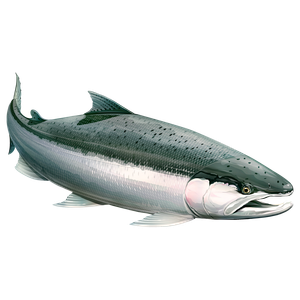
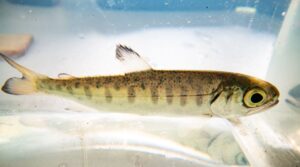
The most obvious impact to the winter-run Chinook salmon was the construction of Shasta dam blocking access to historic spawning grounds. NMFS Draft Recovery Plan identifies at least four independent winter-run Chinook salmon populations with a stronghold in the McCloud and other populations in Fall River, Hat Creek and Upper Sacramento River. The construction of Shasta Dam mixed these runs into a single population below Shasta Dam resulting in a population bottleneck.
The Draft Feasibility Report mischaracterizes the NMFS Draft Recovery Plan identified stressors to winter-run Chinook and solutions to address them. NMFS is clear that a key strategy for securing the long-term viability of winter-run Chinook salmon is establishing ‘at least one other viable independent population’ in the Battle Creek and/or tributaries above Shasta Reservoir. There is no mention of a Shasta Dam raise. This clear focused priority by NMFS that the best way to ensure the long term survival of winter-run Chinook is to establish a population above Shasta Dam. But they do not mention the need to raise Shasta Dam.
Best Allocation of Resources?
As the scientists at the UC Davis Center for Watershed Sciences California Water Blog noted, if we’re asking taxpayers to cough up $655 million to benefit fish, then it’s fair to ask if fish wouldn’t better benefit from spending that \$655 million some other way:
New major water projects are increasingly justified based on recovering
fish and environmental benefits lost through construction of previous
projects. Yet we are not seriously studying what would be the best
investment portfolio for fish and the environment. We are still trying
to justify individual projects rather than trying to find the best
portfolio of activities to accomplish objectives, particularly
environmental objectives. This approach is backwards, and ineffective. Independent single-facility studies of improvements to a complex system
are expensive and time-consuming, and distract us from addressing
greater system-wide problems. If we continue to study this complex
system incrementally, money and time will be spent without substantial
improvements or strategic direction.
New major water projects are increasingly justified based on recovering
fish and environmental benefits lost through construction of previous
projects. Yet we are not seriously studying what would be the best
investment portfolio for fish and the environment. We are still trying
to justify individual projects rather than trying to find the best
portfolio of activities to accomplish objectives, particularly
environmental objectives. This approach is backwards, and ineffective.
Independent single-facility studies of improvements to a complex system
are expensive and time-consuming, and distract us from addressing
greater system-wide problems. If we continue to study this complex
system incrementally, money and time will be spent without substantial
improvements or strategic direction.
As further noted in the California Water blog, the increased water capacity in the lake will result in very expensive water, while added water deliveries aren’t significant on a state-wide scale:
- The study found that the most economical expansion was about 14% (634,000 acre-ft), costing $1.1 billion dollars, roughly $1,700 per acre-ft of storage capacity. This would expand statewide surface storage capacity by 1.5%, although water storage capacity is not equal to water deliveries.
- This expansion produces an additional 76,000 acre-ft of firm yield (dry year deliveries). This is less than 0.2% of agricultural and urban water use in California. (Modern water engineers will wonder why the antiquated firm yield is still the main water supply indicator.) Average annual deliveries increase by only 63,000 acre-ft. Other traditional benefits (hydropower, recreation, flood reduction) were small.
We remain unconvinced of any increased recreational opportunity accruing to the project should more flat water be created; blue ribbon trout streams are far more rare than stillwater recreational opportunities.
On the issue of climate change and the need to expand reservoirs in California the scientists at UC Davis warn that expanding reservoirs in not necessarily useful for climate change.
Climate warming will reduce seasonal snowpack, but with some changes in reservoir management, existing large reservoirs on most of California’s rivers can largely accommodate seasonal shifts in runoff (Connell-Buck et al. 2011). Climate warming will be somewhat costly, but not catastrophic for most conventional water storage operations (Willis et al. 2010; Madani and Lund 2010). Change in total precipitation is more important than warming alone. The physical, economic and ecological instability of the Sacramento-San Joaquin Delta probably poses more risk to California’s water supply than climate warming (Lund et al. 2010).
Cultural Impacts
And while our objections focus on resources, there is a large cultural cost to dam raising; raising Shasta Dam would submerge 43 of the remaining Winnemem Wintu’s sacred sites under the lake’s waters. This follows the inundation of most of the tribal lands that were lost when the lake was originally flooded.
Recommendations
- Comprehensive Salmon Recovery: The rationale to raise Shasta Dam to benefit a single run of Central Valley salmon is flawed and counter to the way fish scientists have been thinking about salmon recovery in California. Assessing reservoir reoperation, expanding floodplains, addressing Delta issues, removing dams on Battle Creek are all positive steps. Hatchery reform is important too. These fish management, habitat restoration and water management activities must be assessed and implemented in a coordinated way to address salmon and steelhead recovery needs. The Draft Feasibility Study falls short of this by focusing on a single run of salmon and on the effects of only one action.
- Redesign the Spillway Capacity: Shasta Reservoir is presently drawn way down by November each year to provide enough room for storage of a series of potential storm events as flood protection. A reasonable alternative could be to redesign the spillway for increased carrying capacity in the event of that type of flood event. The protection against an uncontrolled release over the dam would be achieved by a greater capacity for controlled releases through a larger capacity spillway, rather than by building the dam higher to contain that type of a storm event. This could be an effective, cost efficient and environmentally superior solution.
- Downstream Floodplain Expansion: Most of the attempts to bolster wild salmon and steelhead populations have focused on improving riverine spawning and rearing habitat and increasing flow releases from dams to manage temperature and move juveniles to the sea. However, research has shown that floodplains may be an important missing ingredient in the efforts to restore these fishes. Salmon have evolved to take advantage of the historically abundant floodplains in California. During outmigration, juvenile salmonids follow increased flows from an annual spring snowmelt from the channel out onto the floodplain. The abundant food resources, relatively low velocities and warmer temperatures on the floodplain make for ideal rearing conditions, producing growth rates that are up to three times those of juveniles that remain in the channels. Reconnecting floodplains to the Sacramento River through levees setbacks and improved water management is an important factor in addressing Central Valley salmon and steelhead recovery needs.
- Improve Hydrologic Models for Shasta Reservoir Tributaries: Currently hydrologic models, used to predict the amount of winter and spring inflow to Shasta Reservoir from major tributaries (Upper Sacramento, McCloud and Pit Rivers), are outdated and unsophisticated. By updating the models to more accurately predict runoff, Shasta Reservoir could be better managed to ensure full capacity at the beginning of each dry season. Currently, the reservoir rarely fills partly because of over draw down in the fall months in anticipation of heavy winter inflows. More accurate models predicting the timing and amount of inflow would allow a less conservative approach to managing Shasta Reservoir water levels and would result in increased water yield in most years.
Conclusion
Raising Shasta Dam will come at the expense of a river the California Legislature acknowledges as one of the most beautiful and valuable in the state. While CalTrout remains committed to protecting and restoring Central Valley anadromous fisheries, the benefits of raising Shasta Dam to Central Valley steelhead and salmon need to be done in a more coordinated and comprehensive way. We remain unwilling to sacrifice irreplaceable river habitat for benefits that are uncertain and costly.
CA Public Resources Code §5093.542
The Legislature finds and declares that the McCloud River possesses extraordinary resources in that it supports one of the finest wild trout fisheries in the state. Portions of the river have been appropriately designated by the Fish and Game Commission, pursuant to Chapter 7.2 (commencing with Section 1725) of Division 2 of the Fish and Game Code, as wild trout waters, with restrictions on the taking, or method of taking, of fish. The Legislature has determined, based upon a review of comprehensive technical data evaluating resources and potential beneficial uses, that potential beneficial uses must be balanced, in order to achieve protection of the unique fishery resources of the McCloud River, as follows:
(a)The continued management of river resources in their existing natural condition represents the best way to protect the unique fishery of the McCloud River. The Legislature further finds and declares that maintaining the McCloud River in its free-flowing condition to protect its fishery is the highest and most beneficial use of the waters of the McCloud River within the segments designated in subdivision (b), and is a reasonable use of water within the meaning of Section 2 of Article X of the California Constitution.
(b)No dam, reservoir, diversion, or other water impoundment facility shall be constructed on the McCloud River from Algoma to the confluence with Huckleberry Creek, and 0.25 mile downstream from the McCloud Dam to the McCloud River Bridge; nor shall any such facility be constructed on Squaw Valley Creek from the confluence with Cabin Creek to the confluence with the McCloud River.
(c)Except for participation by the Department of Water Resources in studies involving the technical and economic feasibility of enlargement of Shasta Dam, no department or agency of the state shall assist or cooperate with, whether by loan, grant, license, or otherwise, any agency of the federal, state, or local government in the planning or construction of any dam, reservoir, diversion, or other water impoundment facility that could have an adverse effect on the free-flowing condition of the McCloud River, or on its wild trout fishery.
(d)All state agencies exercising powers under any other provision of law with respect to the protection and restoration of fishery resources shall continue to exercise those powers in a manner to protect and enhance the fishery of those segments designated in subdivision (b). In carrying out this subdivision, any exercise of powers shall be consistent with Section 5093.58.
(e)Nothing in this section shall prejudice, alter, affect in any way, or interfere with the construction, maintenance, repair, or operation by the Pacific Gas and Electric Company of the existing McCloud-Pit development (FERC 2106) under its license, or prevent Pacific Gas and Electric from constructing a hydroelectric generating facility by retrofitting the existing McCloud Dam if the operation of the facility does not alter the existing flow regime below the dam. \