Once an iconic California fishery, Hat Creek needs help. Here’s what we’ve got in mind.

In the 1960s, California’s Hat Creek was a mess; overfished and overrun by non-game species, anglers could legally kill ten of its trout per day.
By 1972, a young conservation group named CalTrout succeeded in restoring Hat Creek’s habitat, reduced harvest to two fish per day, and had it declared California’s first Wild Trout Area.
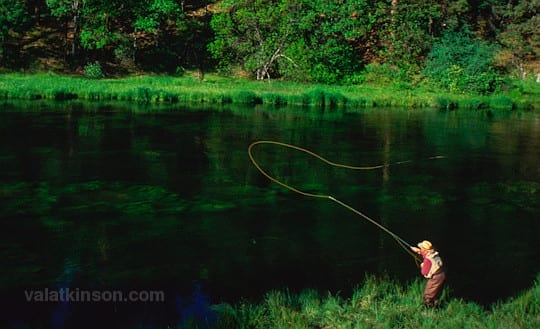
By 1983, the success of CalTrout’s Hat Creek project was apparent; fish counts were estimated at 5,000 fish per mile, the weed beds and hatches were stunning, and anglers traveled from all over the west to fish it.
By any measure, it had become California’s most iconic fishery.
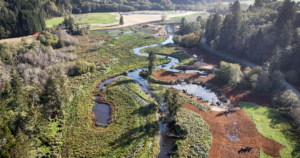
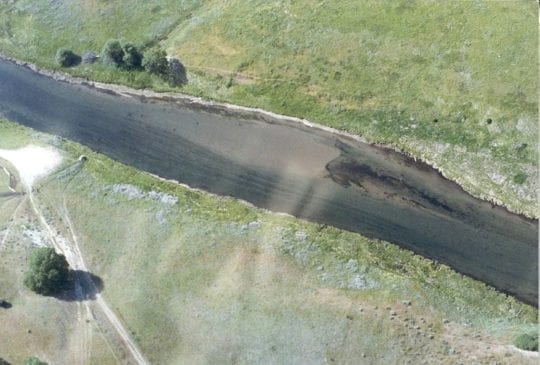
But even as Hat’s reputation soared, the 50,000-80,000 tons of fine volcanic sediment that would eventually strangle it was becoming apparent in aerial photos.
A light-colored smear below Powerhouse Riffle #2, the sediment plug — which for decades migrated down Hat Creek like a slow-moving wave — suffocated Hat’s rich beds of aquatic vegetation and the insect life that depended on it.
When the bugs and the cover went away, so did Hat Creek’s fabled trout.
Worsening matters were the non-native muskrats (released into the wild when a nearby fur farm went bankrupt). They burrowed under Hat Creek’s banks, which promptly collapsed. That had the effect of widening and shallowing Hat Creek, compounding its problems.
Cattle grazing also denuded the riparian corridor and speeded the collapse of the banks.
Recently — with the tail end of sediment plug finally starting to clear Hat Creek’s upper stretches — fish populations had plummeted to an estimated 1,000 fish per mile — approximately 1/5 their peak population.
Hat Creek — an iconic fishery which once drew anglers from literally around the world — has once again fallen on hard times.
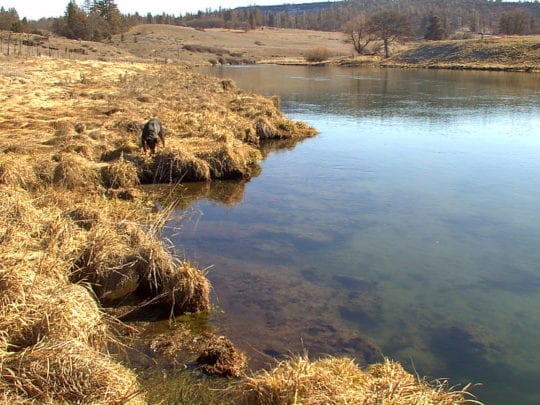
What’s Next?
Hat Creek remains compromised, but there are encouraging signs. Aquatic plants have begun reappearing at the tail end of the sediment plug and the cattle are gone.
The luxuriant hatches of previous decades have largely disappeared (longtime local and CalTrout Board Member Dick Galland recalls fishing 16 distinct hatches during Hat’s better years), and many speak fondly of Hat Creek’s “Golden Age” as if it was gone forever.
Intent on recovering Hat Creek’s iconic status, CalTrout has created a new restoration plan, the goal being a return of stable, sustainable fish populations to Hat Creek.
Most encouragingly, PG&E — who owns the land surrounding Hat Creek — recognizes its value to anglers, and is working with CalTrout and other partners to restore Hat Creek.
Perhaps Hat’s Golden Age isn’t behind us.
Working Plan
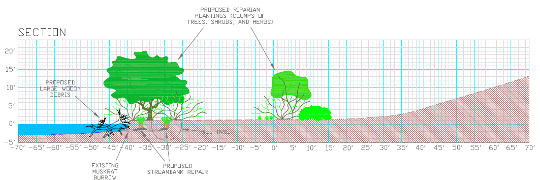
CalTrout’s draft recovery plan — developed in conjunction with PG&E, the California Department of Fish & Game and the UC Davis Center for Watershed Sciences — focuses on six key areas:
- A program designed to monitor Hat Creek’s status and progress.
- Replanting 6.3 acres of Hat’s riparian corridor with native plants (including alders and willows, which disappeared when the cattle arrived).
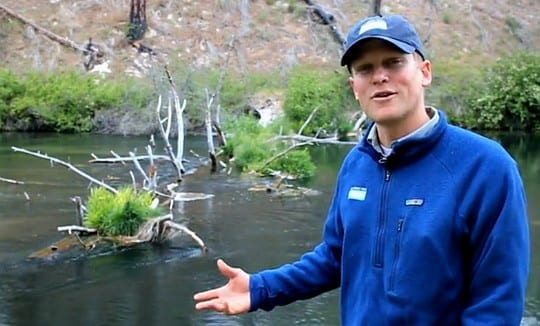
- Adding large woody debris (typically trees with root balls still attached) to mimic the trees which would have fallen into the river had cows not intervened. These provide exceptional instream habitat for bugs, juvenile trout and large trout alike.
A program designed to monitor Hat Creek’s status and progress.
Replanting 6.3 acres of Hat’s riparian corridor with native plants (including alders and willows, which disappeared when the cattle arrived).
Adding large woody debris (typically trees with root balls still attached) to mimic the trees which would have fallen into the river had cows not intervened. These provide exceptional instream habitat for bugs, juvenile trout and large trout alike.
- Moving the Carbon Bridge parking lot away from the river’s edge to minimize angler impacts.
- Constructing a trail around Hat Creek (Wild Trout Area), including two pedestrian overpasses (minimizing angler impacts on streamside vegetation).
- Stabilizing the banks and hardening them against muskrat burrows.
Moving the Carbon Bridge parking lot away from the river’s edge to minimize angler impacts.
Constructing a trail around Hat Creek (Wild Trout Area), including two pedestrian overpasses (minimizing angler impacts on streamside vegetation).
Stabilizing the banks and hardening them against muskrat burrows.
“We’re encouraged to see some aquatic vegetation appearing at the tail end of the sediment plug,” said CalTrout’s Hat Creek Project Manager Drew Braugh.
“If we can build up the instream habitat — mostly by using large woody debris to provide cover for fish and a place for aquatic vegetation to root — and address a few other issues, we can get Hat Creek back on track.”
The Future
Note that dredging is not a part of the restoration plan; there isn’t enough material left to justify the disruption, and the presence of an endangered sucker likely renders dredging untenable.
More importantly, biologists believe Hat Creek’s submerged weed beds will reappear if given a chance to reestablish themselves.
Right now, the Hat Creek restoration plan remains just that — a plan. CalTrout is actively seeking funding to undertake Hat’s restoration (we should receive word on one funding source by Fall of 2012).
In the meantime, we’re moving forward with the first steps in the process: permitting, finalizing the plan, and working closely with PG&E (who owns the properties).
Hat Creek was once California’s premier fishery, and with a little help, it can fish like the world-class fishery it once was.
CalTrout’s members, readers and interested parties should stand ready; we’ll no doubt ask you for a show of support sometime in the future, if only to convince our partners that Hat Creek still means something to California’s fishermen.