
Recently a CalTrout Southern California project was featured in the Article “Boom: Removing 81 Dams Is Transforming This California Watershed” by The Revelator. Below are excerpts from the article.
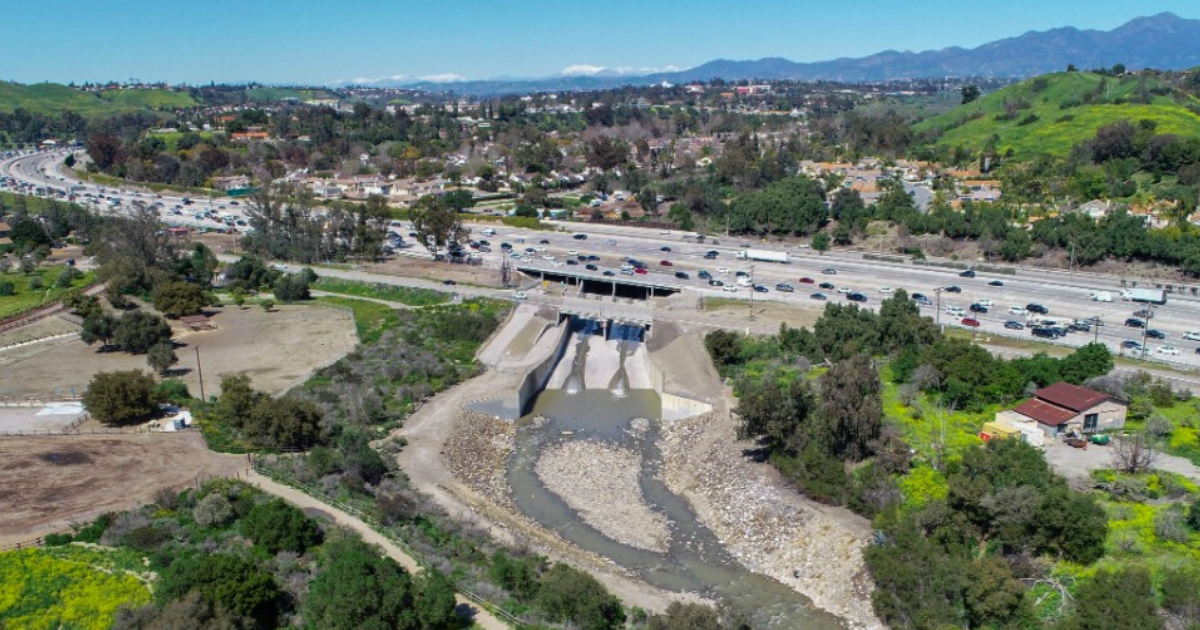
The article features the I-5 Trabuco Creek Fish Passage Project that will provide steelhead with an express lane to avoid the flood control channel and pass under the array of bridges.
“This addresses one of the major threats to endangered southern steelhead,” says Sandra Jacobson, the South Coast regional director of California Trout, which is leading the downstream effort. “Once you open up the rivers, it allows a tremendous change in the accessibility of steelhead to their historical habitat so that they can go in and reproduce.”
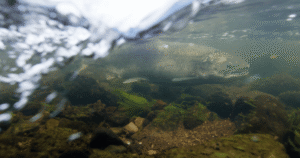
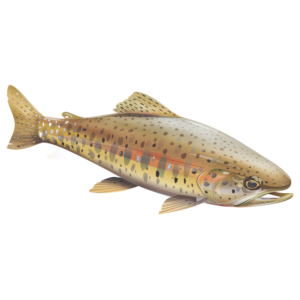
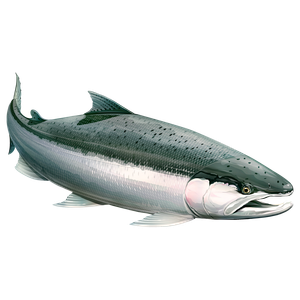
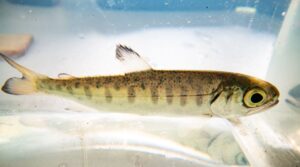
The biggest benefactors of the barrier removals on the South Coast will be southern steelhead — a type of salmonid. Like salmon, steelhead are anadromous, spending their time in both freshwater streams and the ocean. But unlike salmon that return to their natal headwater streams to spawn and die, steelhead will often spawn more than once.
They’re also a key indicator species, says Jacobson. “When they disappear, that means there are probably multiple issues within a watershed.”
CalTrout is working with many partners to pull this off including fellow nonprofit Trout Unlimited, as well as Orange County’s flood control district and public works office, the city of San Juan Capistrano, California Department of Transportation, and the Metrolink railroad association.“We just received funding to complete the design,” says Jacobson. The fish passages are expected to be completed around 2023 to 2025.
It’s one part of a larger regional effort by the South Coast Steelhead Coalition, which consists of more than 35 organizations working to recover stable populations of the species in Southern California. Removing barriers to fish passage is a key element of the strategy, as are ensuring adequate water quantity and quality and removing nonnative species that compete for limited resources.
For more information, read the full article here.