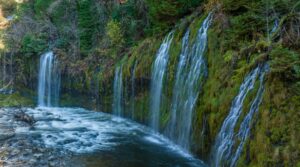
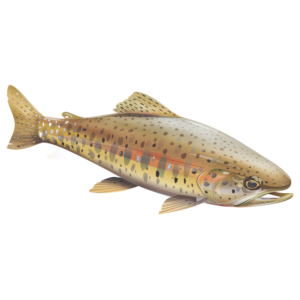
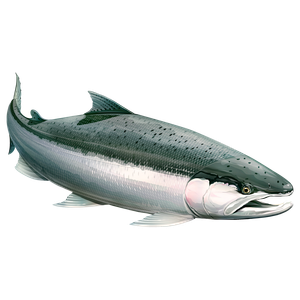
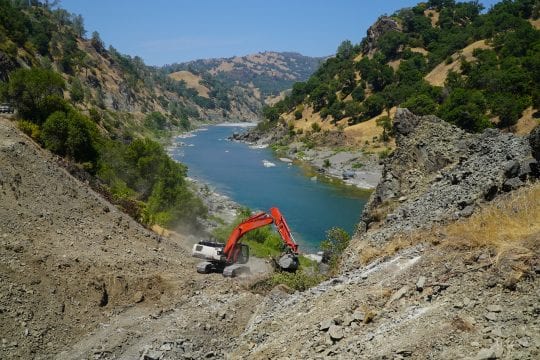
Woodman Creek, located five miles north of Dos Rios, is a tributary of the Eel River which is one of California’s most significant salmon and steelhead strongholds. CalTrout is overseeing a major project to restore fish passage to Woodman Creek where salmon have not found their way into its watershed for over a century.
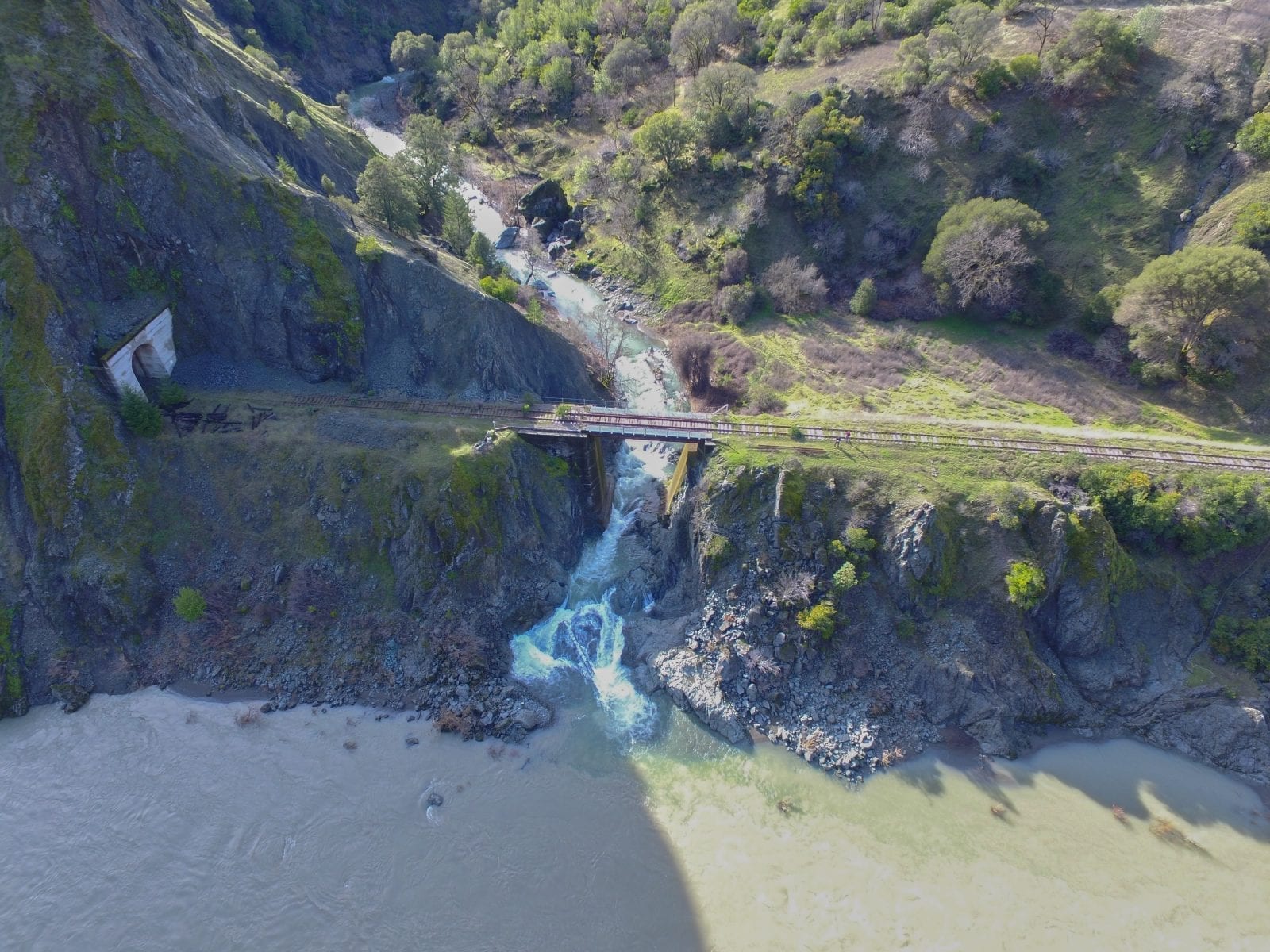
The Northwestern Pacific Railroad was constructed in 1914 through the Eel River Canyon which permanently blocked the migration pathway for salmon and steelhead into Woodman Creek. Now, a century after it was built, this story takes a turn in favor of fish restoration. The Woodman Creek Fish Passage Project will remove over a mile of rusted steel rail which will open access to high-quality steelhead and salmon habitat.
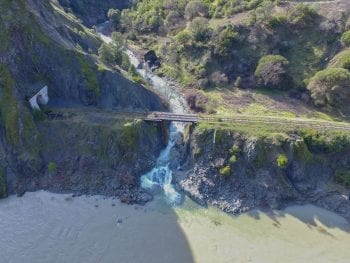
The historic railroad line was built through an area known to have high geological and tectonic activity including gigantic ‘deep-seated landslides’ slumping into the Eel River, catastrophic earthquakes, and powerful floods which often ravaged through the canyon. The 1997 flood caused a bedrock cliff to shear off next to Woodman, where a portion of the tunnel collapsed into the river thus ending any prospect of railroad service ever returning to this line.
As mentioned in the Eureka Times Standard, “railroad workers at the time filled in about 500 feet of the creek and blasted a large hole in the bedrock in order to complete a bridge. These changes altered the mouth of the creek so that fish would now have to leap 12 feet vertically to access the creek, which essentially cut off access to most fish.”
The 2017 State of the Salmonids II: Fish in Hot Water report states that 74% of CA’s native salmon, steelhead and trout species are likely to be extinct in 100 years. With major dams listed as a top human-caused threat to salmon and steelhead resilience, CalTrout is dedicated to reconnecting habitat and giving the fish access to diverse habitat by removing barriers and obsolete dams. CalTrout is currently engaged in several projects with the goal of dam removal including the Klamath Dams and Potter Valley Project in the north and Matilija Dam in the south.”
The 2017 State of the Salmonids II: Fish in Hot Water report states that 74% of CA’s native salmon, steelhead and trout species are likely to be extinct in 100 years. With major dams listed as a top human-caused threat to salmon and steelhead resilience, CalTrout is dedicated to reconnecting habitat and giving the fish access to diverse habitat by removing barriers and obsolete dams. CalTrout is currently engaged in several projects with the goal of dam removal including the Klamath Dams and Potter Valley Project in the north and Matilija Dam in the south.”
The Woodman Creek Fish Passage Project has taken the better part of seven years for CalTrout and numerous partners to plan and prepare for. This project, which is led by our North Coast Regional Director Darren Mierau, will support quality local jobs while providing significant ecological benefits to the region.
Highlights include:
- This $2+ million project is funded by the California Department of Fish and Wildlife Fisheries Restoration Grant Program due to the significant benefit it will provide to imperiled species.
- CalTrout has focused contractor hiring on Humboldt County businesses for this project, including Pacific Earthscapes, Pacific Watershed Associates and Mike Love & Associates to plan and complete the required work. Twelve full-time, prevailing wage local jobs will be created in the process.
- After years of advocacy and negotiation, the bridge removal received the full support of the railroad authority, which acknowledged that restoring service through this canyon was untenable.
The project is on track to be completed by early September this year. Check back later to hear more updates on the fish passage restoration and habitat creation at Woodman Creek.
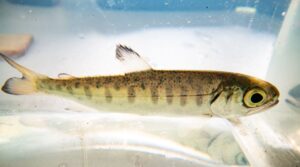
Project update 7/26/18: they’ve completed the excavation and reconstruction of 200 ft of the mouth of Woodman Creek, and on Tuesday we removed fish (only three juvenile steelhead), hundreds of Foothill Yellow Legged Frogs (now a candidate species for state listing), and two Western Pond Turtles, so the Woodman Creek channel can be dewatered for construction.