Written by Redgie Collins, Legal and Policy Director
California is Not Prepared to Protect the Environment from Drought during the Ongoing Climate Crisis
This past month was a major setback for California’s diverse freshwater ecosystems. Drought preparedness bill AB 2451, representing real hope for water scarcity, likely failed, and Governor Newsom introduced a Water Supply Strategy that is an important step but inadequate for the protection of freshwater ecosystems – especially in the face of the ongoing climate crisis.
Here at CalTrout, we balance the needs of fish, water, and people. We recognize that the California we know and love is a functionally altered landscape. Our work and our vision support clean drinking water for all Californians, a thriving economy, while also allowing wild fish to thrive in our rivers, lakes, estuaries, and headwater habitats. However, this balance is not reflected in the Governor’s or the State’s drought preparedness, vision for the future, or policies.
AB 2451 and Governor Newsom’s Water Supply Strategy
Assemblymember Jim Wood sought to address California’s lack of drought preparedness in AB 2451. This bill would have created the State of California’s only permanent office that prepares for a drier, more arid future. However, because of some short-sighted efforts hidden behind the veil of our legislative process, AB 2451 and California’s chance to prepare for long-term drought and aridification have likely failed. While there is some hope that the legislature can support the funding of AB 2451 through a last-minute budget process, it appears more likely that the State Water Resources Control Board and the legislature have once again failed to meet the needs of Californians.
Within an hour of hearing the news on AB 2451, Governor Newsom released his Water Supply Strategy. This Strategy was pitched as an adaptation plan to prepare California for a hotter, drier future. While it sounds promising, this Strategy fails to outline a plan for our freshwater streams, rivers, and lakes. Despite a handful of references to ‘fish and wildlife’, this Strategy firmly places California’s unique geography and freshwater habitat as an afterthought. Worse than that, this Strategy highlights the need to invest heavily in California’s archaic patchwork dam system without specifically naming those projects.
CalTrout supports investments in necessary water storage systems and investments in groundwater storage, but we believe there must be a balance. Dams are necessary to support California’s economy and growing population. However, there are over 1400 major dams throughout California, many of which no longer serve any functional purpose. These obsolete dams do not supply water storage, do not produce electricity, and are dangerous to populations of both fish and people. Many of these dams cause harmful algae blooms that create toxic, not to mention deadly stream temperatures for fish. Any solution that highlights a need to create and maintain surface water storage must also come with a recognition of our past failures. Governor Newsom’s Water Supply Strategy does not offer this recognition.
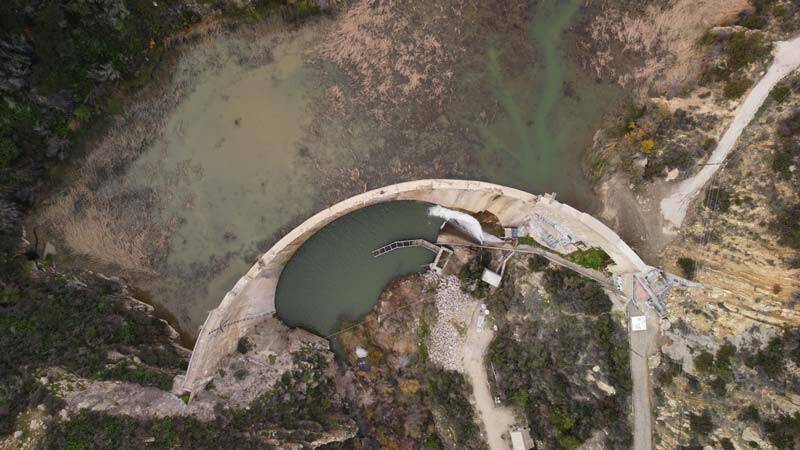
Matilija Dam, one of CalTrout’s Top 5 Dams prioritized for removal.
California’s Natural Resources
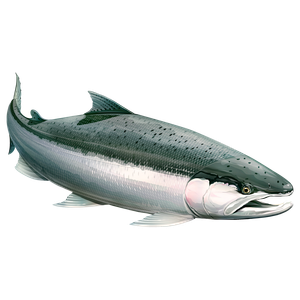
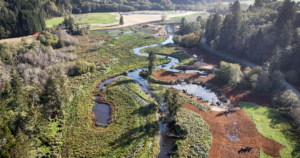
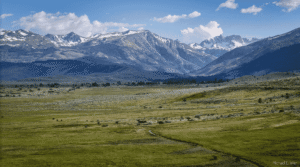
If Governor Newsom truly wants to support a broad and inclusive Water Supply Strategy for all Californians then he should not turn his back on the natural resources that make California such an inspiring and desirable place to live. California still has salmon and steelhead migrating hundreds of miles through cities, past hatcheries, and into cold headwaters. We still have estuaries, high mountain lakes, and meadows that provide recreational opportunities for folks in both cities and rural towns. We have vast public lands and parks that provide camping, hiking, and inspiration to generations of environmentalists and to families that want to feel grass between their toes.
If the administration and legislature continue to ignore the importance of place within the pantheon of success factors within our State, then we are abandoning the balance with our environment that defines California. Newsom aims to secure water for three key sectors: people, business, and agriculture. But if Newsom continues to place environmental flows as secondary, it will not take long before this imbalance upends the ability to support our cities, industry, or farmers, let alone our forgotten fisheries.
If you’re anything like me, your memories of childhood include places where the past climate no longer resembles the present. Yellow raincoats and rainboots no longer make sense in a San Francisco where rainy seasons are a thing of the past. Instead of welcoming June rainstorms hiding under the covers from thunder, we check Twitter for lightning induced wildfires in the Sierras. These are changes that we will all remember as the climate crisis continues to unfold. Unless the administration and the legislature act more decisively and with greater emphasis on protecting our natural environment, our childhood memories will be the only place where salmon runs, swimmable water, and the importance of the balance of nature and economic growth will continue to live.
Read our joint Press Release with Trout Unlimited below.
For Immediate Release
August 11, 2022
Contact
Redgie Collins, rcollins@caltrout.org, (415) 748-8755
Charlie Schneider, charlie.schneider@tu.org, (707) 217-0409
Fish Conservation Groups say new Water Supply Strategy for California doesn’t do enough to help vanishing salmon, steelhead, and other coldwater species
SACRAMENTO, Calif. – Today, California Governor Newsom released his Water Supply Strategy, which is intended to guide and improve the state’s ability to adapt to a hotter, drier future. Leading coldwater conservation groups California Trout (CalTrout) and Trout Unlimited (TU) applauded the Governor’s action but said the Strategy must also articulate how it will address the worsening state of freshwater ecosystems, native fish populations, and recreational and commercial fisheries.
The Strategy lays out a number of proposed actions to increase water supply, including developing new supplies, expanding storage capacity, reducing demand and improving forecasting, data, and management, including water rights modernization. Missing are specific actions to restore and protect streams and water sources vital for salmon, steelhead, and trout.
“While we applaud and agree with the Governor’s focus on solving California’s aging water storage infrastructure problems, he left out a critical piece of nuance,” said Redgie Collins, CalTrout’s Legal and Policy Director. “Many of California’s 1,400 dams are obsolete, meaning they no longer safely deliver water storage, flood control, or energy production. Many of these aging dams kill fish, impair water quality and destroy recreational opportunities. If the state truly wants improve it’s water infrastructure, it must include the removal of facilities as well. Old obsolete dams are located on some of our best remaining salmon streams, including the Eel River, Battle Creek, and the Klamath River, which are also water sources for many cultures, communities and economies. While we need to ensure that our state has adequate water storage capacity, we also must seize the opportunity to restore those rivers that will most benefit people, fish and wildlife.”
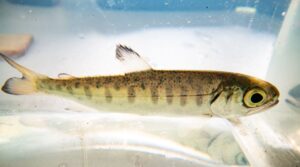
Climate impacts, coupled with human water demand and management and legacy land use practices have devastated California’s salmon and steelhead populations, many of which are currently listed under the California and federal Endangered Species Acts due to drastic declines in recent decades.
Some of the actions outlined in the Strategy have the potential to improve habitat conditions for native fish if implemented in the right manner. For example, groundwater recharge efforts could open opportunities for nature-based solutions that also restore and improve important fish habitat like floodplains and reconnect wetlands.
“We agree that the effects of climate change on the state’s water supplies are severe,” said Matt Clifford, staff attorney for TU’s California Water Project. “More severe dry years, hotter temperatures, more evaporation, and less runoff all add up to less flow in the rivers and streams that support salmon and steelhead. This plan has a lot to say about how to make more water available for people, but it needs to say much more about how we will integrate those actions with others to better protect and enhance the streamflows that our native coldwater fish require. There are ways to do both, and it’s crucial that they be described in the state’s plans.”