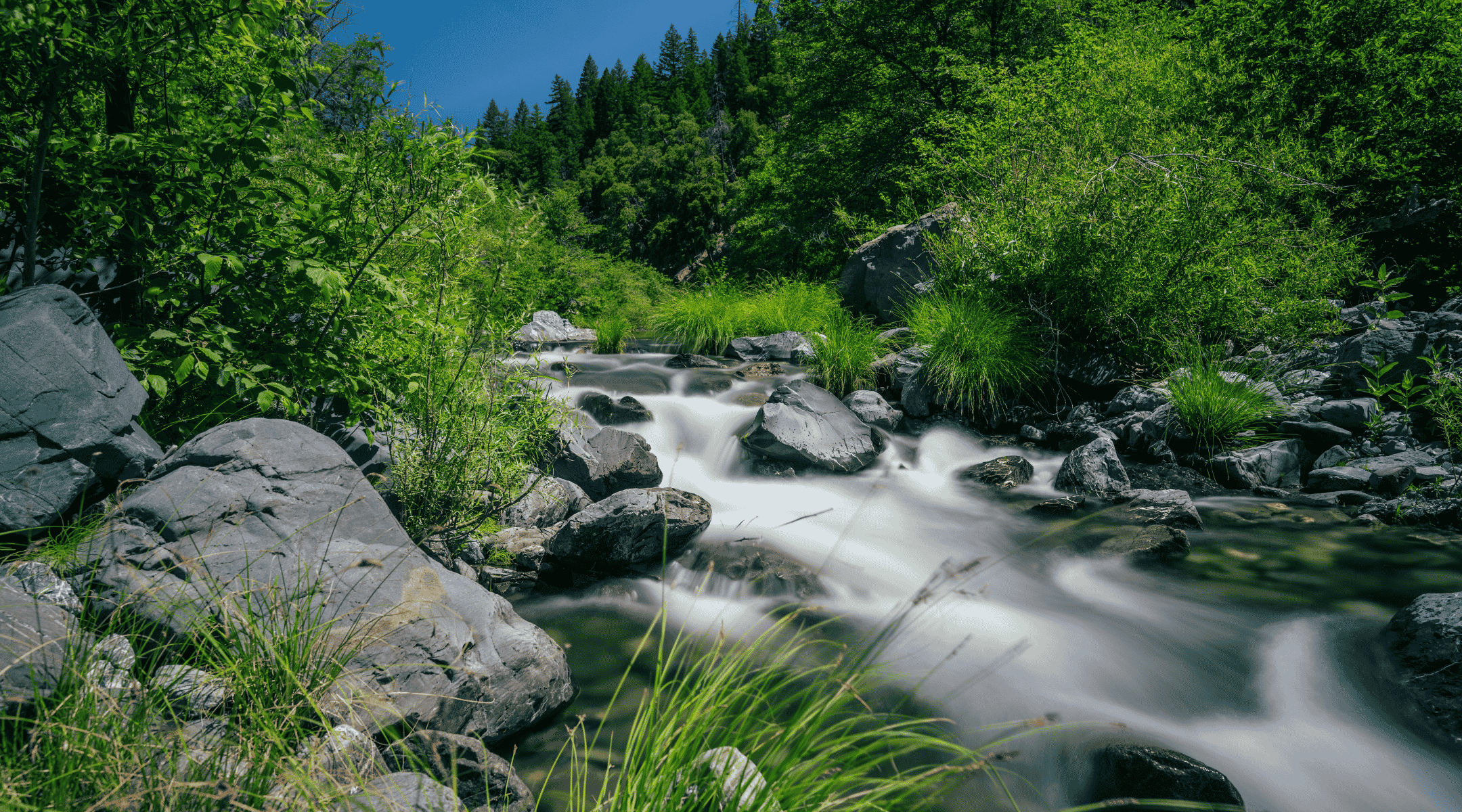
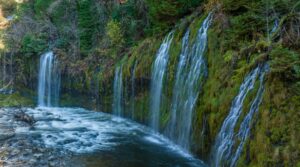
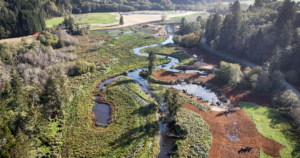
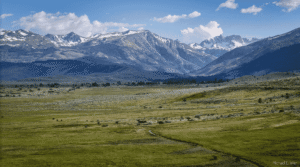
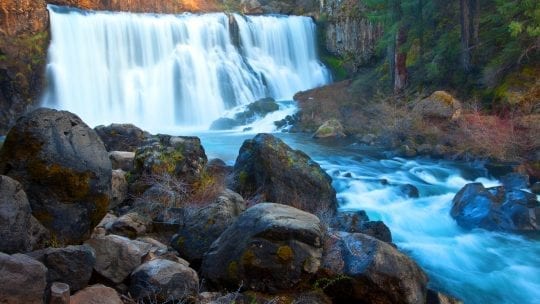
Despite the importance of California’s source water aquifers, little research has been done. CalTrout is working to change that, studying these aquifers that bubble up from the ground, fed by California’s Cascade mountains. Mount Shasta, Medicine Lake Volcano, and Mount Lassen recharge a vast expanse of underground aquifers, formed by volcanic eruptions millions of years ago. These aquifers store and release large quantities of groundwater to spring-fed rivers, like the McCloud, that supply water for both humans and wildlife. California’s volcanic aquifers supply 14-30% of total water storage, and generates up to 40% of the state’s hydroelectric power. During times of intense drought, groundwater from volcanic aquifers keeps rivers flowing, staving off potentially disastrous losses of downstream fish and agricultural productivity.
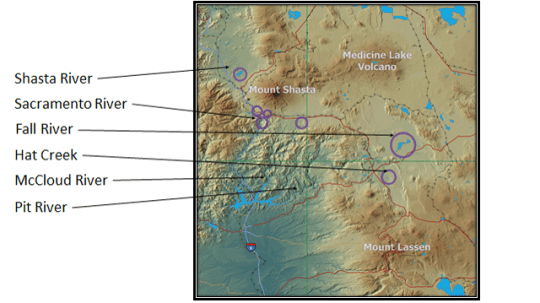
These aquifers have never been systematically studied and thus, there is a lack of policy to protect and sustainably manage them. CalTrout is working with top scientists to better understand these source waters.

We’re studying the region using isotopic dating to evaluate the age and origins of the aquifers and their movement. Isotopes can be thought of as environmental tracers; water molecules carry unique fingerprints, based on their isotopic proportions. This will tell us how much water they take in and from where, and how much they store and release. We can use this information to better prove volcanic aquifers’ role supplying California’s water which in turn will influence policy, introduce legal protections, and identify conservation strategies.
For more on the science behind assessing volcanic aquifers, read CalTrout’s publication California’s Cascade Aquifers: Resilient and Unrecognized Source Waters.
[gview file=”https://caltrout.org/wp-content/uploads/2018/03/April-2016-Draft-CCA-White-Paper-1.pdf”]