To Protect Our Source Waters, We Must First Understand Them: CalTrout Launches New Source Waters Science Study
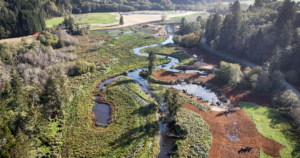
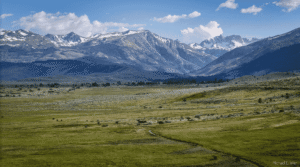
The spring waters that emerge from the volcanic rocks of northern California’s Cascade Range are of critical importance for water security for both fish and people, yet relatively little is known about them and how they have been affected by recent drought and other climate change impacts. In 2023, CalTrout and our partners embarked on a three-year study to provide a scientifically based toolset to better understand, manage, and advance the protection of the cold, clean spring waters in the Upper Sacramento Basin.
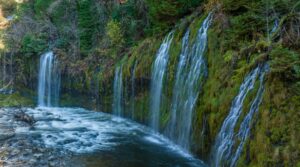
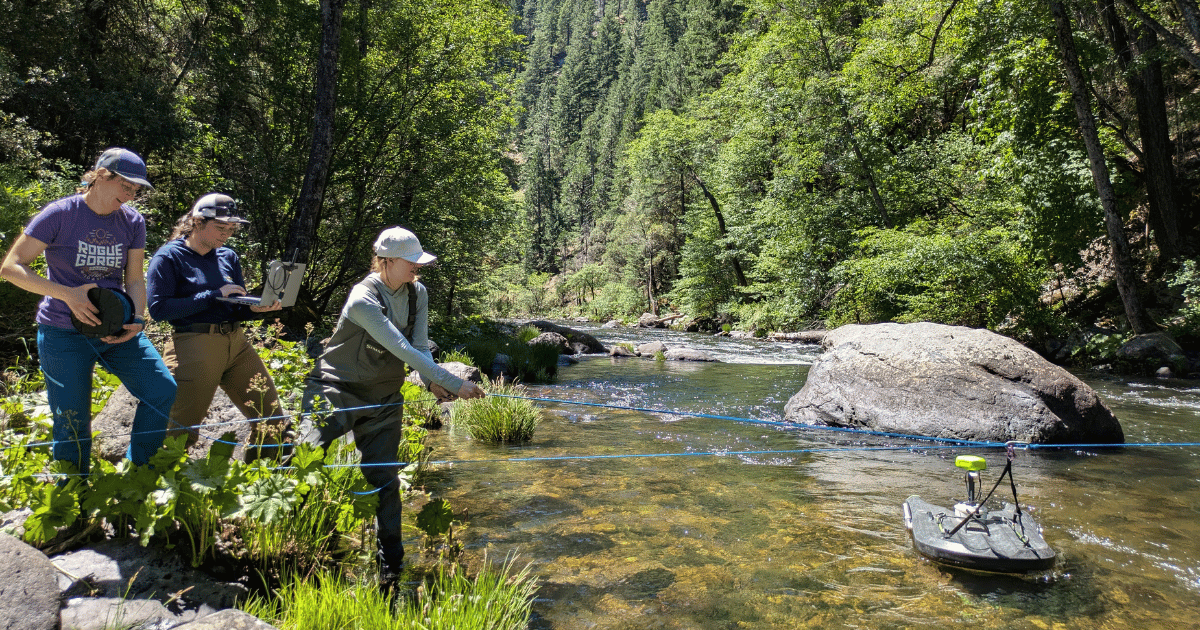
Building on our past efforts to assess baseline conditions of springs in the Mount Shasta region, this study will define and quantify source areas and flows, assess ecosystem sensitivity to climate change, and determine how these systems support the diverse life history of wild cold-water fish. Study locations include the spring-fed streams above Shasta Reservoir: the McCloud, Upper Sacramento, Rising, and Fall rivers, Hat Creek, and Burney Creek, which feeds the iconic Burney Falls.
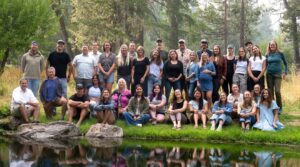
We have teamed up with organizations and universities with a wide range of expertise to get this work done, including California Department of Fish and Wildlife (CDFW), CSU East Bay, UC Davis, and Lawrence Livermore National Laboratory. This study will help inform future policy and management to further protect these vital springs in an increasingly variable climate.
What is a spring or spring-fed river?
Springs are locations where groundwater, or water flowing underground, reaches the surface. A spring-fed river means that much of the water flowing in the river has originated from underground. This is contrasted with a runoff dominated stream, which receives much of its water from snow and/or rain. It’s a spectrum: spring-fed rivers often receive some runoff, while runoff-fed rivers may have some springs feeding their flow.
Why are springs important for fish?
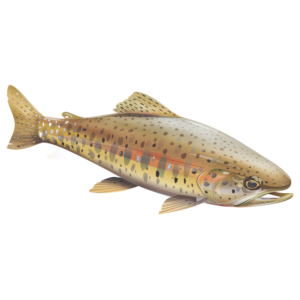
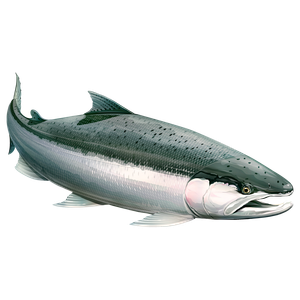
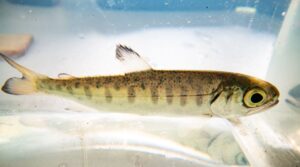
Springs supply consistently cold water to rivers no matter how hot the air is, and many of California’s native fish thrive in cold water. Some springs also bring nutrients with them from underground that support growth of lower-level organisms like bugs and plants that become food for fish. Previous studies have suggested that fish in spring-fed systems tend to be healthier, bigger, and have a higher quality of life. Our study will test these hypotheses and uncover what role springs can play in ensuring fish survival in the face of a changing climate.
Opportunity for Climate Change Resilience
Spring-fed rivers may be especially resilient to climate change since they are less reliant on precipitation and the temperature outside. As winter precipitation continues to trend towards falling more as rain than snow in the higher elevation regions of California, and the overall amount of water these areas receive from both rain and snow becomes more uncertain, our future water supply could be in jeopardy. Today, we do not yet understand how much of our water comes from springs and how long this water takes to travel through the ground, but if we can answer these questions then we can understand how resilient spring-fed rivers may be to climate change.


Join the Fight for California’s Water Future
As we continue our work to better understand and protect our vital source water areas, we invite you to join us in this crucial mission. With 75% of our state’s water originating north of Sacramento, protecting these resources is not just an environmental imperative – it’s essential for the future of our entire state.