Sound science informs our work.
Established as a scientific leader on fish and water issues in the state, CalTrout roots its projects in research to drive innovative, science-based solutions to the state’s resource issues.
In April 2021, CalTrout sponsored and presented at the 2021 Virtual Salmonid Restoration Federation (SRF) Conference. The annual SRF Conference offers an unparalleled opportunity for professionals, academics, and scientists to present their research to a large audience of fisheries restoration enthusiasts.
Several CalTrout researchers presented at the 2021 SRF conference speaking on topics from dam removal to fish food webs. Check out the recordings and description of the talks below.
The Influence of Food Webs on Salmonid Growth and Performance: A Forgotten Link to Species Resilience
Facilitated by Rob Lusardi, CalTrout/UC Davis Wild and Coldwater Fish Researcher
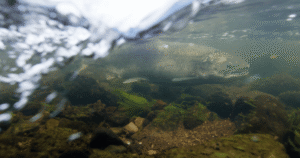
Efforts to conserve at-risk populations of anadromous Pacific salmon (Oncorhynchus spp.) often focus on the restoration of physical habitat features (e.g., water temperature, pool frequency and depth, large wood abundance, etc.) associated with enhanced juvenile production in freshwater. However, there is growing recognition that restoration and protection of suitable habitat must consider interactions between physical habitat features, ecosystem productivity, and fish performance. Recently, numerous scientists have called for a broader understanding of how prey availability and food webs affect the growth, persistence, and survivorship of juvenile salmonids. We seek abstracts that examine the effects of food webs and aquatic habitat productivity on the growth of juvenile salmonids particularly in productive ecosystems or where food webs strongly interact with physical habitat attributes to influence growth.
Abundant Prey Availability Improves Juvenile Coho Growth Under Warming Stream Temperatures
Robert Lusardi, UC Davis and California Trout
Water Residence Time Drives Aquatic Ecosystem Productivity on a Managed Floodplain
Jacob Montgomery, California Trout
Making Sense of Making Salmon: Recipes for Routing Landscape Carbon into Fisheries Biomass
Jacob Katz, Lead Scientist, California Trout
(Un)Dam it! Dam Removal and Fish Passage Projects in California
Facilitated by Darren Mierau, CalTrout North Coast Regional Director
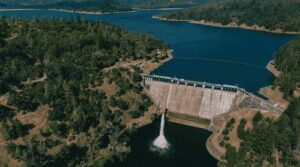
Throughout the United States, aging dams and fish barriers of all sizes represent an unprecedented opportunity for salmon restorationists. By removing barriers to migration, we can restore fish access to spawning and rearing habitat, as well as increase streamflows and reduce harmful temperatures and algal blooms. This session will explore the many facets and stages of successful and ongoing dam and fish barrier removal projects throughout California, from permitting and project initiation to decommissioning and river restoration.
The Potter Valley Project- Dam removal on One of California’s Wildest Rivers
Redgie Collins and Darren Mierau, Staff Attorney, California Trout
Progress Towards Removal of Rindge Dam in Malibu Creek
Sandra Jacobson, Cal Trout, Director South Coast Region
Danielle LeFer, California Department of Parks and Recreation, Angeles District