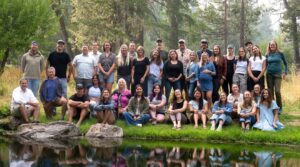
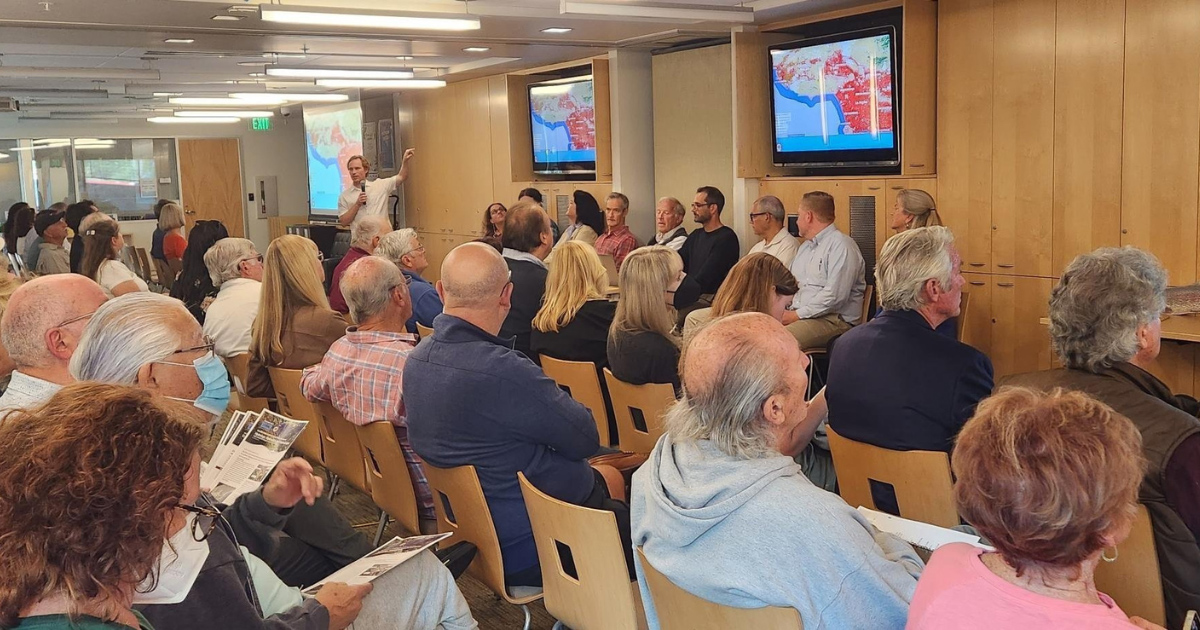
The Malibu Creek Ecosystem Restoration Project (MCERP) team led by California State Parks (State Parks) held its first public workshop on June 13, 2023, at Malibu City Hall, presenting Phase II of restoring the Malibu Creek Watershed. Phase II will center on the removal of Rindge Dam and remediation of eight upstream barriers. State Parks Angeles District Superintendent Lori Harrod welcomed about 80 attendees to hear from the project technical team and participate in a listening session.
Presenting the project overview, Richard Van Sant, State Parks Environmental Scientist and Rindge Dam Project Manager, encouraged public participation in the restoration process. “We want your input; it’s a public project, it’s on State land, and as a public agency we want to hear from our public stakeholders.”
The panel of experts from State Parks, CalTrout, McMillen, Stillwater Sciences, and Moffat & Nichol discussed the current pre-construction, engineering, and design project phase, which covered project management, public outreach, geomorphic/ sediment analysis, geotechnical overview, and aquatic ecology. The public was given an opportunity to ask questions of the team or comment about the restoration effort.
CalTrout is partnering with State Parks to lead a comprehensive outreach and education program as part of Phase II. “These types of meetings are extremely important. We’re all in this ecosystem together and this is an ecosystem level project, it’s big, it’s bold, and we’re taking utmost care to address every issue,” said Sandi Jacobson, Ph. D., CalTrout South Coast Regional Director. “We want you to have pride when you look at Malibu Canyon that it’s beautiful and no longer has a big chunk of concrete in the middle of it, and that Southern steelhead can go from ocean to headwaters and back again.”
The Q&A session following the project overview can be read here.
What is the Malibu Creek Ecosystem Restoration Project?
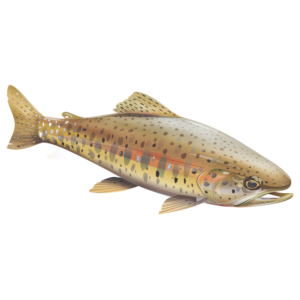
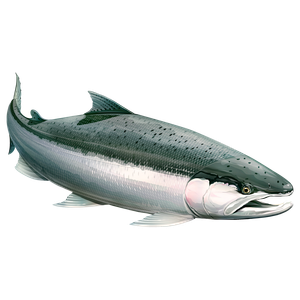
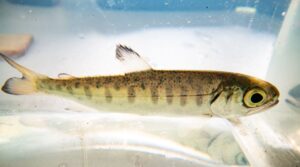
For a century, the 100-foot-tall Rindge Dam has severed the Malibu Creek watershed from its natural connection to Malibu Lagoon and onward to Santa Monica Bay and the Pacific Ocean. This abandoned dam, which provides no water storage or flood control benefits, stands as an insurmountable barrier to aquatic species, including the federally endangered Southern Steelhead. It also prevents natural sediment flows from the Santa Monica Mountains downstream to Malibu’s Coast, breaking the natural cycle of beach replenishment and further exacerbating beach erosion. State Parks is leading the effort to deconstruct the dam and rebuild the river, addressing a century of damage and restoring resiliency to the Malibu Creek Watershed.
State Parks, along with a team of consultants and partners from CalTrout, McMillen, LLC, Stillwater Sciences, and others will conduct baseline biological surveys, hydrology/hydraulic modeling and flood risk assessment, engineering plans, environmental permitting, public outreach, and other project studies to advance the project to a 90% level of design.
When completed, the project will restore creek functions and increase habitat connectivity, including opening 15 additional miles of stream habitat for Southern California steelhead, improve climate resiliency, and restore natural sediment transport processes that will nourish Malibu beaches with vital sand. The project will also improve public safety by removing the obsolete Rindge Dam where serious injuries and fatalities have occurred. Removing Rindge Dam will not only help the recovery of southern California steelhead but will also benefit countless other species.
The target date for completion of the PED phase is March 2026. The project is estimated to create 1,887 jobs statewide and $157 million in gross regional product during the construction phase.
Learn more about the project and stay up to date with upcoming public events by visiting restoremalibucreek.org or by signing up for the Malibu Creek Ecosystem Restoration Project newsletter.