By Curtis Knight and Brian Johnson
*This article was originally published in The Press Democrat on November 22, 2018.
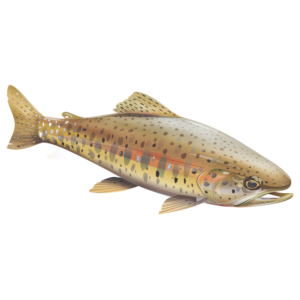
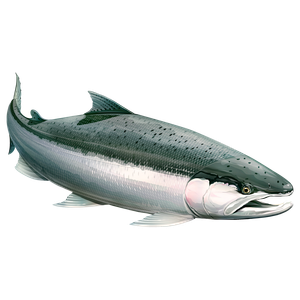
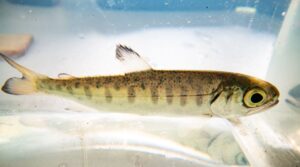
It’s a familiar story: human activity leaves salmon and steelhead populations clinging to survival by a thread. But all is not lost. In a few places, we have the chance to rewrite how the story ends. One such place is Northern California’s Eel River.
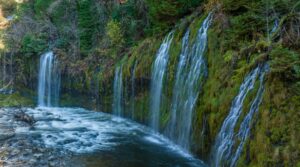
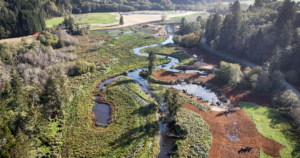
Most Californians are unfamiliar with the Eel River, which traverses Humboldt, Mendocino, Lake, and Trinity counties. Even many Sonoma County residents, whose water comes in part from this watershed, have likely never seen the Eel’s blue-green waters with their own eyes.
One of California’s first Wild and Scenic Rivers, the Eel is the state’s third-largest watershed. It encompasses 3,600 square miles of mostly undeveloped land used for timber harvesting, farming, and ranching. Large swaths are protected as public lands famous for towering stands of redwood trees.
Tens of millions of public dollars already have been spent in this watershed to preserve redwoods and other sensitive habitat and on river restoration projects — $60 million since 2000 alone. And legislation recently passed would convert an old Eel River canyon railroad right-of-way into a world-class hiking trail. Thanks to these strategic investments, the Eel is poised for a comeback. But two 100-year-old chunks of concrete stand in the way: the dams of the Potter Valley Project.
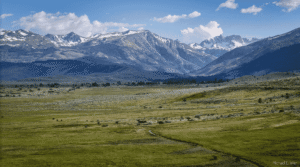
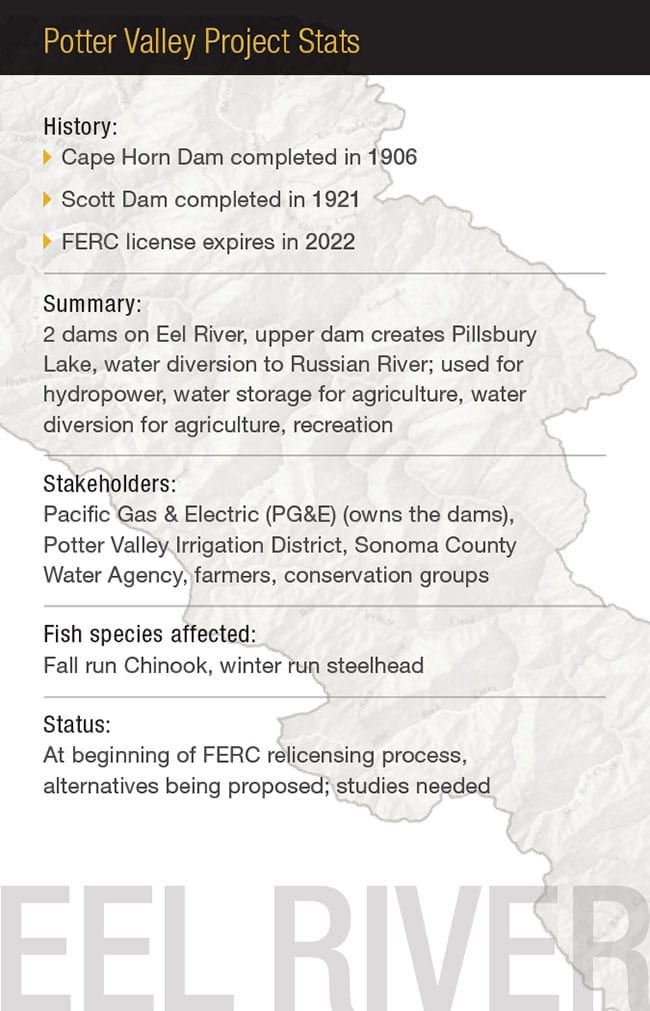
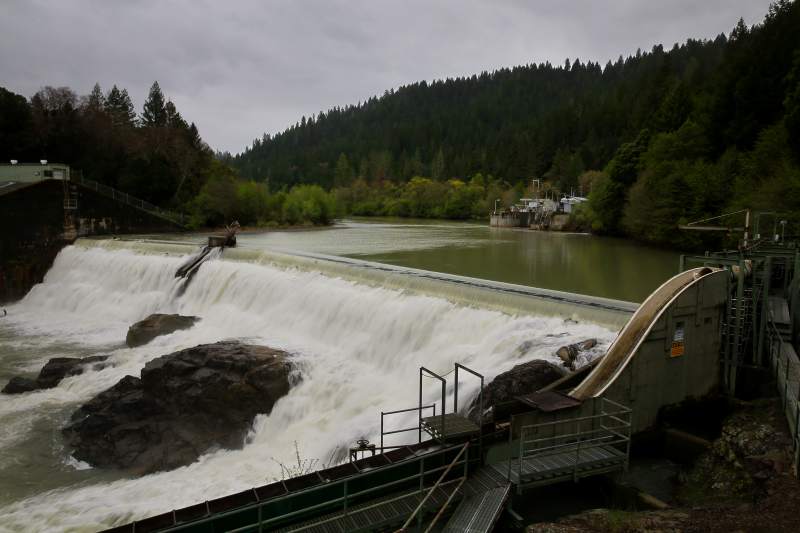
PG&E’s Potter Valley Project, located near the Eel’s headwaters, produces a trickle of hydroelectricity and diverts Eel River water into Potter Valley in Mendocino County and Sonoma County’s Russian River. In the Russian, it supplements flows and provides irrigation water to wine producers in the Alexander Valley and for use by ranchers, farmers, and Sonoma County residents. The project includes two dams, a hydroelectric facility, and a diversion tunnel. It has also completely blocked more than 150 miles of fish habitat since 1908. But that could change.
Due to federal regulations, the Federal Energy Regulatory Commission must issue a new license for the Potter Valley Project by 2022. Relicensing is a complex process that looks at all the impacts of the project. The outcome will set the Eel River’s course for the next 50 years. It is a once in a lifetime chance to bring this infrastructure up to 21st century standards, to benefit both the people and the fish that depend on this river for survival. Doing so would almost certainly require expensive investments.
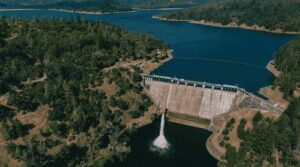
CalTrout is actively working to reconnect habitat by removing two dams on the Eel River in the Potter Valley Project. One of which, Scott Dam, is the only complete barrier to fish migration on the mainstem Eel, blocking over 150 miles of native fish spawning and rearing habitat. In part due to highly reduced flows and major habitat alteration from the dams, the Eel River’s wild salmon and steelhead runs are dramatically reduced. CalTrout is leading the effort to bring all parties involved to the table to reach an agreement that ideally includes the decommissioing and removal of Scott Dam. – 2018 Watershed Review
CalTrout is actively working to reconnect habitat by removing two dams on the Eel River in the Potter Valley Project. One of which, Scott Dam, is the only complete barrier to fish migration on the mainstem Eel, blocking over 150 miles of native fish spawning and rearing habitat. In part due to highly reduced flows and major habitat alteration from the dams, the Eel River’s wild salmon and steelhead runs are dramatically reduced. CalTrout is leading the effort to bring all parties involved to the table to reach an agreement that ideally includes the decommissioing and removal of Scott Dam. – 2018 Watershed Review
PG&E wants out of this money-losing operation and has recently put the project out for bid. Meanwhile, conversations are underway among public agencies, tribal governments, conservationists and others to identify the best path forward to restore this river. One promising option would remove both dams and divert water to Mendocino and Sonoma County users during the rainy season when it is most plentiful. This approach would allow the Eel to flow free while still addressing the need for water in both counties. It would also restore headwaters access for native fish, a critical step for populations to rebound.
A river healthy enough to support robust fish populations is also clean enough to benefit the people who depend on it. Now is the time to push for a solution that meets the needs of fish and all the people who depend on this majestic river. We have a chance to take a bold step forward toward a truly sustainable future for the region.