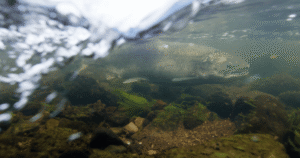
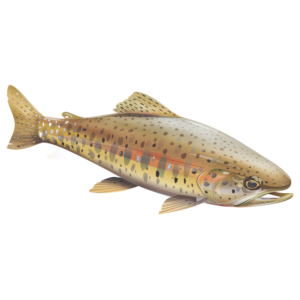
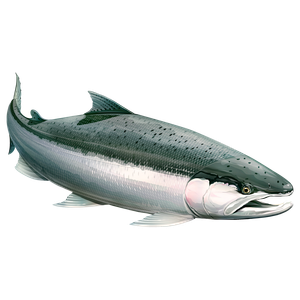


For struggling salmon populations in California, it’s never just one thing. Over the past century, these fish have faced impacts from human development, pollution, overfishing, dams and other barriers, climate change, invasive species, and more. This myriad of problems has led to a significant reduction in California salmon population numbers – a “death by a thousand cuts” of sorts for these culturally and ecologically important fish. In 2020, researchers discovered reason number 1001. A study by University of Washington and Washington State University researchers found a specific chemical often included in car tires to be the likely cause of death in coho salmon returning to urban streams and rivers in the Puget Sound.
The culprit, 6PPD-quinone, is an antioxidant that helps prevent degradation and cracking of rubber compounds caused by exposure to oxygen, ozone, and temperature fluctuation. 6PPD-quinone is created when 6PPD reacts with ozone in the atmosphere.
Automotive tires are the main source of 6PPD and thus 6PPD-quinone released into the environment. As the millions of tires on our roads wear down, small pieces of rubber peel from them, many eventually make their way into storm drains and then into rivers and streams. While 6PPD is most toxic to coho salmon, subsequent studies have shown it is also lethal to other native salmonids including Chinook salmon, steelhead, and inland rainbow trout. Little is known about sub-lethal effects on these and other species of aquatic life, but early studies suggest some level of toxicity for many aquatic plants and animals and potentially to humans as well. In short, what is known about 6PPD suggests it may be a widespread problem for salmonids throughout the state.
Unfortunately, 6PPD is an important ingredient in tires, helping them last longer and ultimately making vehicles safer. Because no effective replacements have been identified yet, it would be difficult to remove 6PPD from tires now without potential performance and safety consequences.
CalTrout and our partners at the California Salmon and Steelhead Coalition – Trout Unlimited and The Nature Conservancy – have been participating in various efforts to find a solution to this issue that can work for both cars and fish. Fortunately, the issue has received significant attention and the state Department of Toxic Substances Control (DTSC) recently adopted a rule that requires manufacturers of motor vehicle tires for sale in California to evaluate safer alternatives to 6PPD and notify DTSC if they are using 6PPD by November of 2023. Learn more about this recent regulatory rule. But alternatives will take time to identify and even once they are identified and 6PPD is replaced, millions of older tires containing 6PPD will be on the road for several years.
To this end, CalTrout also supports Assembly Bill 756 introduced by Assembly Member Diane Papan and sponsored by California Coastkeeper Alliance. This bill would direct Caltrans to further study the issue and assess the use of biofiltration to limit 6PPD from getting into our waterways. Biofiltration works by capturing stormwater before it reaches streams and filtering out pollutants, but could be expensive to implement at scale. Preliminary research suggests that biofiltration could be useful in mitigating 6PPD impacts. As a bonus, biofiltration can also help reduce the occurrence of other pollutants like microplastics and oil in our waterways, making it worth pursuing. Unfortunately, AB756 was held in Assembly Appropriations this year due to the costs associated with implementing the bill and the State’s limited budget. CalTrout is continuing to look into options to help move similar efforts forward in the future or pursue other options to fund similar work.
At CalTrout, we see three important steps that should be taken immediately to help address 6PPD and its impacts: 1) increase funding for research to better understand the threats of 6PPD to the environment 2) Rapidly seek alternatives to 6PPD and phase out its use once reliable and safer alternatives are identified 3) Invest in mitigation efforts like stormwater management or increased street sweeping to prevent 6PPD from reaching aquatic ecosystems.
Recovery of California’s salmon and trout is a complex endeavor and 6PPD adds another layer to that complexity, but we believe this is a problem we can solve. Together, we can make a difference for our native salmonids and the 1001 obstacles they face.
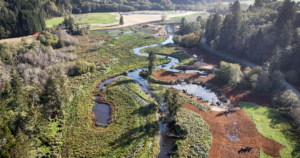
Cover Photo: Feather River by Patrick Sheehan