
By Ada Fowler
Mt. Shasta/Klamath Project Manager
This Field Note is an update to my June 15, 2020 note, Ensuring Flows for Fish in the Shasta and Scott River.
In the Shasta and Scott Valleys, the irrigation season just ended on October 1st. It was a rough season for fish in both watersheds. Most recently in the Shasta River, flows in mid-September — the beginning of the fall Chinook salmon run — were lower than I have ever seen in my 12+ years working with the Shasta Fall Flow Program.
The program, started by The Nature Conservancy and the Shasta Valley Resource Conservation District and now managed by CalTrout, uses short-term forbearance agreements to secure water for salmon when and where it is needed most.
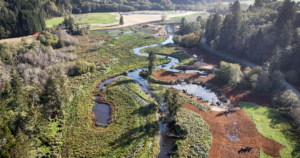
When salmon in the Shasta need water is during the last couple weeks of September but not every year. Where salmon need water is in an area we call the canyon in the lower Shasta where adult fish tend to hold as they enter the river, congregating in pools until flows improve at the end of the irrigation season.
CalTrout and our agency partners knew right away that this was going to be a year we would need to secure water for salmon. We used funding from the National Fish and Wildlife Foundation (NFWF) Klamath Basin Restoration Funds to add roughly 640 acre feed of flows instream, that is about 20 cubic feet per second (cfs) of additional water in the river for the fall Chinook in the last two weeks of September.
On the 15th of September, before we initiated the first forbearance agreements, flows in the Shasta were less than 13 cfs. Once all of our transactions were left instream, flows doubled in the lower Shasta and by the 30th flows were averaging between 35-40 cfs.
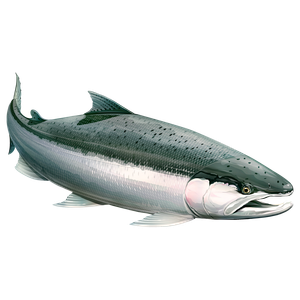
California Dept of Fish and Wildlife has a video counting weir at the mouth of the Shasta which records the number of Chinook entering the Shasta and during the last 2 weeks of September over 1500 adult Chinook entered.
In this very dry year, that additional water left instream by landowners significantly improved conditions for those adults (see Willis et al, 2015, Instream Flows: New Tools to Quantify Water Quality Conditions for Returning Adult Chinook Salmon).
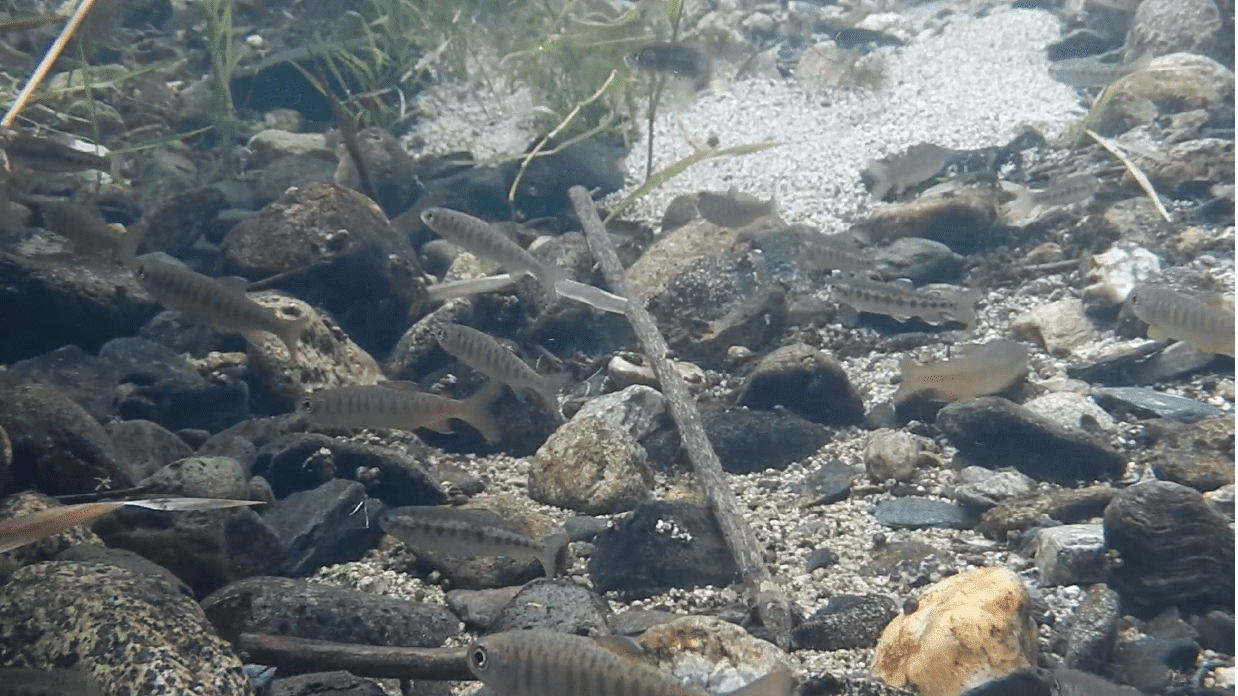
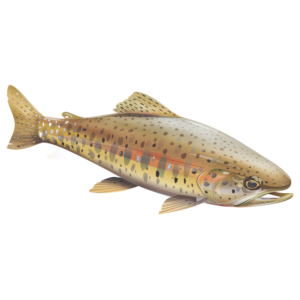
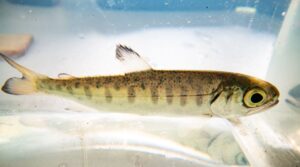
This season was also very tough for juvenile coho salmon trying to survive in the Scott River in the extremely low flow conditions.
CalTrout and our partners, the Scott River Water Trust and the Scott River Watershed Council, were awarded Emergency Funding from PacifiCorp and NFWF Coho Enhancement Funding to again use short-term forbearance agreements to get more water instream for these rearing juvenile coho.
This funding allowed CalTrout and partners to collaborate with willing landowners in critical tributaries of Scott Watershed. We are still analyzing the data from our water transaction program, but it does appear we were successful in helping the coho salmon survive through the summer and fall.
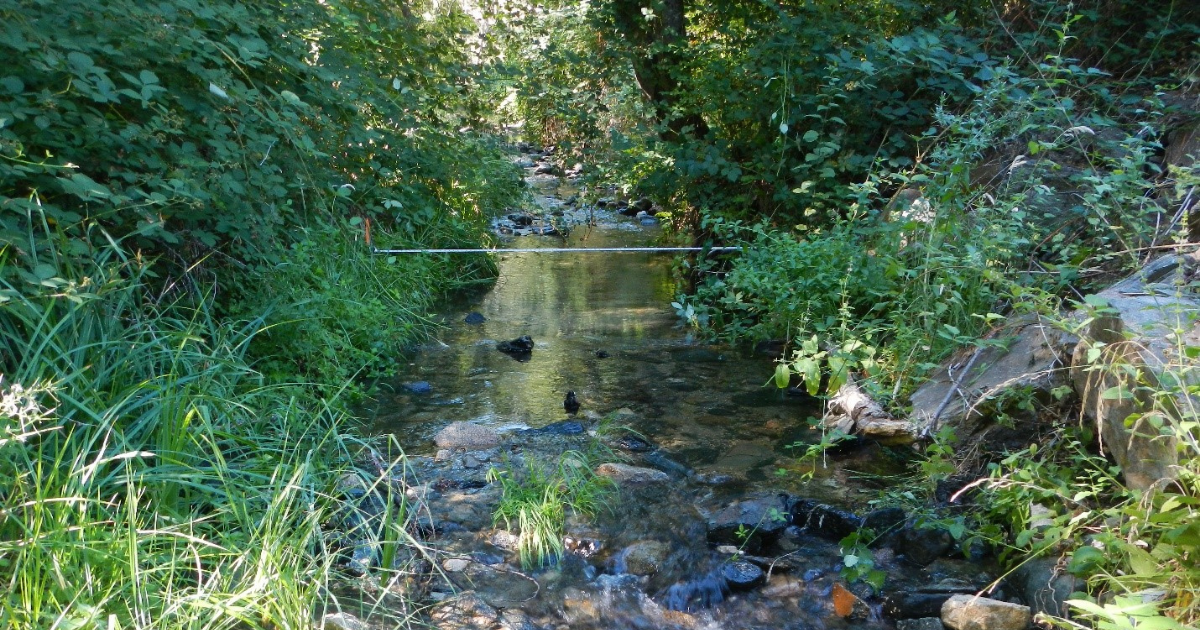
In one critical tributary system, we were able to negotiate with many of the high priority water users and have them leave water instream.
With their help, the pools stayed connected and kept the young coho salmon healthy. Having so many cooperating landowners had not happened before and that can be attributed to the work of our partners.
We will take the lessons that we learned this year and continue working with our partners to develop a more sustainable water transaction program that allows us to plan ahead for these situations that will likely become more common in the years ahead.