A Field Note from the Central Valley: Making Fish Food in the Rice Fields
by Michael Wier, CalTrout Field Reporter
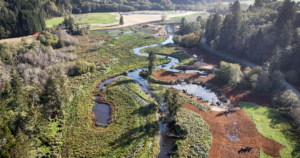
Winter research season in the Central Valley is a muddy affair. California Trout field technicians Jennifer Kronk and Chloe Wagner suit up in waders and fishing boots at the back of a Ford F250 on a surprisingly chilly morning in March. We are meeting up with CalTrout Central Valley Regional Manager, Jacob Montgomery, for a tour of a few different research sites for the Fish Food on Floodplain Farm Fields (Fish Food) Project along the Sacramento River. The Fish Food Project is a management program that grows fish food (aquatic bugs and zooplankton) on farm fields and managed wetlands and then pumps that floodplain water, rich in those bugs and other nutrients, back into the river where the fish are. The floodplain water reconnects the river (and the starving fish confined within its leveed banks) with floodplain-derived food web resources. All the research project test sites are located along the muddy banks of the main river or in farming field canals.


The technicians gather up their five-gallon buckets and totes full of monitoring equipment and head to the river. Jacob Montgomery is in the parking lot getting peppered with questions by Rob McAllister, a local filmmaker. Today is media day for the Fish Food crew. Rob and his crew are out to capture some imagery for a larger Central Valley salmon coalition video they are working on while I am taking some notes for our CalTrout communications team. Meanwhile, in the background, a maintenance worker turns a large metal wheel that opens the valve to the pipe coming from the canal pump house into the main river. Water starts, gushing and bubbling, and forms a whirlpool. The large pumps and pipes help drain the water from the farm fields back into the river during big water events.
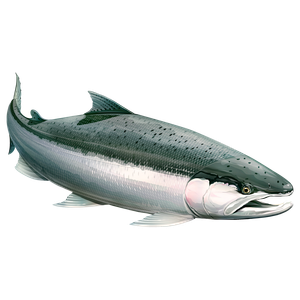
A key component of the Fish Food Project is testing the effects of the program on real fish. Currently, we are in the fifth year of this program. It all started with the Knaggs Ranch project, a joint study with UC Davis and CalTrout to demonstrate that juvenile Chinook salmon grow faster on flooded rice fields than they do in the main river. That concept has been well proven, and now it’s time to expand into a functioning program throughout the valley. The Fish Food Project is the next step in the greater floodplains reactivation movement.


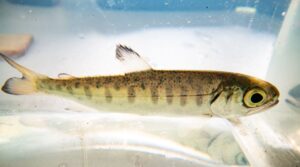
Today, the field technician crew is checking enclosures that house juvenile Chinook salmon. Enclosures are placed in the Sacramento River upstream of the canals, in the canals themselves, and downstream from the canals in the main river. Every week technicians gather the juvenile salmon, measure their weight, and record size and general observations about health while snapping a quick photo. The fish are also passed through a scanner to read its PIT tag, a passive integrated transponder (same technology as the microchip in your dog or cat at home) that gives a unique ID to each fish making it easier to collect and manage data on their growth. These tags are also used to track fish movements in other scenarios.
The idea is that if we can’t get fish back on the floodplain naturally, we can grow the food in the fields and pump it back into the river where the fish can access it. Bugs or zooplankton emerge from flooded agricultural fields after laying dormant in the solid, dry ground for months or even years. Once the water is standing on these fields for three, mimicking a natural flood cycle during wintertime, the bugs explode out of the soil. These bugs are amazing forage for both fish and birds as well as other wildlife. The fish in the enclosures are our test subjects being studied to gain an understanding of how these augmented food substitutes are affecting fish growth in real time.
The goal of this program is to someday find more ways to reconnect the natural floodplain to the river so that native fish can use it of their own volition. Those kind of infrastructure upgrades take a long time, a lot of money and engineering, and a lot of political will to make happen. In the meantime, this program was created to flood the farm fields, grow lots of fish food, and then pump it back into the river where the fish can utilize it.
Our research is clearly demonstrating that the fish in the canals where they have the most access to this food grow fastest. The fish right at the outlet of the canal water in the river grow second fastest. The fish downstream grow third fastest. The fish upstream that don’t have access to any of the food subsidy grow slowest. The Sacramento River, although big, can be a food desert for fish. Currently, juvenile fish must migrate out of the river as soon as possible to find ample food resources. The Fish Food Project is helping to change that equation. If we can build and implement this project to scale, the benefits could be game changing for native salmon.
Learn more about the Fish Food Project in the video from KCRA News: