A Field Note from Big Chico Creek
by Holly Swan
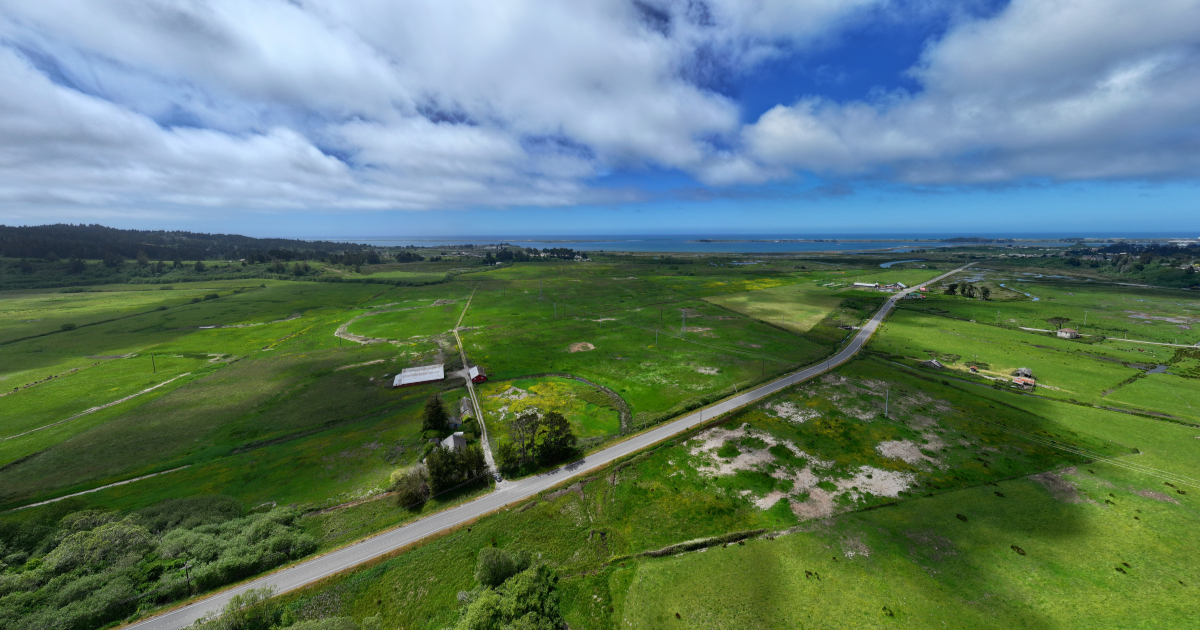
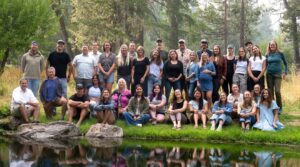
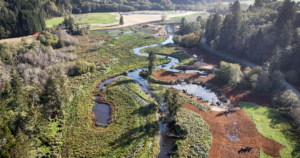
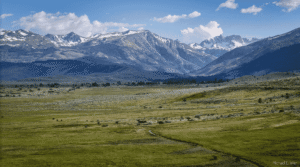
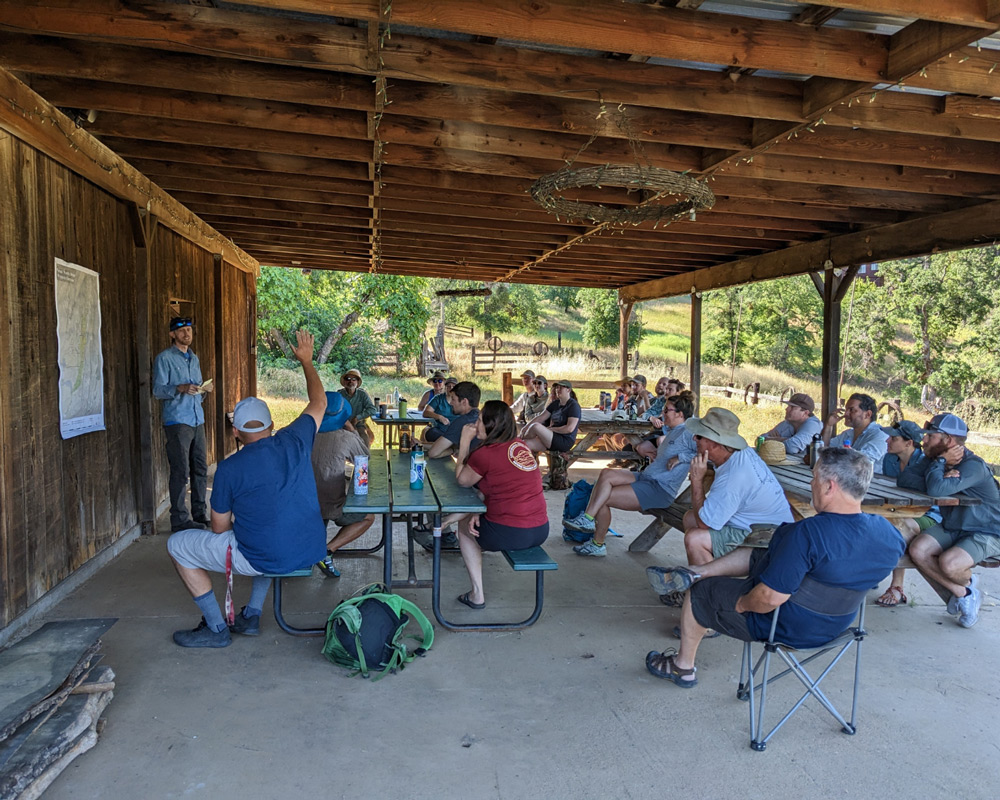
Driving down a steep dirt road, we arrive at a pristine foothill native grass meadow with an open-air barn that looks down into the canyon of Big Chico Creek. We are at the headquarters of the Big Chico Creek Ecological Reserve, and this was the location of this year’s weekend-long Native Fish Committee meeting of the American Fisheries Society Cal Neva Chapter. 25 attendees from state and federal resource agencies, universities, and private organizations came together to learn and converse about native fish and land stewardship of the Big Chico Creek watershed.
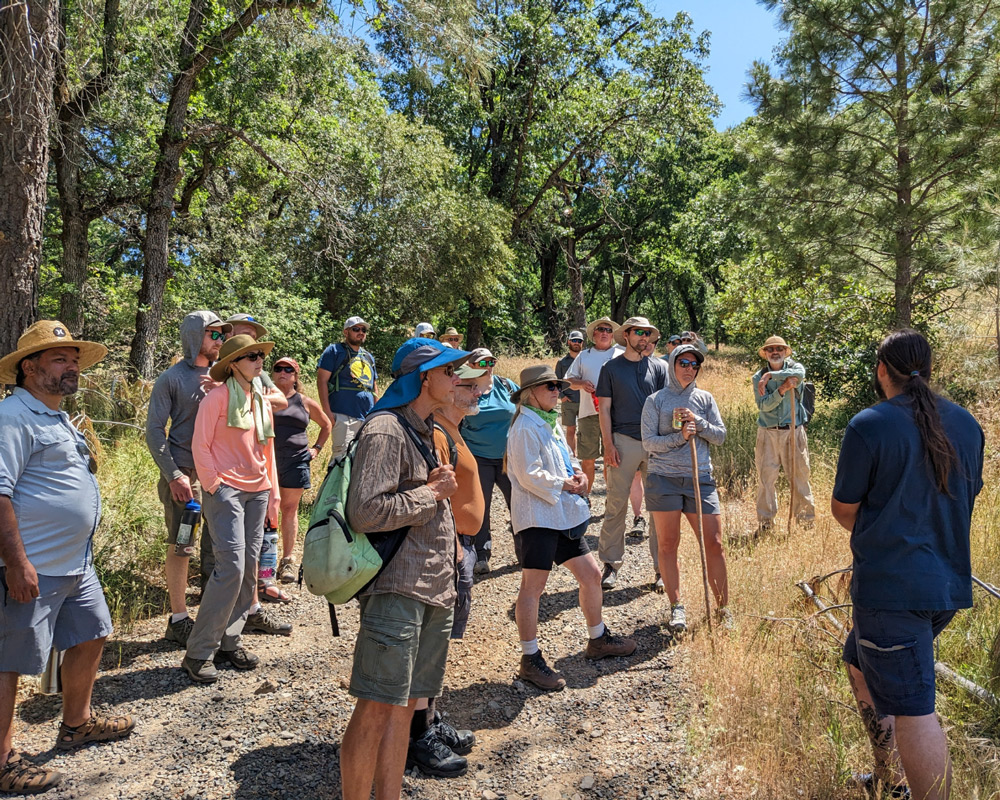
Over the weekend, attendees got a glimpse into how the Mechoopda people have stewarded the land since time immemorial. He-Lo Ramirez, Mechoopda Indian Tribe of Chico Rancheria’s Director of Environmental Planning and Protection and tribal member, led attendees on a place-based knowledge tour focusing on the indigenous uses of plants. He-Lo talked about the importance of geophytes in their diet, which species of acorns were the most prized, and how baskets were used to collect and cook food. Most enthralling to me was He-Lo’s moving talk on the history of the Mechoopda people in the Big Chico Creek watershed, the way they lived, and their spiritual relationship with all living things.
Eli Goodsell, Director of the Ecological Reserve (and a Certified Prescribed-Fire Burn Boss!) also led a tour. Eli talked extensively about how the projects they are implementing on the 7,835-acre reserve are all in the name of adding resilience to the landscape, from ridgetop to creek, by adding healthy fire to the land, removing invasives, and slowing down the flow of seasonal creeks.
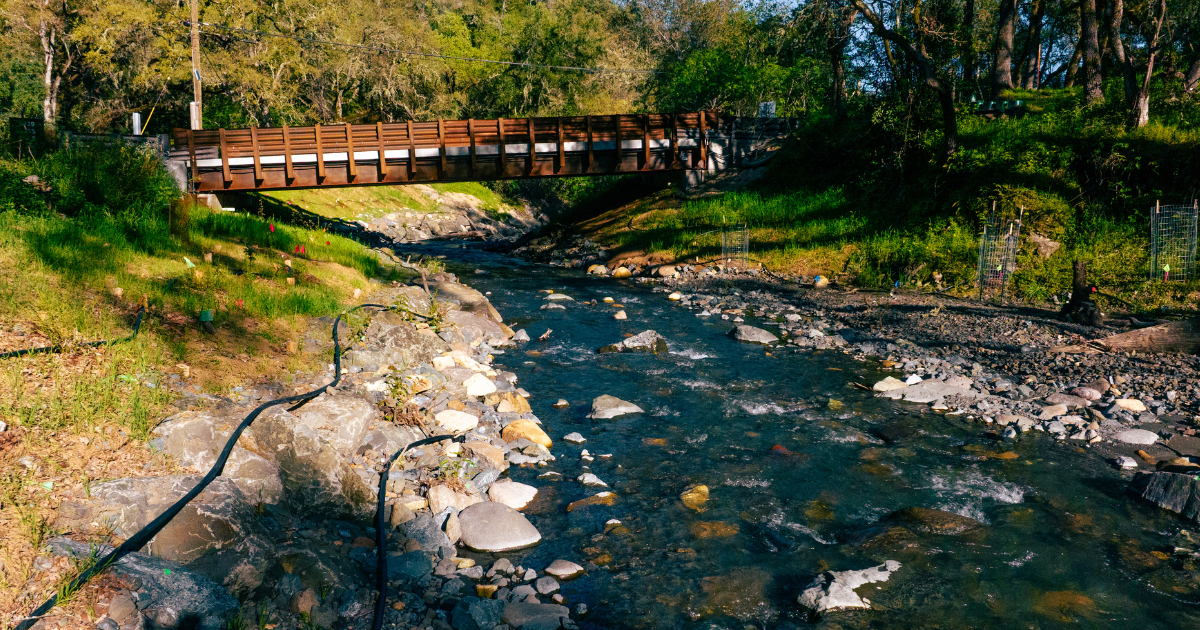
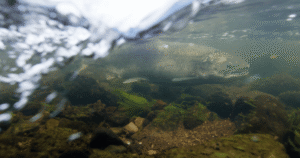
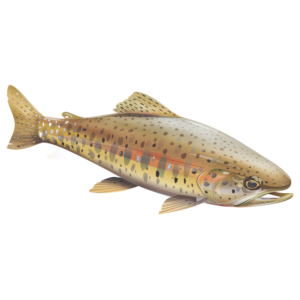
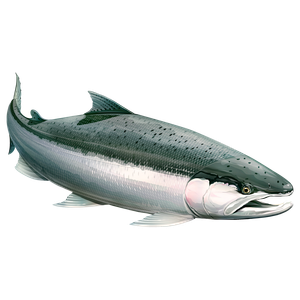
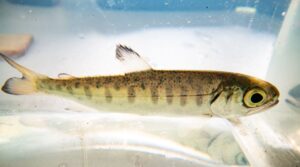
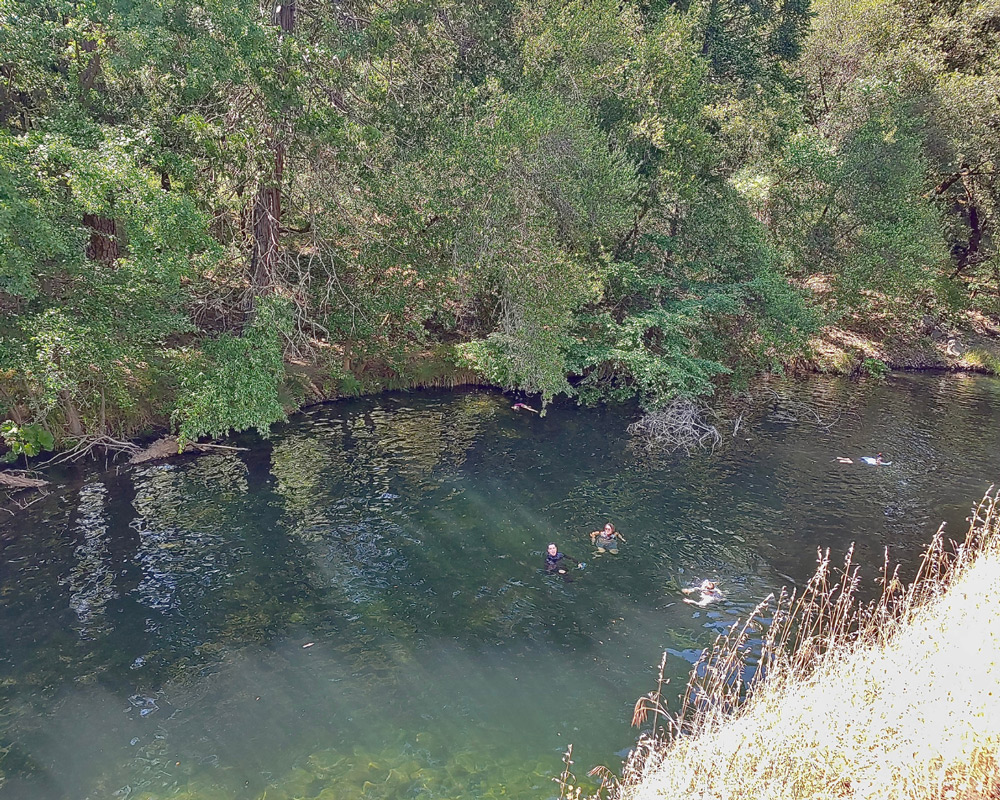
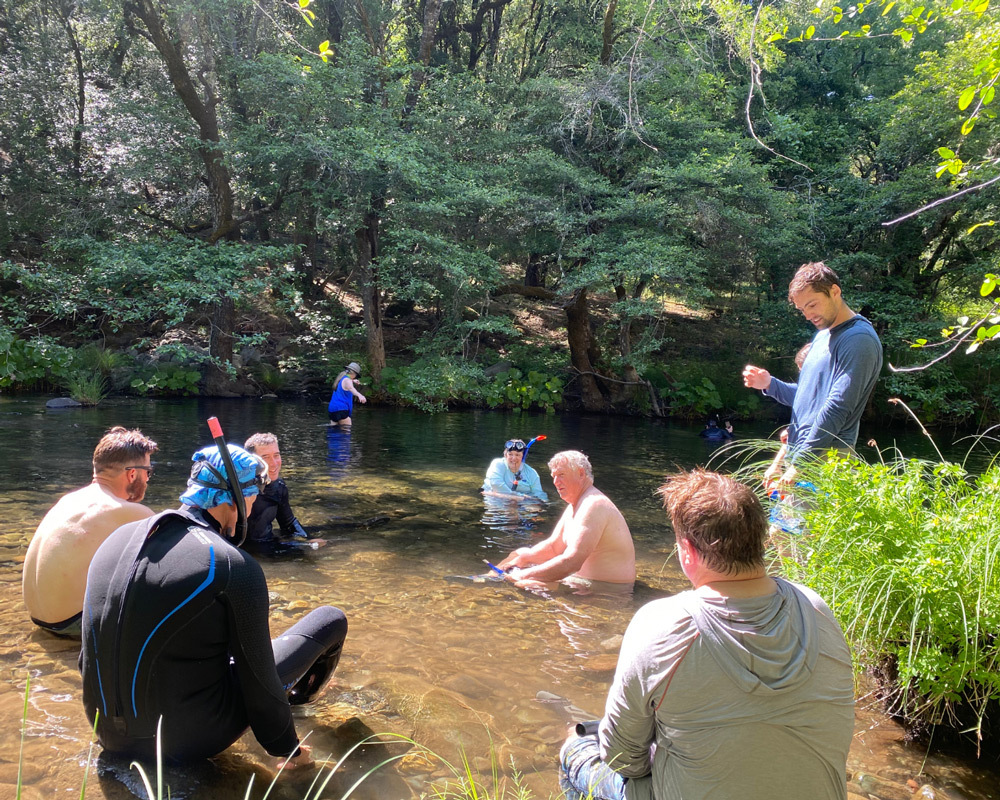
Later that afternoon, Dr. Paul Maslin, Chico State biology professor emeritus and honorary Ecological Reserve staff, took us on a walk down to Henning’s Hole, a large, deep holding pool on Big Chico Creek. We all immediately donned our snorkel gear and jumped in! The water was cold and clear; however, snorkelers noticed the lack of species diversity in the pool. Dr. Maslin explained to the group that a rotenone treatment took place in the 1980’s targeting non-salmonid native fish – the diversity and abundance of native fish species in this stretch of the creek was very different to what we see today. There used to be hardhead, suckers, pikeminnow, sculpin, and lamprey, but many of those species no longer exist in the upper watershed. Even though decades have gone by, a fish passage barrier in the form of a rock fall further down the creek in a bedrock gorge called Iron Canyon has prevented many native fish species from recolonizing their natal waters further upstream. Michael Hellmair, fisheries biologist with FISHBIO, a local fisheries consulting firm that has been performing snorkel surveys in this section of the creek for a decade gave an overview on their findings – many native fish species that once called these waters home are no longer present, including spring-run Chinook salmon and steelhead.
CalTrout is working in collaboration with the Big Chico Creek Ecological Reserve, Mechoopda Tribe, and the City of Chico to alleviate the fish passage barrier in Iron Canyon. As part of the Iron Canyon Fish Passage Project, we will be removing non-salmonid native fish that would become stranded in tributaries to Big Chico Creek and relocating them above Iron Canyon. In five years, when you snorkel Henning’s Hole, you will be able to see a much different ecosystem, one filled with an abundantly diverse array of wild native fish.
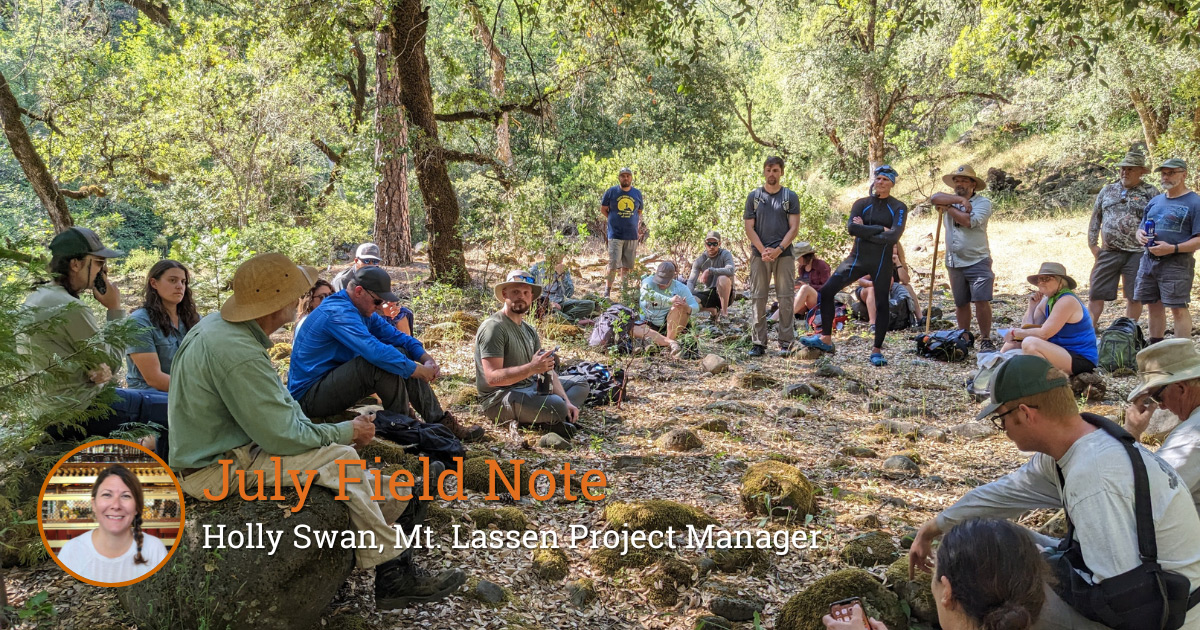
Cover Photo: Attendees gathering around to hear Dr. Paul Maslin and Michael Hellmair talk about species abundance and diversity before and after rotenone treatment. Images, unless otherwise stated, courtesy of Holly Swan and Damon Goodman.