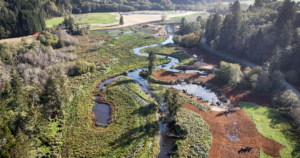
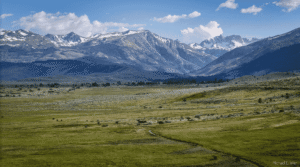
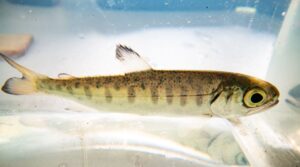
Pacific salmon are iconic travelers. Young salmon use nearly all of the types of habitat available in a large watershed. They emerge in headwaters to rear in tributaries before moving into mainstems rivers, across inundated floodplains and off-channel habitats, through estuaries, sloughs and out onto tidal shelves and the open ocean. Each of these places offers food and growth opportunities for rearing salmon according to unique seasonal and daily patterns. And salmon are wonderfully adapted to these historic patterns of abundance in their home waters. But today in the Eel River and across their range in California, young salmon are often severed from those sources of productivity that nourished their ancestors. Natal streams become dry or inhospitable due to water diversion; mainstem rivers are dammed or occupied by new predators and diseases; floodplains and off-channel habitats are diked and leveed; estuaries are simplified and reclaimed for agriculture.
Given this context, we’re asking the question: How can we help to reconnect the Eel River’s native fish with restored and recovering productive habitat that made this river such a powerful and resilient salmon stream?
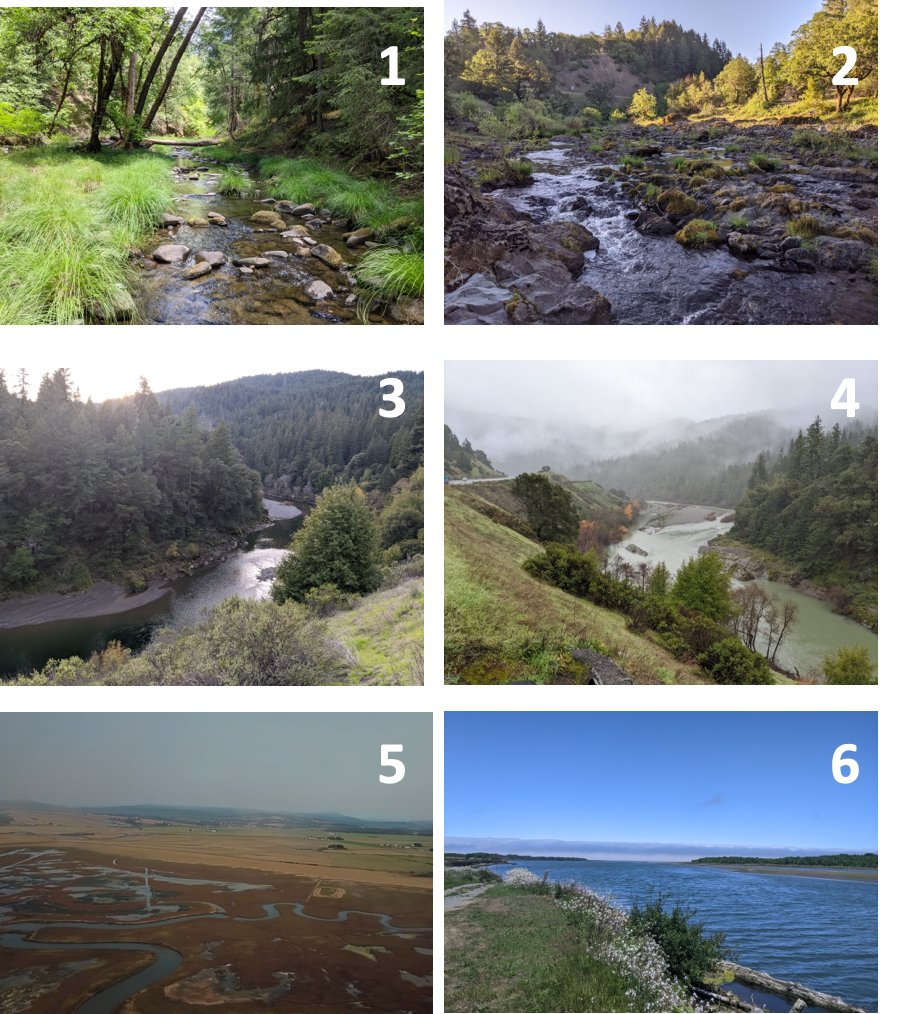
California Trout and U.C. Berkeley are partnering with the Wiyot Tribe, Humboldt State University, and local consulting and watershed restoration groups to answer this critical management question, and to develop baseline monitoring data in the South Fork Eel River. We will then use that information to take the necessary actions that will help recover the river’s iconic salmon. This research and monitoring will be accomplished through our South Fork Eel River Science Program. Little is known about the spatial structure, abundance, and diversity of salmon life histories in the South Fork Eel River or the fate of non-natal fish in lower mainstem and estuary habitat. Even less is known about the seasonal and spatial patterns of salmon food production, or the “lost” growth potential that is a product of a century of habitat alteration, invasive species introduction, and climate change.
To develop this critical knowledge-base we are working on many fronts. We are working with state, federal, and tribal partners to pursue invasive species remediation projects. We are trapping migrating juvenile salmon and implanting them with acoustic tags to understand migration patterns, habitat use, and survival. We are partnering with the Wiyot Tribe and Stillwater Sciences to monitor the movement of invasive predatory pikeminnow to understand their interactions with native salmon. We are partnering with Humboldt State University researchers to assess pikeminnow suppression and eradication approaches. We are monitoring and counting adult salmon migration using sonar DIDSON technology. And we are measuring food, and modeling growth potential across seasonal and spatial scales (from headwaters to the sea) to understand what is and what could be the productive capacity of the South Fork Eel River. This information will be leveraged to identify, prioritize, fund, and accomplish the most important recovery actions that will pave the way toward a future resilient and abundant wild salmon population and a healthy South Fork Eel River ecosystem.
Learn more about Dr. Rossi and his work on our South Fork Eel River Science Program project page.
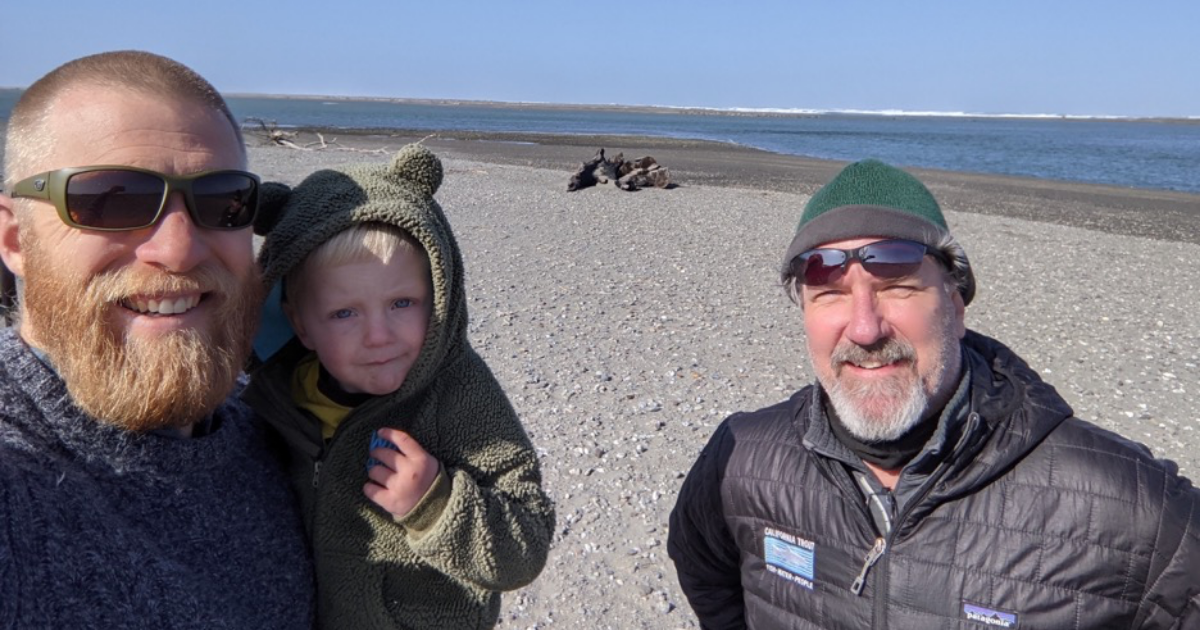
Cover photo: Dr. Gabriel Rossi, Basil Rossi, and Darren Mierau (CalTrout North Coast Director) at the mouth of the Eel River.