


by Andrew Braugh
Shasta-Klamath Regional Director
Field Note: The Importance of Partnerships
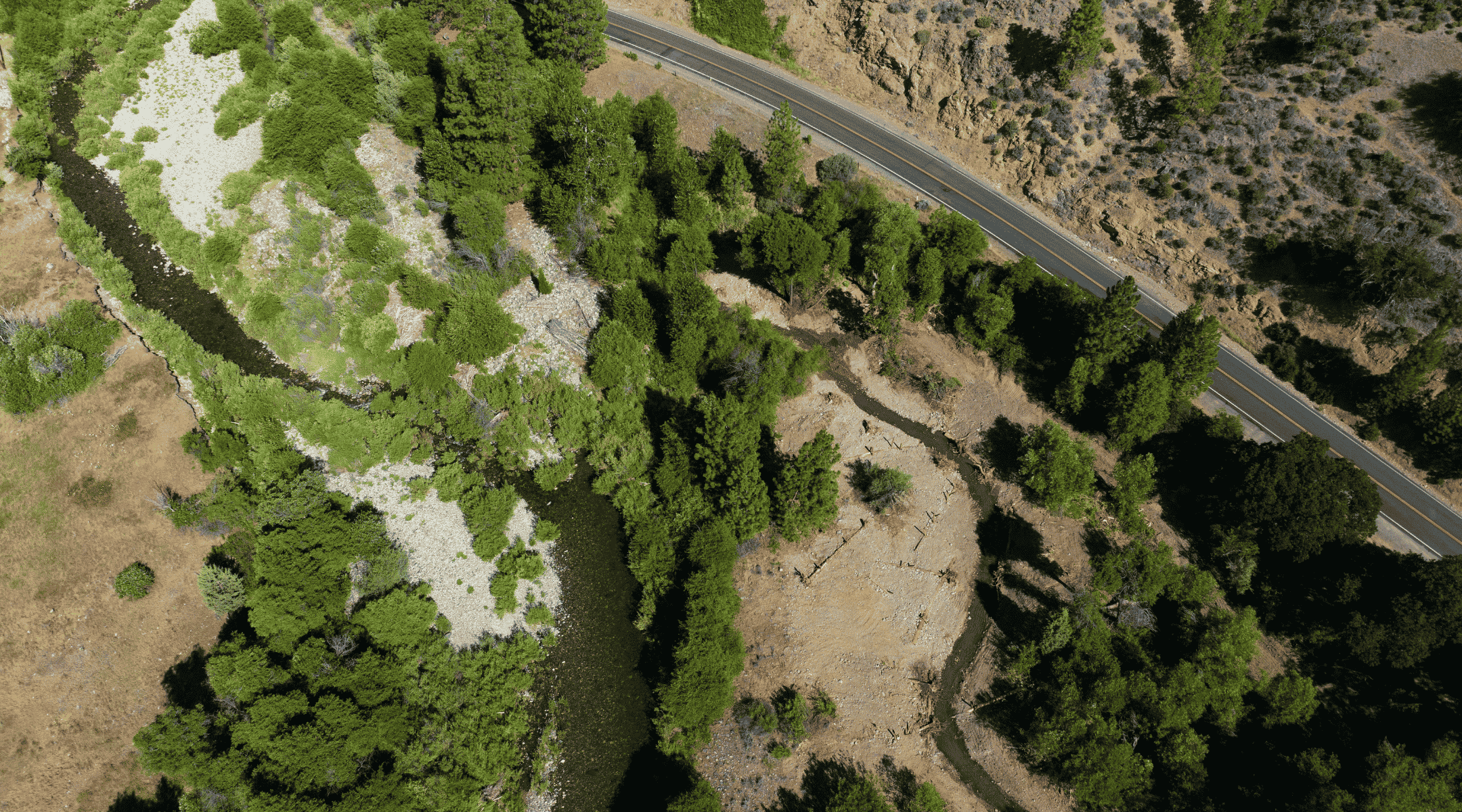
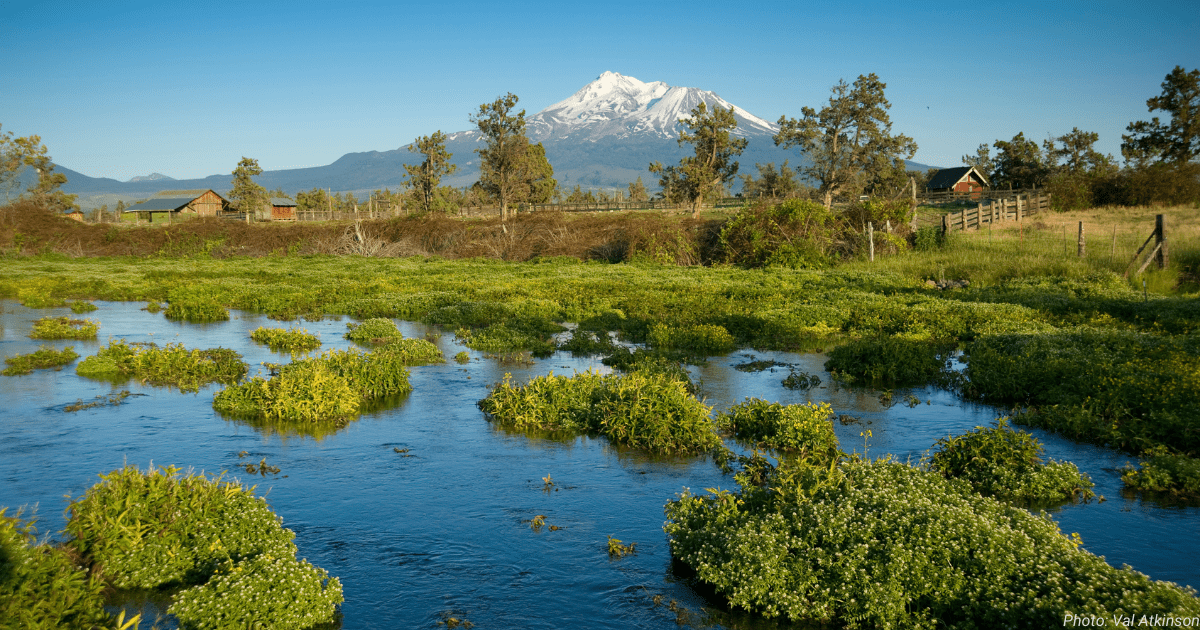
The Shasta-Klamath Region organizes work around protecting California source water and volcanic aquifers, working with family farms to improve water management, and protecting legacy fly-fishing waters like the McCloud River, Hat Creek, and Fall River. In 2021, we are heavily invested in conservation projects in the Shasta and Scott watersheds. These key Klamath tributaries will be critical for recovering salmon populations in the Mid-Klamath Basin after dam removal.
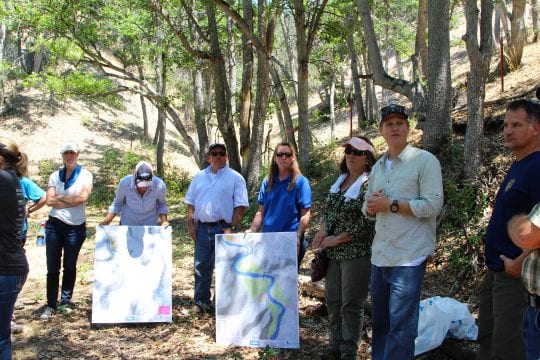
Regionally, CalTrout partners with state-federal agencies, conservation NGOs like The Nature Conservancy and Scott River Watershed Council, and key tribes like the Pit River Tribe, Karuk, and Yurok. CalTrout also builds long-term relationships with private landowners like the Hart and Cardoza families, where we partner to find on-farm water solutions that work for both fish and agriculture. More than 90 percent of all surface and groundwater water diversions in Siskiyou County go to private agriculture.
Consequently, if we want to restore streamflows in the Shasta-Scott watersheds, we need access to private lands and incentives for family farms to conserve water for rivers and fish. We’ve found that it can take decades to establish trusting relationships with private property owners, which is why CalTrout’s staying-power as an organization and 50th anniversary is so crucial to our mission.
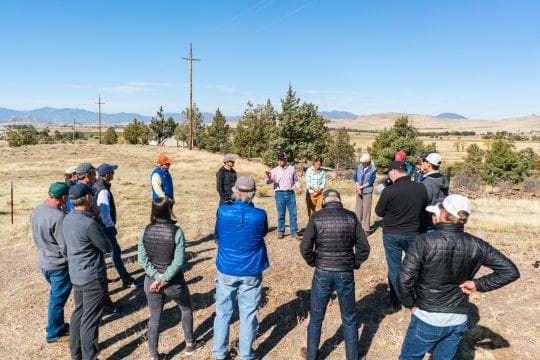
CalTrout is always searching for meaningful incentives to engage our public-private partners. Nothing gets done unless our projects benefit all parties. Whether it’s restoring downstream flows for our tribal partners in the lower Klamath, improving irrigation infrastructure for smaller family farms, or helping state agencies carry out long-term conservation priorities, we work really hard to find common ground, shared vision, and mutually beneficial outcomes.
Competing interests for water continue to grow exponentially in California: we think long and hard about how to allocate limited water resources to meet a wide variety of beneficial uses. If we forget to take all user groups into consideration in our projects, then long-term planning based on science and engineering goes out the window and it becomes a tragedy of the commons scenario or a zero-sum game, and that usually benefits one or two parties at the expense of a larger solution.
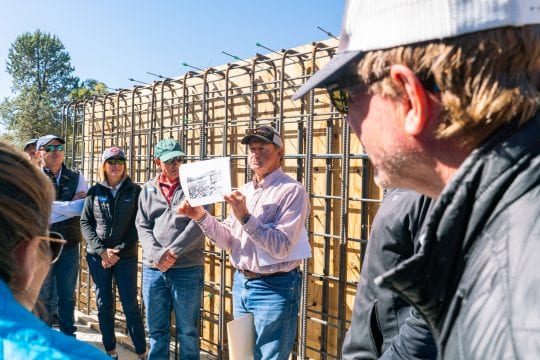
CalTrout values partnerships that embrace science, technology, conflict resolution, and long-term thinking. We often talk about sitting down at the kitchen table with private landowners and finding engineering solutions to water management problems. Solutions almost always exist for using water more efficiently, but if relationships become toxic and threatening, nobody can think straight, becoming entrenched in defensive positions. Once the finger-pointing and threats subside, we can get to work on actual solutions. The Hart Ranch and Cardoza Ranch flow projects in the Shasta Valley demonstrate what’s possible when we think clearly, using science and technology and common sense to get things done.
“We invest in our own ability to problem solve, effect change, bring people to the table, and carry out projects with measurable impact in 3-5 years” – Andrew Braugh
We always have a choice to make about how we motivate people to engage in our mission. Usually, it boils down to heavy-handed regulation versus voluntary, incentive-based strategies. Clearly, bad actors exist that have no interest in reasonable protections for the environment. But we find that the majority of water users in agriculture in Siskiyou County just want to protect their interests, their family legacy, and their cultural heritage associated with ranching, farming, and community. They need technical & legal assistance, science-based solutions, and dialogue to understand the dire issues facing salmonids in California.
Should the government do a better job of enforcing existing environmental laws and holding bad actors accountable for egregious and wasteful water use? Yes, absolutely. But as a conservation group, we could also spend all of our time, energy, financial resources asking political entities to forcefully regulate and never see adequate results. Alternatively, we invest in our own ability to problem solve, effect change, bring people to the table, and carry out projects with measurable impact in 3-5 years. The literal ranch gates are starting to open for us on key private properties that control significant water rights and land-use patterns in the Shasta-Scott. A new world of conservation possibilities emerges when people start working together.