

Tracking steelhead movement to shed light on seasonal migrations
October 17, 2019
By Pat Samuel, Bay Area Program Manager
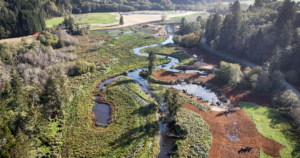
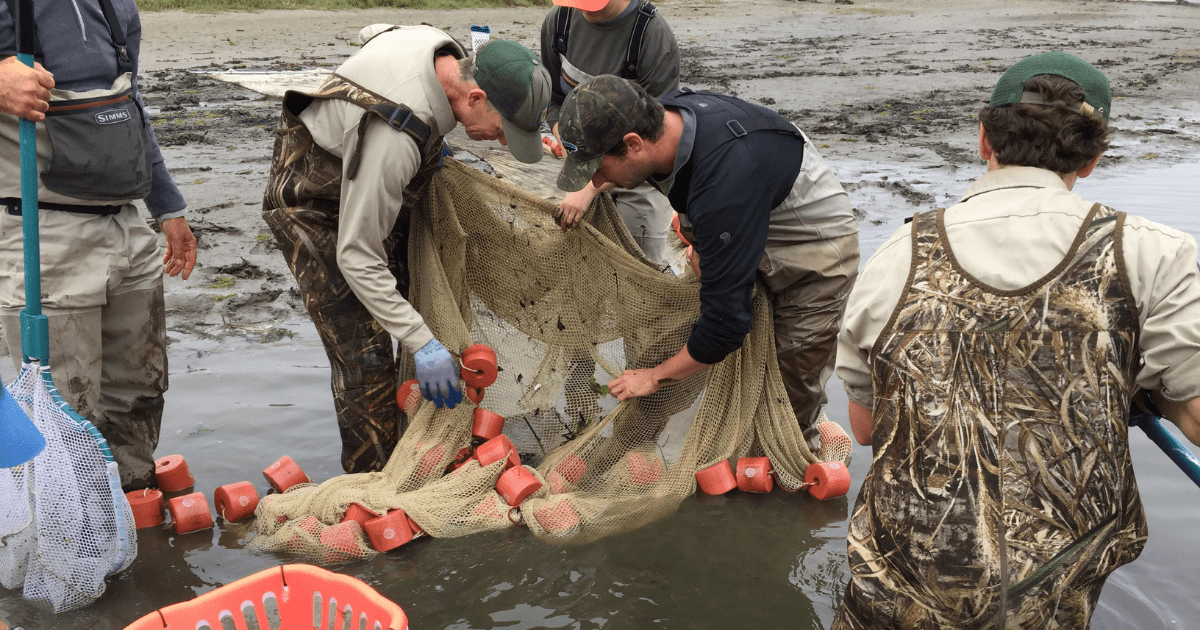
I spent this week working with California Department of Fish & Wildlife (CDFW), Trout Unlimited, NOAA Fisheries Southwest Fisheries Science Center, and a consultant from Eco-Logical Research on Pescadero Creek. We relied on partnerships with dedicated private landowners to design and install a set of two wire antennas to detect tagged fish moving upstream in Pescadero Creek. The goal of this pilot project is to detect seasonal movement and document migration timing of steelhead moving upstream into Pescadero for rearing or spawning in late fall and early winter months.
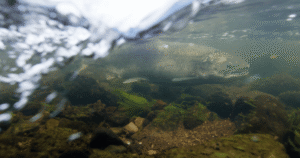
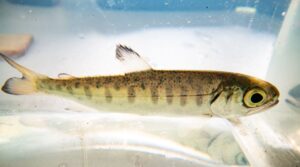
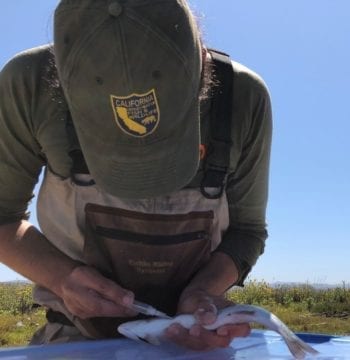
Each summer and fall, CDFW conducts a mark-recapture population survey by capturing steelhead in Pescadero Marsh and implanting fish with Passive Integrated Transponder (PIT) tags, similar to the tags implanted into your cat or dog. Each tag is about the size of a grain of rice and has a unique code that transmits to a reader when it comes close enough to be activated by an electromagnetic field. Scientists record the size of the fish and collect scale samples during the survey, which can help us re-create a fishes’ life and age.
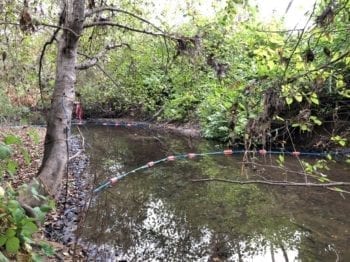
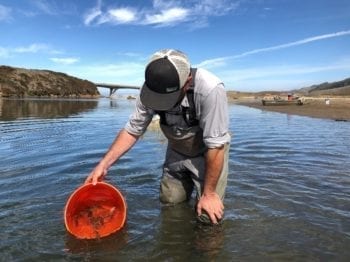
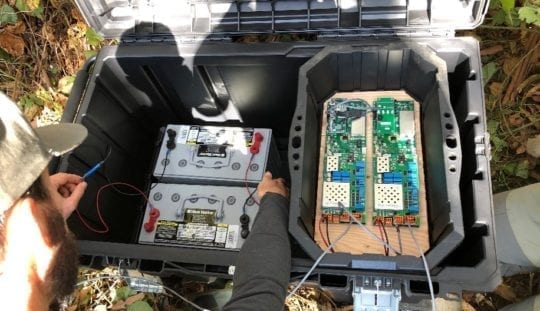
When tagged steelhead swim through the cable loop on the antenna, the signal and PIT tag code is automatically recorded on a device attached to a battery and computer located safely up on the bank. With two sets of cables installed in close proximity, we can tell if fish are moving upstream or down giving us a hint as to their purpose: (e.g. upstream fish may be on their spawning run, and downstream fish may be on their way back out to the Pacific after spawning).
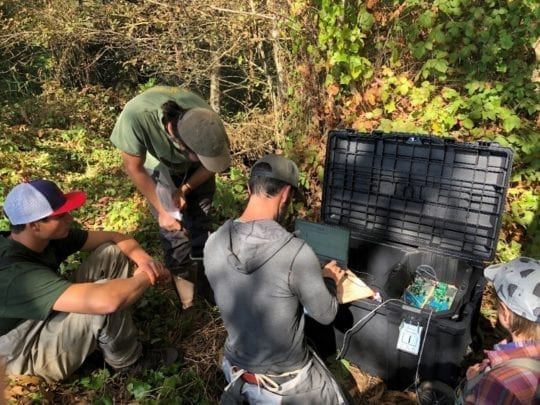
This pilot effort is intended to leverage and expand upon the existing fisheries surveys in the watershed by our project partners, and we hope that in the future can be used to help inform steelhead survival rates, document juvenile migration downstream to the marsh, and offer valuable data to help triangulate population size estimates.
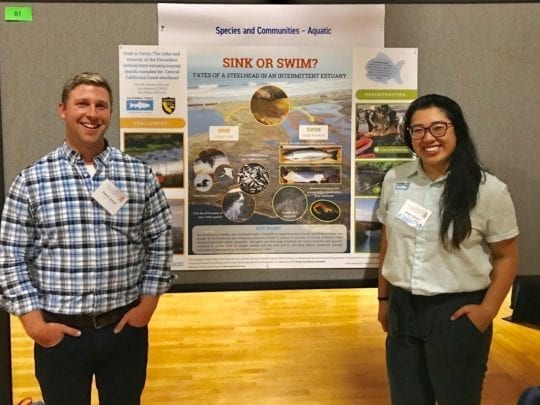
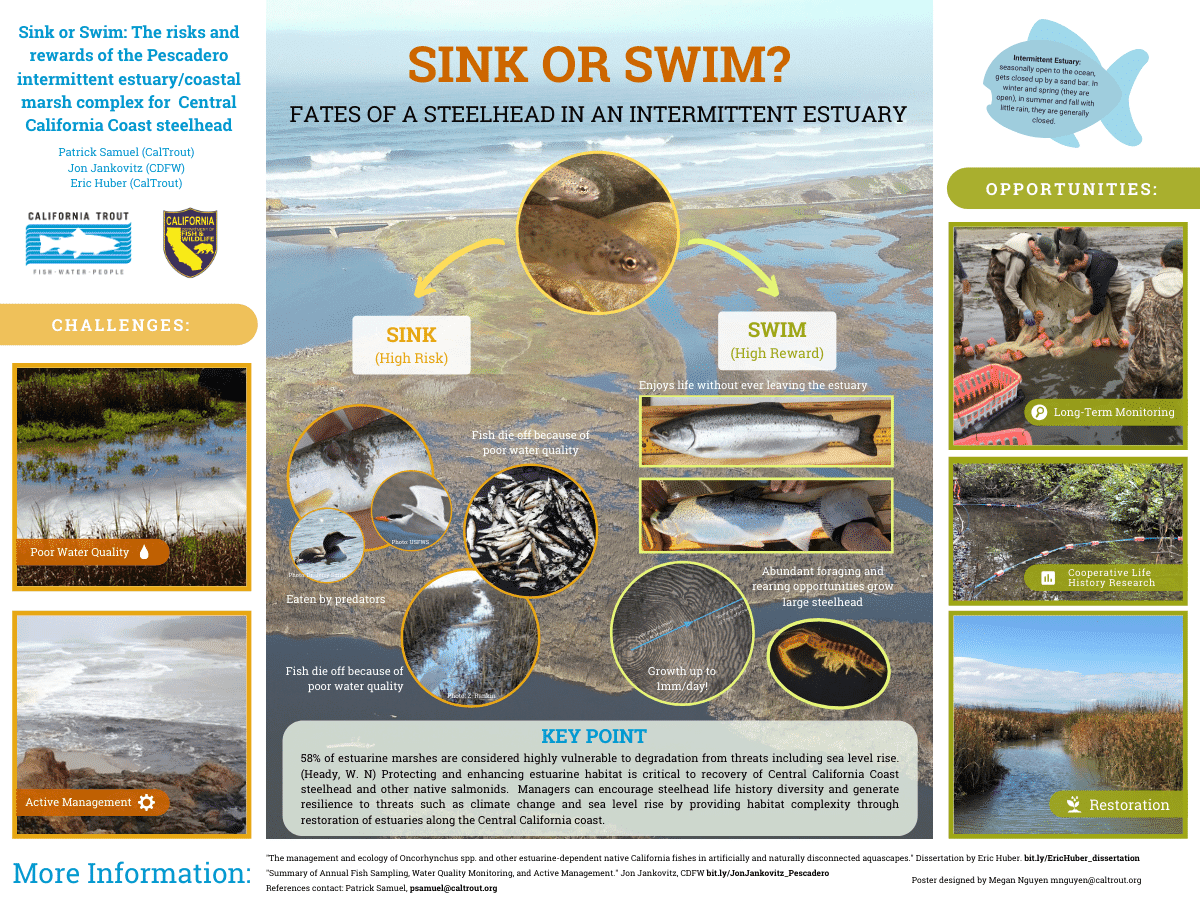

Patrick Samuel has been with CalTrout since 2014 and was one of the lead authors of the 2017 State of the Salmonids II: Fish in Hot Water report. Prior to joining CalTrout, Patrick worked with the Fisheries Leadership & Sustainability Forum as well as the NOAA Fisheries Protected Resources Division in Sacramento. View Patrick’s Bay Area region work here.