

To expand the benefits, we partnered with Reclamation District 108 to secure funding to open the program up to public participation. This is a major step in turning what started as a CalTrout experimental program into our vision of a publicly funded conservation easement program, similar to winter flooding programs for waterfowl or shorebirds on farms and managed wetlands (e.g., NRCS Environmental Quality Incentive Programs, CDFW Private Lands Incentive Programs).
How does the public participate in this program? Fish Food applications are submitted in a reverse auction format. Rather than a typical auction where the seller tries to get the highest price for a product or service, in a reverse auction the buyer tries to get the lowest price for a product or service. We determine the practice: an average flood depth of 10 inches, held for a minimum of 3 weeks, and delivered to a fish-bearing waterway; and land-owners submit applications telling us how much it will cost them to do this. We then established a set of selection criteria with a committee, including participants from UC Davis and the California Rice Commission (host of the Fish Food application website: https://calricewaterbirds.org/fish-food/), and rank all the applications we received during a set enrollment period. Selection criteria include: total acreage, number of flood/drain cycles, timing of drainage events, cost per cycle, and distance from property to fish-bearing channel. We fund as many of the highest scoring bids as possible and reserve a small amount of funding for outreach to new participants who tend to submit more conservative bids that inherently score lower with the criteria.
The program grew substantially from water year (WY) 2023, the first year it was open for public enrollment, to today, WY2024. In 2023, we received 29 bids with a total of 69,000 acre-cycles bid on 32,700 acres for a total cost of $2.9M. This year (WY2024), we received 42 bids with a total of 89,000 acre-cycles on 43,000 acres for a cost of $3.6M. An acre-cycle is the metric of fish food delivery that includes a flood up to full pool, holding water for a minimum of three weeks, and then draining that water (full of fish food) back to a fish-bearing channel. So far, we’ve seen a maximum of three cycles executed on a single acre. But there are likely some ideal circumstances (e.g., water supply, farming and hunting constraints, water year type) such that four cycles per acre is possible. Last year (WY2023), we selected 43,000 cycles on 29,000 acres for $1.99M. This year (WY2024), we selected 54,800 cycles on 27,400 acres for $2.1M. Between the two years, we are getting more bids, more cycles per acre, and lower cost per cycle.
The program has gotten more efficient and more engrained in the management culture in the core area where we initially developed the program (Yolo, Colusa, and Sutter counties), and has expanded into new areas with high potential impact like the Butte Sink, Bear River, Honcut Creek, and lower Butte Creek above the Sink. Our Central Valley team is extremely proud of this program and we hope to secure more long-term funding to establish a legacy that manages at least 500,000 acre-cycles of fish food annually and in perpetuity in the Central Valley.
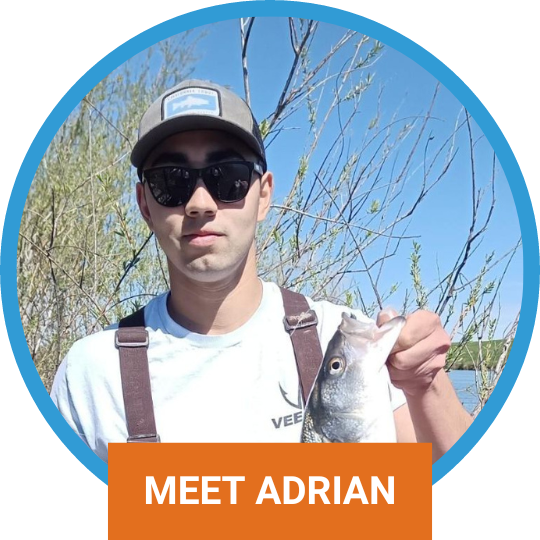
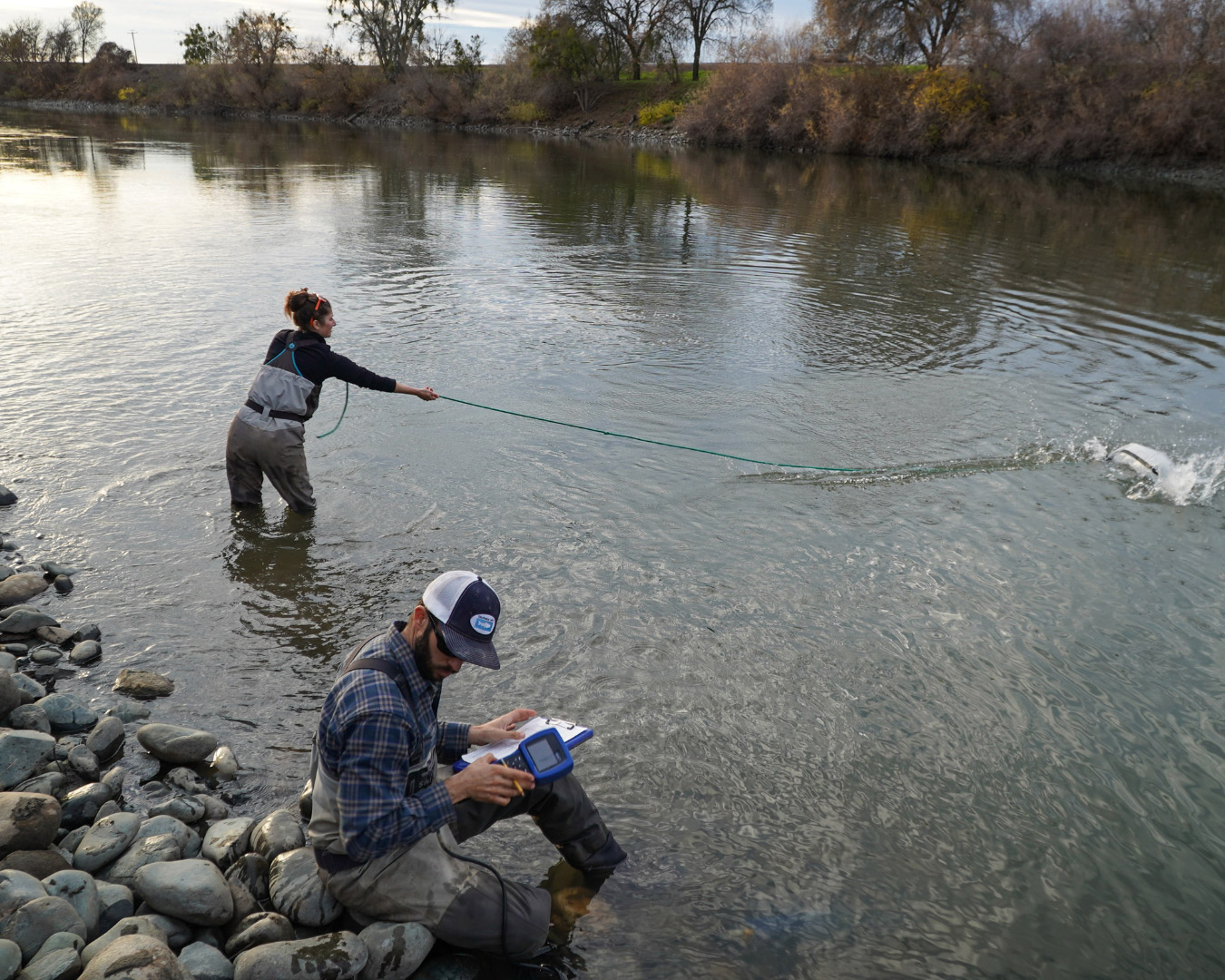
We are thrilled to partner with UC Davis on this project as work to lead with and advance science while training the next generation of fish scientists and restoration practitioners. Get to know CalTrout UC Davis Graduate Fellow Adrian Loera a life-long angler from the San Fernando Valley who works closely with our Central Valley Region team on the Fish Food Project. His research will help provide a better understanding of how salmon utilize localized high food abundance habitats around agricultural pumps in the Sacramento River during periods of managed floodplain drainage.