

Authored by CalTrout Staff, Redgie Collins (Legal and Policy Director) and Analise Rivero (Policy Associate)
On March 28, 2022 Governor Newsom issued Executive Order No. 7-77, meant to provide guidance on emergency drought relief. The executive order (EO) states that the “21st century to date has been characterized by record warmth and predominantly dry conditions, and the 2021 meteorological summer in California and the rest of the western United States was the hottest on record” and “the ongoing drought will have significant, immediate impacts on communities with vulnerable water supplies, farms that rely on irrigation to grow food and fiber, and fish and wildlife that rely on stream flows and cool water.”
Read on as CalTrout dives into the details of this important directive…
Requirements of the Executive Order:
Within the Order, the Governor ordered the State Water Resources Control Board to evaluate the adoption of regulations and the relaxations of permitting for drought positive measures. These regulations include banning irrigation of “non-functional” turf (or grass), such as decorative grass adjacent to large industrial and commercial buildings. The ban would not include residential lawns or grass used for recreation, such as school fields, sports fields and parks.
Further, the order asks the State Water Board to prepare municipal water agencies for drought restrictive measures. More specifically, the Board asks these urban water suppliers to prepare to activate, at a minimum, Level 2 of their customized Water Shortage Contingency Plans. These plans are developed by local water agencies to navigate extreme drought and each plan is customized based on an agency’s unique infrastructure and management. Triggering Level 2 of these plans involves implementing water conservation actions to prepare for a water shortage level of up to 20 percent.
The Governor has also ordered state agencies to submit funding proposals to support the state’s short- and long-term drought response, including emergency assistance to communities and households facing drought-related water shortages, facilitating groundwater recharge and wastewater recycling, improvements in water use efficiency, protecting fish and wildlife, and minimizing drought-related economic disruption.
Important Highlights of the EO:
- Permit Vulnerable Communities Access to Emergency Drinking Water
- Cuts red tape so communities that need access to emergency hauled or bottled water can get it immediately.
- Ensure Groundwater Supplies
- Requires local permitting authorities to coordinate with Groundwater Sustainability Agencies to ensure new proposed wells do not compromise existing wells or infrastructure, as 85 percent of public water systems rely heavily on groundwater during drought.
- Streamlines permitting for groundwater recharge projects that help to refill aquifers when rains come.
- Suspension of CEQA for Essential Emergency Restoration Initiatives
- While CalTrout does not endorse wholesale changes to California’s preeminent water protection act, we do think that the timelines associated with permitting emergency drought actions should be relaxed.
- Protections for Vulnerable Fish And Wildlife
- Expedites state agency approvals for necessary actions to protect fish and wildlife where drought conditions threaten their health and survival
- Inspect Illegal Water Diversions
- Directs the Water Board to expand site inspections in order to determine whether illegal diversions are occurring.
- Highlight Importance of Multi-Benefit Floodplain Projects
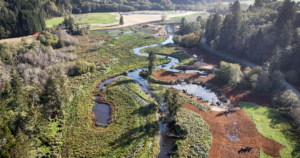
- Support projects that reduce flood risk and those that restore or mimic historical river and floodplain processes.
- Cuts red tape so communities that need access to emergency hauled or bottled water can get it immediately.
- Requires local permitting authorities to coordinate with Groundwater Sustainability Agencies to ensure new proposed wells do not compromise existing wells or infrastructure, as 85 percent of public water systems rely heavily on groundwater during drought.
- Streamlines permitting for groundwater recharge projects that help to refill aquifers when rains come.
- While CalTrout does not endorse wholesale changes to California’s preeminent water protection act, we do think that the timelines associated with permitting emergency drought actions should be relaxed.
- Expedites state agency approvals for necessary actions to protect fish and wildlife where drought conditions threaten their health and survival
- Directs the Water Board to expand site inspections in order to determine whether illegal diversions are occurring.
- Support projects that reduce flood risk and those that restore or mimic historical river and floodplain processes.
Taking the Necessary Steps:
This Executive Order is a step in the right direction and CalTrout is pleased that Governor Newsom’s administration is taking proactive measures within his executive powers. That being said, these measures need to be followed by statutory change, real funding, and a relaxation of permitting for necessary emergency drought actions.
We look forward to working with the administration to make good on these commitments and to make drought preparation and common-sense permitting changes permanent. This ethos is embodied in the Caltrout and Salmon and Steelhead Coalition sponsored AB 2451, which would build a permanent Drought Section at the State Water Board so that California will not be caught off guard during our next drought.
CalTrout will be working tirelessly to ensure that this Order is one of many important decisions that California will make to ensure that this drought does not permanently damage the recovery of our most threatened species.