Fish Food on Floodplain Farm Fields
CalTrout’s science-based approach to grow fish food on floodplains and Integrate Wild Fish and Working Landscapes initiative has been recently featured in an article titled “Harnessing Rice Fields to Resurrect California’s Endangered Salmon” by Inside Climate News.
California’s Central Valley used to be a mosaic of natural wetlands and floodplains but is now a labyrinth of farms and levees. This system of dams and levees have become a maze and drastically reduce the habitat and food salmon need to thrive.
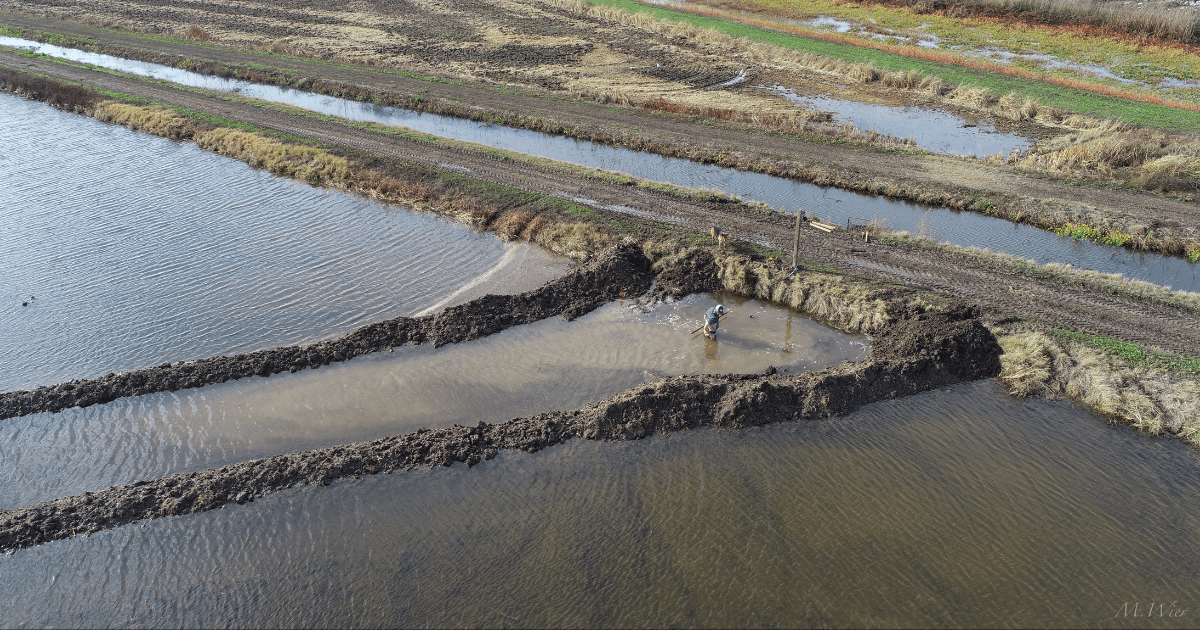
“Straightjacketing the Sacramento River turned it into a food desert, so restoration must replenish the river with life derived from wetland-like habitats. Flooding rice fields during the off season mimics the way rivers once flowed across the floodplains like a liquid solar panel, letting algae and other phytoplankton soak up the energy they need to sustain a vibrant food web. ”
California Trout has been conducting landscape-scale research and effort to reactivate floodplain food webs by flooding 5,000 acres of rice fields in the Sacramento Valley.
Our research shows that floodplains produce food resources 150 times greater than in the river. We work with our partners such as River Garden Farms, to grow food on flooded farm fields and transfer those resources back to the river where fish can access them.
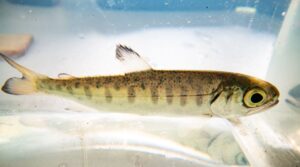
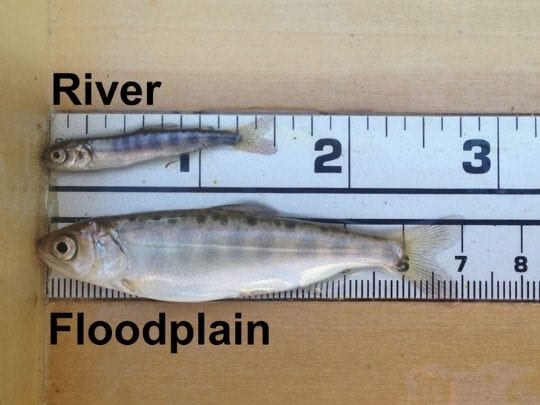
Fish in the river at the floodplain outfall and up to a mile downstream grew 3-5 times faster relative to fish immediately upstream of the floodplain.
“We have really fundamentally changed the river in such a way that it doesn’t make sense to a salmon anymore. What we’re trying to do is have the system make sense to those native species,” says Jacob Katz, Senior Scientist, and CalTrout Central Valley Director.
This science-based approach to managing California’s resources demonstrates that with innovative management practices, there is potential to boost the depleted food resource in Central Valley rivers and help recover endangered fish populations.