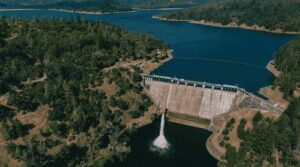
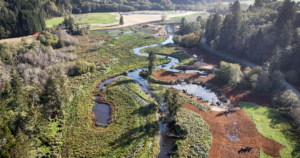

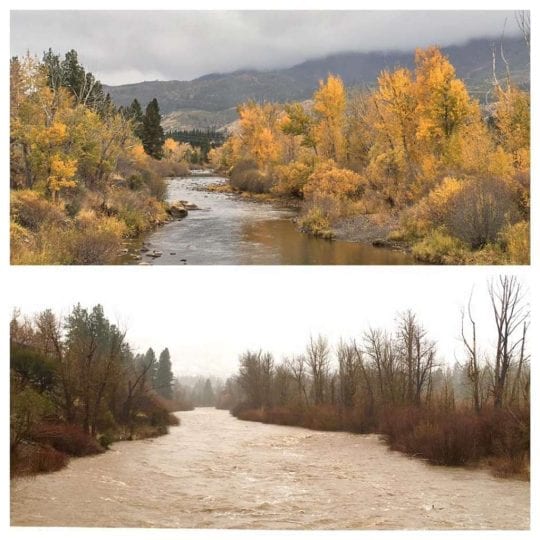
The beginning of 2017 was met with an intense storm that sent over 350 billion gallons of water into California’s parched reservoirs. Lake Oroville, Lake Shasta and other reservoirs in Northern California are key pieces of the state’s water system, which moves the resource from the Sierra Nevada to cities and farmlands. Waterways across the state rose to above average levels, causing pressure on levees downstream and flooding in many towns. To relieve this pressure, the Sacramento weir opened its floodgates for the first time in a decade, releasing water downstream into the Yolo Bypass flowing at an incredible 10,000 cubic feet per second. Allowing the water to course through the gates is designed to calm the raging waters at the confluence of the Sacramento and American rivers.
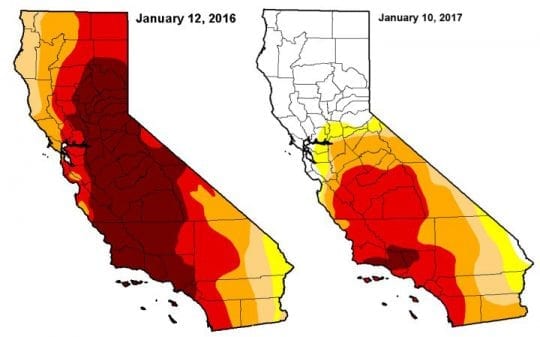
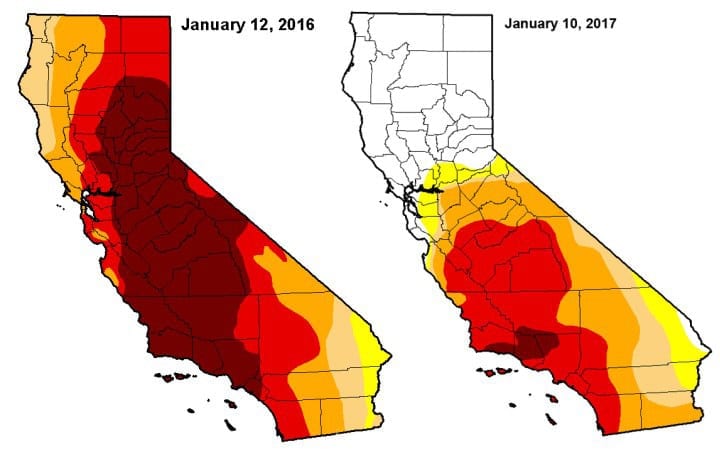
California’s drought-ravaged waterways are welcoming the relief. Considering surface water alone, the majority of the state is in good condition following the storms, particularly Northern California. According to the U.S. Drought Monitor map, nearly all of Northern California has been relieved of the drought. This doesn’t hold true for other parts of the state though. In the Central Valley and Southern California, groundwater deficiency remains due to heavy pumping and overdrawn basins during recent dry years. These areas are not expected to make much of a recovery despite these big storms. Still, northerly precipitation remains the most vital asset in clearing up the drought since it feeds the big reservoirs that supply water across the entire state.
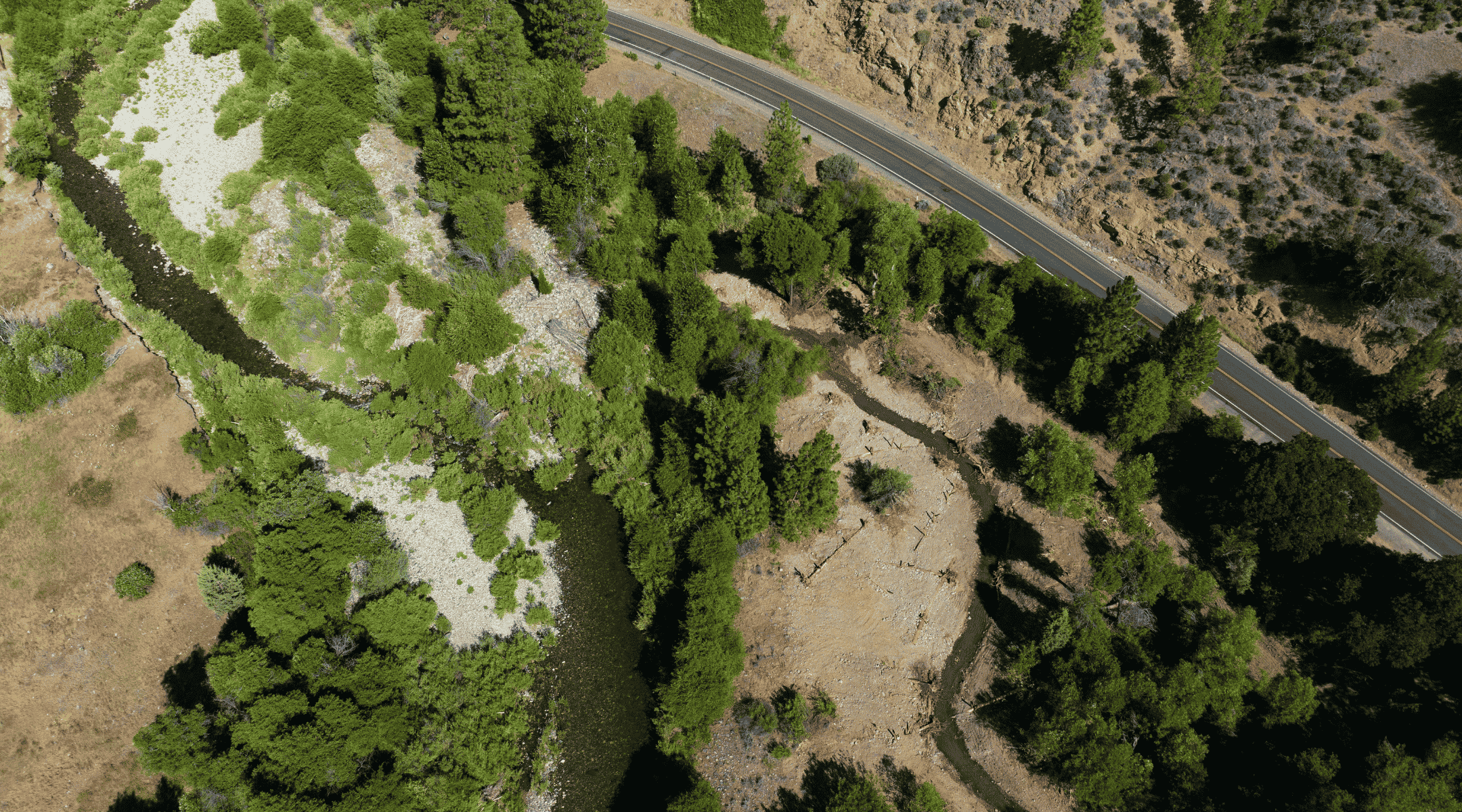
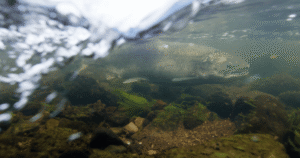
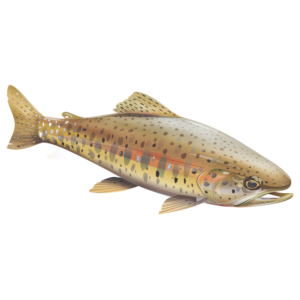
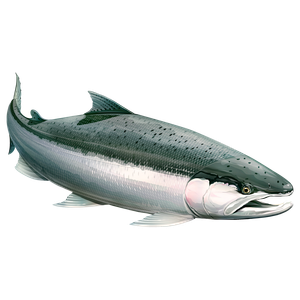
The winter steelhead run should kick in to gear once the rivers begin to recede. The winter storms show promise for some native fish recovery, whose numbers have been majorly depleted as a result of the six-year drought. Full recovery will likely take years, and for some species, will require normal to above-normal rainfall in the coming years.