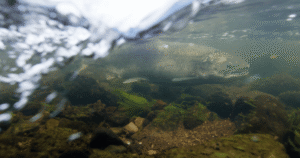
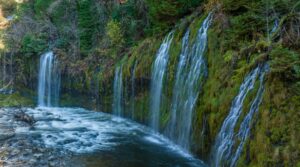
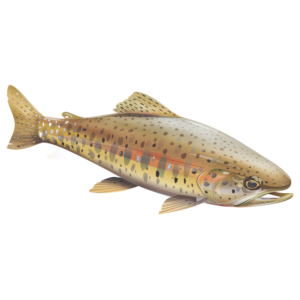
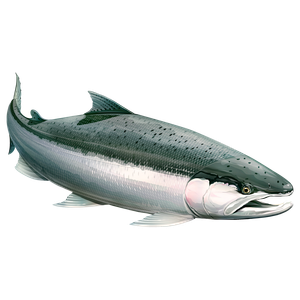
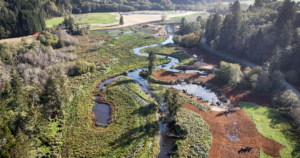
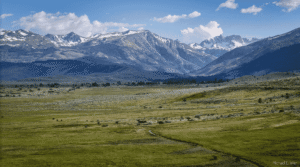
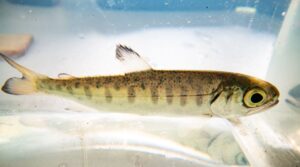
A Karuk Tribe study of Scott Valley water says increased groundwater pumping is resulting in lower flows in the Scott River (which provides spawning habitat for Chinook salmon, endangered coho salmon, and steelhead), and will likely have implications regarding water management in the embattled, largely agricultural Scott Valley.
From the Siskiyou Daily News:
“The results show that as groundwater pumping has increased in Scott Valley over the years, stream flows have decreased,” a press release announcing the report’s completion stated. “We believe that this will have a critical effect on all natural resources,” Karuk Chairman Buster Attebery said in the release. The report is based on a study of data presently available in the public record, “including over 1,000 well logs, soil and geologic data, groundwater elevations, well tests, high-resolution land surface elevation data, crop and riparian vegetation mapping, climatological data and stream gage records,” the release stated.
“The results show that as groundwater pumping has increased in Scott Valley over the years, stream flows have decreased,” a press release announcing the report’s completion stated.
“We believe that this will have a critical effect on all natural resources,” Karuk Chairman Buster Attebery said in the release.
The report is based on a study of data presently available in the public record, “including over 1,000 well logs, soil and geologic data, groundwater elevations, well tests, high-resolution land surface elevation data, crop and riparian vegetation mapping, climatological data and stream gage records,” the release stated.
As demands for environmental uses of water have increased, or to supplement reduced surface water deliveries during drought years, agricultural users have increasingly turned to pumping groundwater.
Several recent studies have shown that most of that pumping is not sustainable; water tables are falling fast in areas of the California’s Central Valley.
Now, according to the Karuk study, overpumping groundwater means lower flows in the Scott River and tributaries for salmon and steelhead.
The Karuk study was conducted in parallel with a Siskiyou County study in part because the Karuk tribe fears the county study would be based more on politics than science — a sign of the factionalization occurring in Siskiyou County.