Check out an excerpt from Upstream featuring Jacob:
Katz has a knack for explaining complicated systems in simple terms. “It comes down to solar energy being the source of all life. Fish have to eat. Levees starve river systems by keeping them swift, deep, and with very little surface area. When you allow the river to spread out, it’s a big solar cell.” He was talking about a process we all learn about in school but rarely think about: photosynthesis. Plants use the sun’s energy to make carbohydrates, creating the base of the food chain and at the same time released oxygen as a byproduct. Life on earth depends on this process.
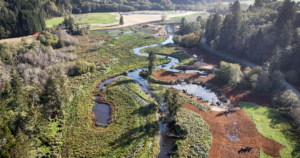
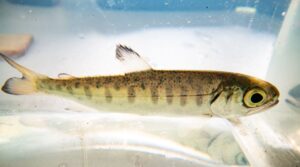
In the case of floodplains, the algae turn the sunlight into sugars that nourish zooplankton, which in turn feed salmon fry- and so on, up the food chain, which of course includes human beings too. “Almost all of our large civilizations developed along large river systems,” Katz added. But rivers are messy and always changing. Every once in a while, he said, a nice warm Pineapple Express– a moisture-laden winter storm from the South Pacific– settles over California’s mountain snowpack, and so much water gets liberated both from the rain and the melted snow that there’s no way to keep it all within the banks of the Sacramento. “So we have this bypass system.” The river pours over its banks into the bypass, and this human-engineered process was proving, counterintuitively, to be a useful conservation tool. “If you give the river a little room, Katz explained, “you allow the natural processes that are the engines of productivity to work. We can integrate that back into an intensely managed system, one that’s not going to be restored– you’re not going to have wall-to-wall tules– but we can have places where we have real productivity.
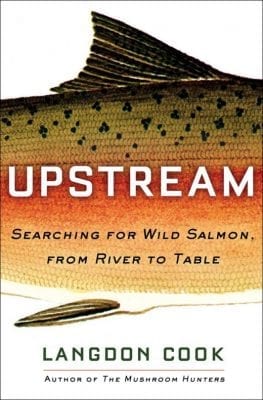
Upstream has received many positive reviews, including from the Wall Street Journal: “In tracing the history and life cycle of these iconic creatures, Mr. Cook embarks on a series of his own journeys—14 nicely episodic chapters that explore how and where such fish still survive in the modern world, despite the threats of logging, dams, the diversion of running water for domestic and commercial uses, overfishing, and climate change. It is a saga that has been told before but seldom with such immediacy and panache.
Langdon Cook is the author of The Mushroom Hunters: On the Trail of an Underground America, winner of the Pacific Northwest Book Award, and nominee for the 2016 James Beard Award. His writing has appeared in numerous newspapers, magazines, and online journals. Upstream is available for purchase on Amazon.
For a great overview of the Nigiri Project, check out our film “No Going Back”. To learn more about CalTrout’s work in the Central Valley, click here.