As part of the Klamath River Salmon & Steelhead Monitoring program, two Cal Poly Humboldt graduate students are using radio telemetry and DNA traces in water to uncover how salmon are returning to the Klamath.
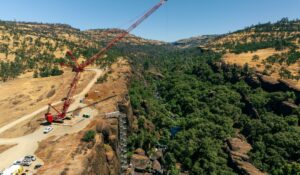
The dams are out, and the salmon are coming home. As fish continue to move into more than 400 miles of habitat reopened by the Klamath River dam removals, a new generation of scientists are part of the team that are documenting recovery in real-time.
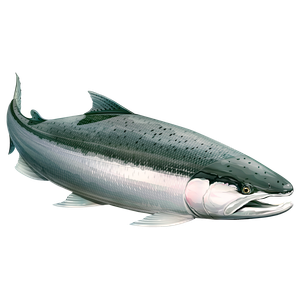
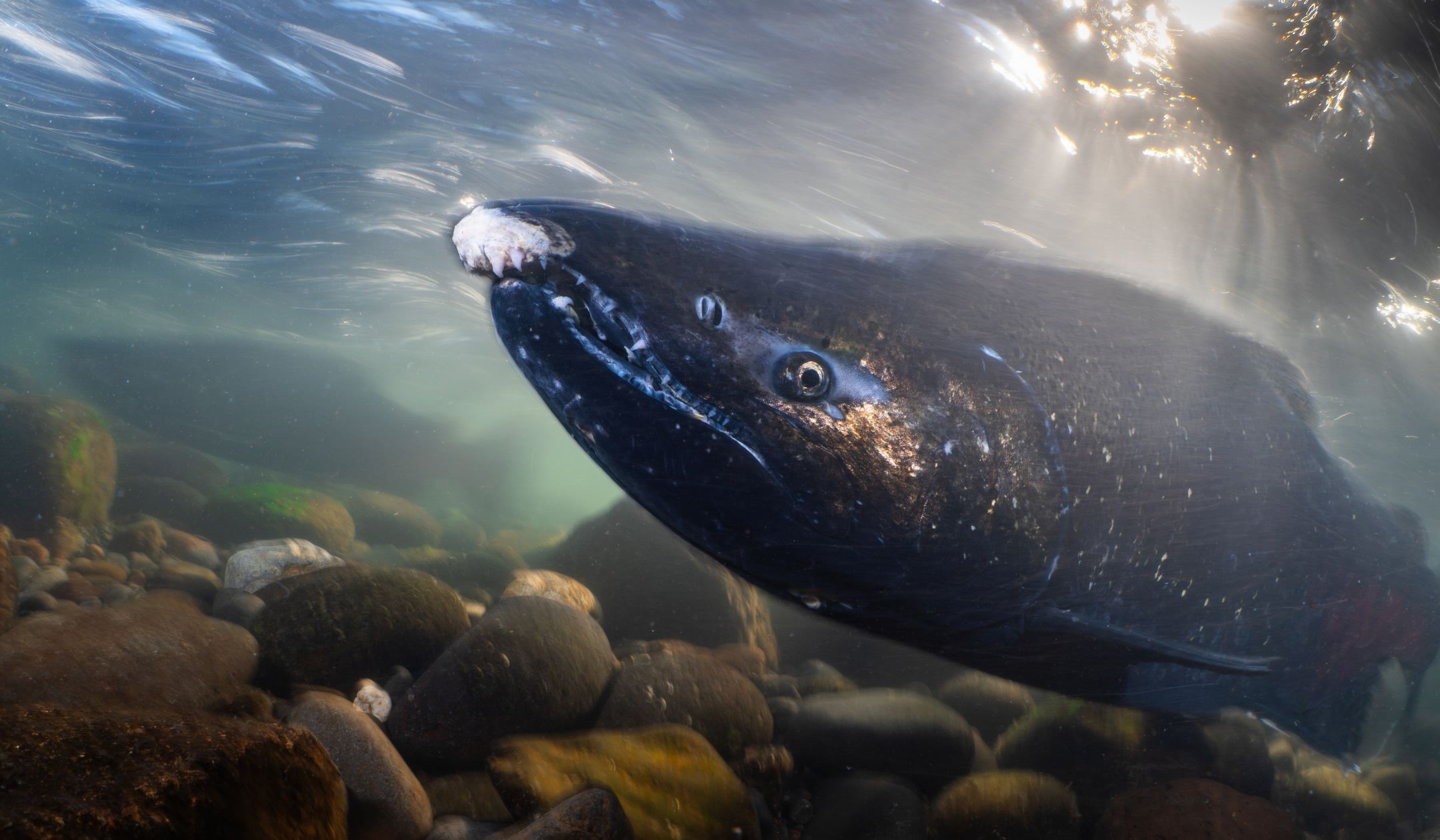
We sat down with two of them: Ben Grassman and Laura Redfield, graduate students at Cal Poly Humboldt, whose research is part of the Klamath River Salmon & Steelhead Monitoring Program and supported by CalTrout. Ben uses radio telemetry to follow adult Chinook salmon as they push upstream. Laura uses DNA traces or environmental DNA (eDNA) to detect which fish are in the river from nothing more than a water sample. Together, their research compliments the broader efforts to understand how many fish are returning to the Klamath River and track migration routes as they repopulate the newly opened habitats. Here’s what they had to say about their research, their favorite rivers, and what it feels like to work on the Klamath at this moment in time.
Meet the Scientists
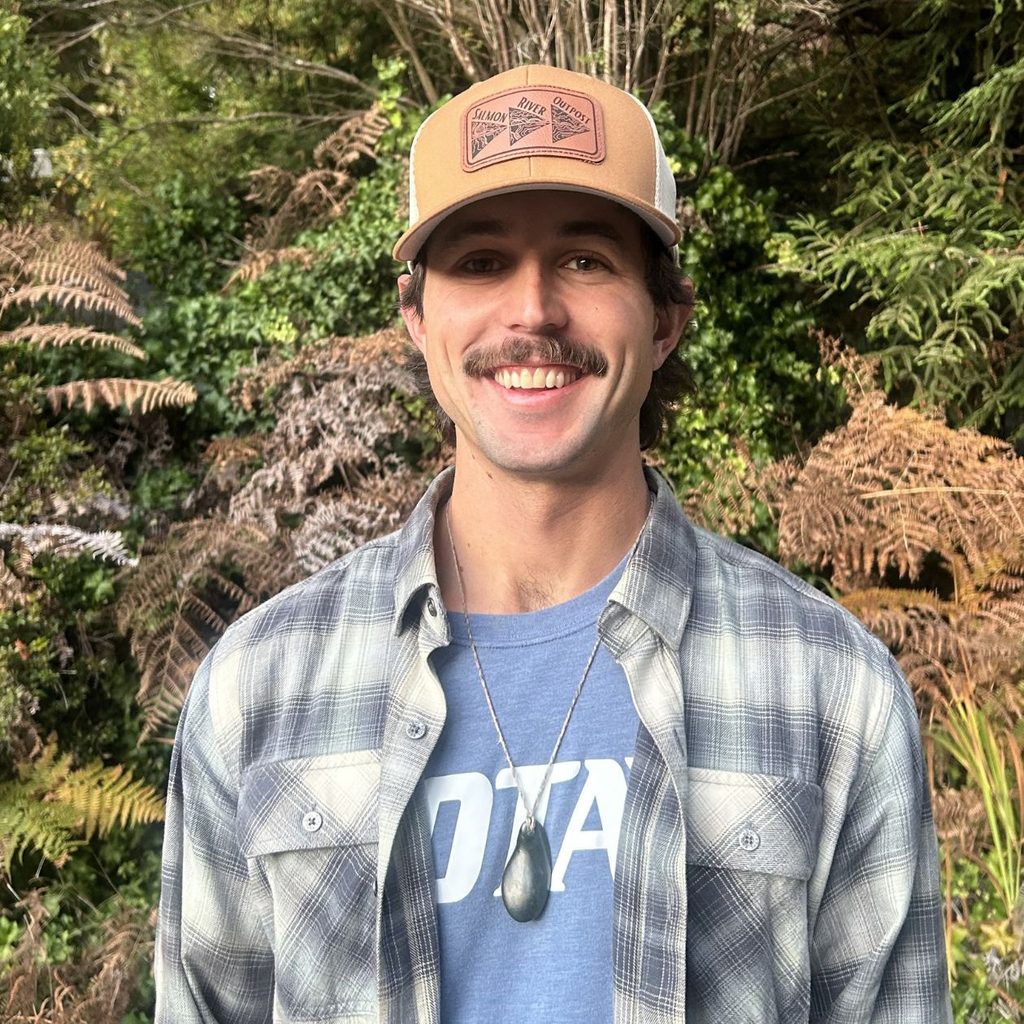
Ben Grassman is a graduate student at Cal Poly Humboldt using radio telemetry and accelerometry to understand what shapes Chinook salmon migration into habitat reopened by the Klamath dam removals. Off the clock, he’s surfing, whitewater paddling, or out on a packraft expedition in the backcountry.
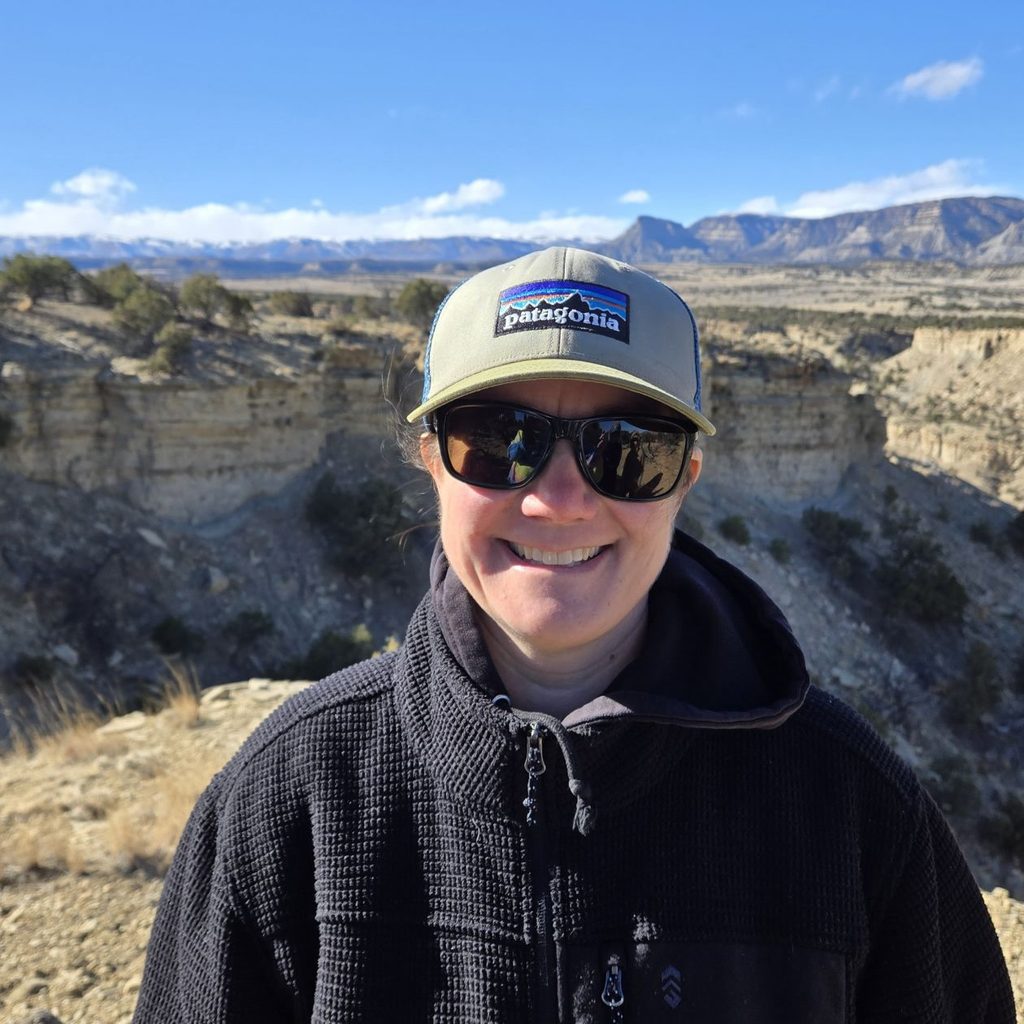
Laura Redfield is a graduate student at Cal Poly Humboldt with a background in conservation genetics. Her thesis tests how well eDNA tracks salmon presence and run timing compared with tangle-net captures and sonar counts. She plans to defend in spring 2027.
The Q&A
Tell us a bit about where you’re from, your background, and what brought you to Cal Poly Humboldt.
Ben: After growing up in the Bay Area, I completed an undergraduate degree at Cal Poly San Luis Obispo, where I got involved with some steelhead monitoring projects on the Central Coast. My professional career began with the Forest Service in central Idaho, then the Morro Bay National Estuary Program, and most recently I led Glacier National Park’s fisheries crew. Humboldt has many of the things I loved about living in the Rockies and on the Central Coast all in one place. I had been interested in getting involved with the Klamath for grad school for many years and was thrilled to be selected for this research opportunity.
Laura: I am originally from Idaho, and most of my work with salmonids has taken place in the Columbia River basin. My first field position was with the Snake River sockeye salmon project out of Stanley, Idaho, which led to my interest in conservation genetics. My interests in dam removal, salmon restoration, and genetics led naturally to graduate work at Cal Poly Humboldt, where active monitoring projects are studying the ecological impacts of the landmark Klamath dam removals.
How did you connect with CalTrout, and what has the collaboration looked like thus far?
Ben: My thesis research is part of a collaborative project of more than a dozen organizations tracking adult salmon and steelhead into reconnected habitat following Klamath River dam removals. CalTrout was instrumental in securing funding for and developing this graduate research opportunity within this partnership. I appreciate how CalTrout staff bring so much enthusiasm for the river and for this project to every field day. My grad school journey would not be possible without the mentorship and support I have received from CalTrout and the team of dedicated project partners.
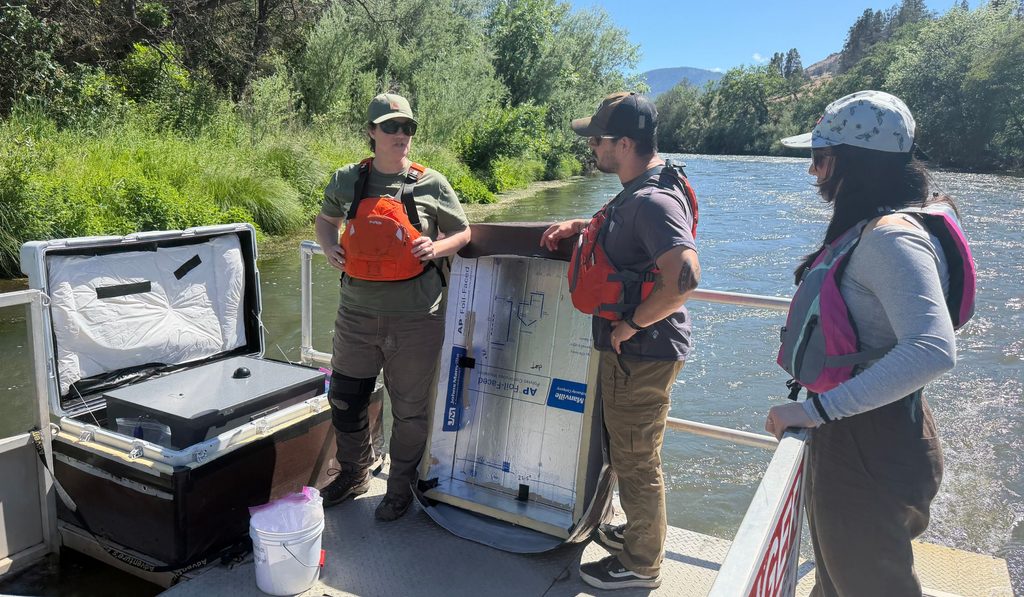
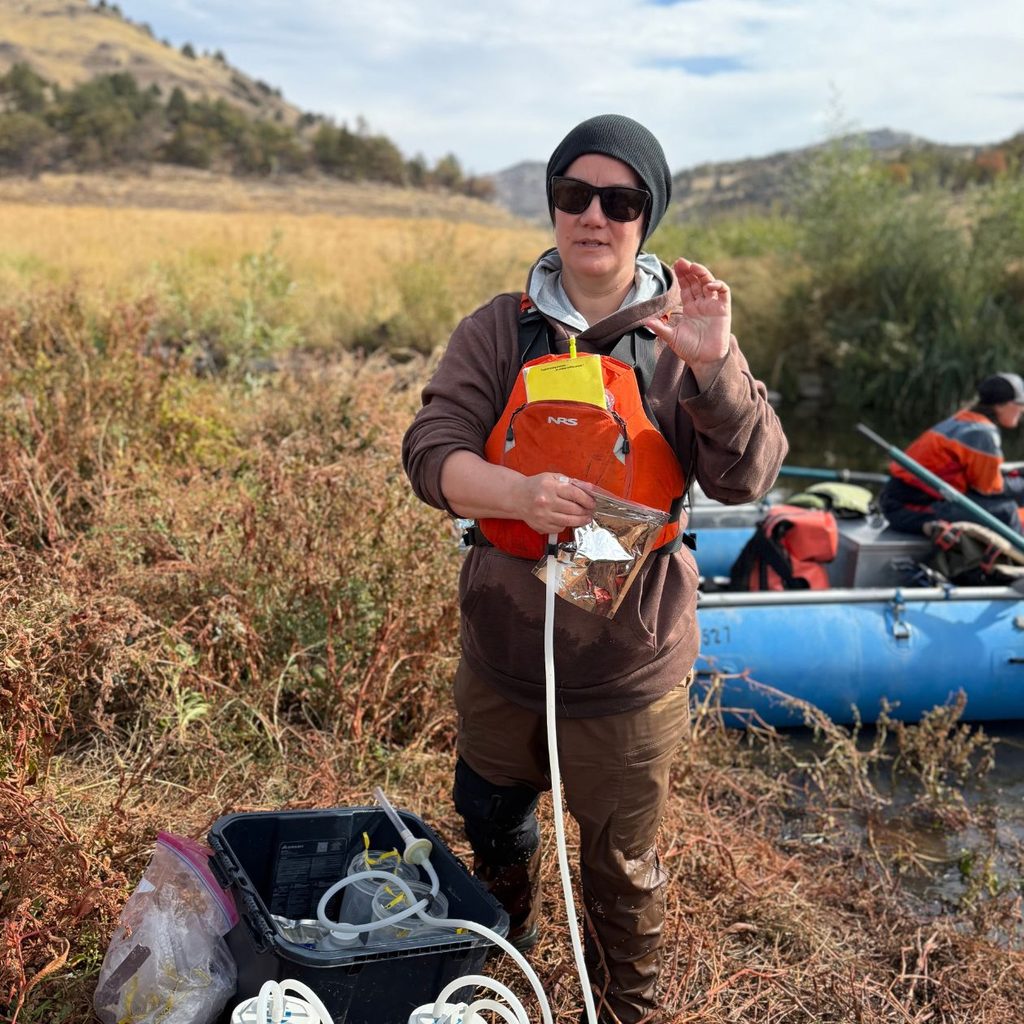
Laura: When I arrived at Cal Poly Humboldt, I connected with Damon Goodman and James Whelan as I began planning my field research. Damon has been instrumental in connecting me with other agencies working in the Klamath Basin, and I work regularly with James out on the river. He helped set up an autonomous eDNA sampler and has hosted me on his raft several times a month for paired tangle-net and eDNA sampling during the last two salmon returns. My graduate research would not be possible without ongoing collaboration with CalTrout.
The Klamath is in the middle of the largest dam removal and river restoration effort in U.S. history. What does it mean to you to do research on this river at this moment?
Ben: It means a lot to me to be working on the Klamath River during this historic period of restoration. I am deeply grateful to the Tribes of the Klamath Basin and all those who fought tirelessly to make dam removal a reality. Watching salmon spawn in reconnected habitat for the first time in over a century is an experience that I truly cherish and will remember for the rest of my life.
Laura: It is incredible, and an absolute dream come true, to be conducting salmon monitoring on the Klamath at this pivotal moment. Everyone out on the river right now feels how impactful the work is. I have never seen, or heard of, this many organizations, Tribes, and agencies collaborating at this scale.
On the klamath
Everyone out on the river right now feels how impactful the work is. I have never seen or heard of this many organizations, Tribes, and agencies collaborating at this scale.
Laura Redfield/Cal Poly Humboldt Graduate Student
Ben, walk us through how radio telemetry works. What are you learning now that the dams are gone?
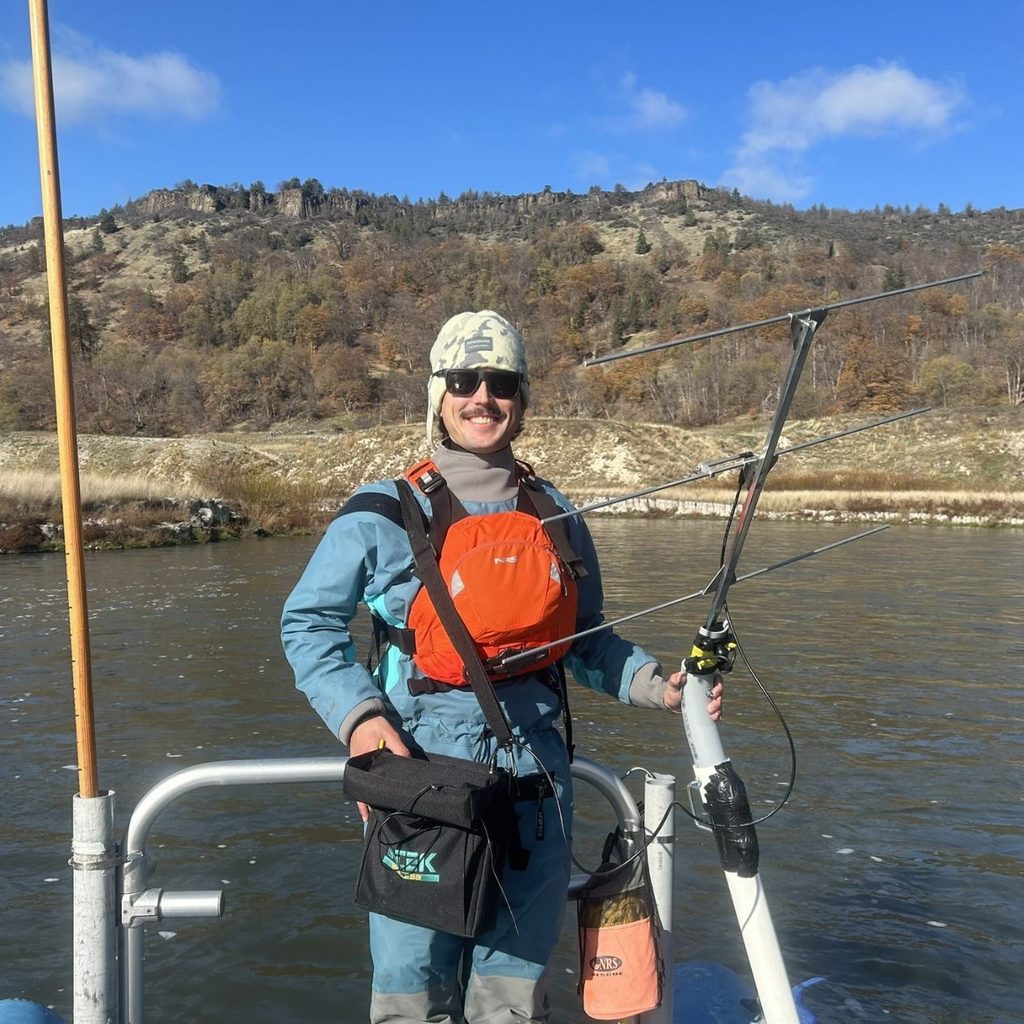
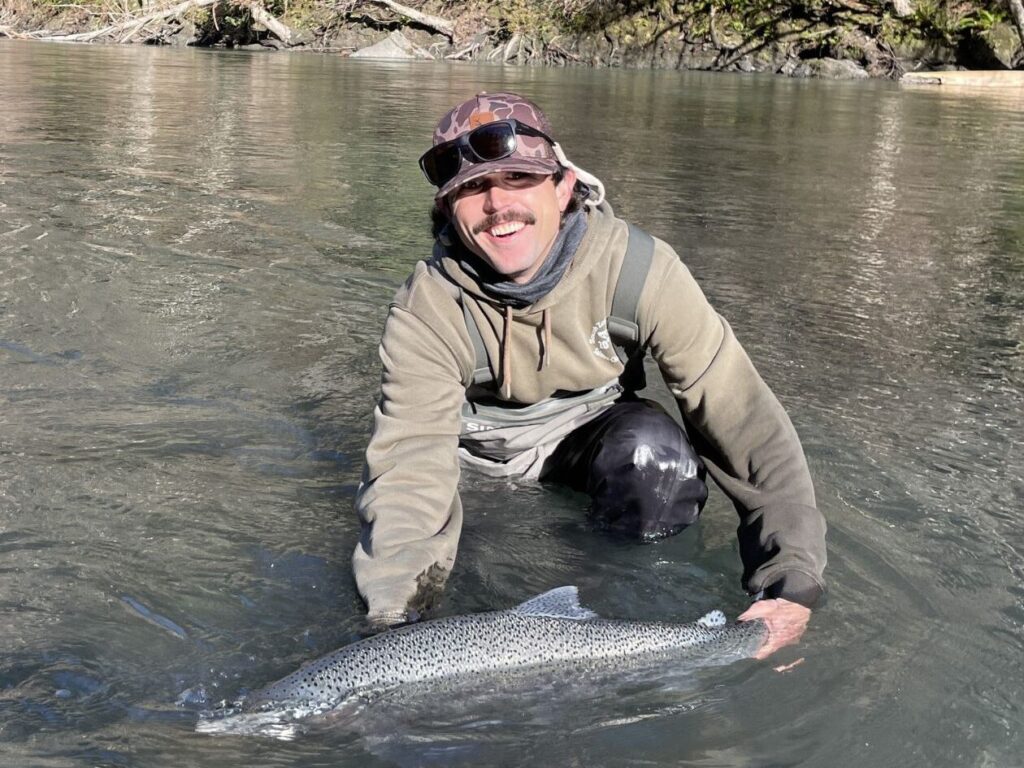
Ben: After capturing a fish, the team attaches a radio tag just below the dorsal fin and records biological data such as length, sex, and lipid content as a proxy for energy reserves. Each tag emits a unique coded radio signal. A network of 15 stationary receivers throughout the Upper Klamath Basin logs detections each time a tagged fish swims by, and we use mobile receivers to track fish by foot, vehicle, or raft to see where they’re spending time and spawning.
The group’s data has helped show that fall-run Chinook salmon very quickly expanded into much of their documented historical distribution above the dam. My thesis focuses on accelerometer data from the tags, which has revealed two distinct behavioral states before spawning: holding and active migration. I hope we can better understand how challenges like high-gradient canyons, remaining dams and impoundments, and variable water quality affect dispersal into historic habitat.
Laura, what is eDNA, and how can a water sample tell us which fish are in the river?
Laura: Environmental DNA is genetic material, such as skin cells or mucus, that organisms naturally shed into their environment. Filtering a water sample captures it, allowing me to isolate the DNA and run a targeted test that confirms whether a species is present, without ever handling the fish.
On the Klamath, an autonomous sampler has collected daily water samples for over a year, tracking when salmon runs arrive, peak, and taper off. I am pairing these samples with passage counts from an acoustic sonar camera operated by CalTrout. Sonar counts fish but cannot always tell species apart, so comparing the two will give CalTrout and its partners a clearer picture of species presence and run timing to guide fisheries management and restoration decisions. Having a crew on the river netting fish every single day, year-round, would be hard on the fish and far too resource-intensive. Automated eDNA sampling makes continuous, year-round monitoring possible.
Has anything in your fieldwork or data surprised you so far?
Ben: The most surprising thing has been the exploratory and nonlinear nature of movement paths. One time, I was tracking a fish that swam into Oregon, but the next week I found that same fish several miles up a tributary in California, and then back in the mainstem the week after that. And one particularly memorable tag recovery: we found a tag hanging by its antenna from some brush directly over an otter slide.
Laura: The rapid physical and ecological transformation of the river itself has been extraordinary. River channels are reshaping, fish numbers are rebounding, and wildlife around the river has increased dramatically. Last year during our floats I saw just a few ducks, but this year large flocks of waterfowl have been taking wing as we drift by.
Why does this work matter, both for the Klamath and beyond?
Ben: I think this work highlights the resiliency of salmonids. When we provide access to habitat through restoration and barrier removal, fish can use it very quickly. While these first few years have brought good news, the Klamath still has a long road of recovery ahead, and I hope our analyses help inform ways to keep improving migration conditions.
Laura: The salmon recovery and monitoring work happening on the Klamath is serving as a real-world blueprint for river restoration elsewhere. In California, projects like the proposed removal of Scott and Cape Horn dams on the Eel River and Matilija Dam on Matilija Creek are building on the momentum and lessons learned here.
On the klamath
While these first few years have brought good news, the Klamath still has a long road of recovery ahead, and I hope our analyses help inform ways to keep improving migration conditions.
Ben Grassman/Cal Poly Humboldt Graduate Student
Do you have a favorite river, creek, or body of water, or a favorite memory from one?
Ben: Right now, I’d have to say my favorite river is the Klamath. My favorite memory is floating down the river above the former dams in 2025 and seeing hundreds of salmon spawning over just a few miles.
Laura: I grew up on Idaho’s Snake River. As a kid I built a falls boat (similar to a canoe) with my dad, and we used it to hunt waterfowl on the islands of the Snake and fish the river’s secret spots. It was there, in that boat, that I learned to love the river ecosystem. There was never a separation in my mind between the river and its many users; we were all out there on the water together.
What advice would you give to younger people hoping to pursue a career in fisheries science or conservation?
Ben: Be persistent in following your passion and get involved with work you care about. A simple phone call can go a long way in getting started.
Laura: Start early by taking seasonal field positions during high school and college and seek out a variety of roles. Just as importantly, spend time learning the human dimensions of fisheries and conservation. Learning how to listen and work alongside people with diverse interests is not only deeply rewarding, it is essential to how our field will continue to move forward.
Following the Return of Salmon
Ben and Laura’s research represents two important pieces of a much larger scientific effort. Working alongside Tribal Nations, agencies, universities, and conservation partners, the team is combining innovative technology with years of field observations to understand how salmon and steelhead are returning to the Upper Klamath Basin.
The discoveries made by this team will help inform restoration priorities, improve our understanding of fish migration, and provide valuable lessons for other rivers undergoing restoration. The dams are gone, but the work of understanding and supporting the Klamath’s recovery is just beginning.