Written by Serena Doose, CalTrout Mt. Shasta/Klamath Senior Project Manager
In December 2023, CalTrout and our partners restored access to three miles of anadromous habitat in Mill Creek – the lowermost tributary to the Scott River – for the first time since the 1980s!
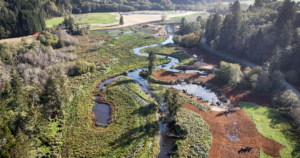
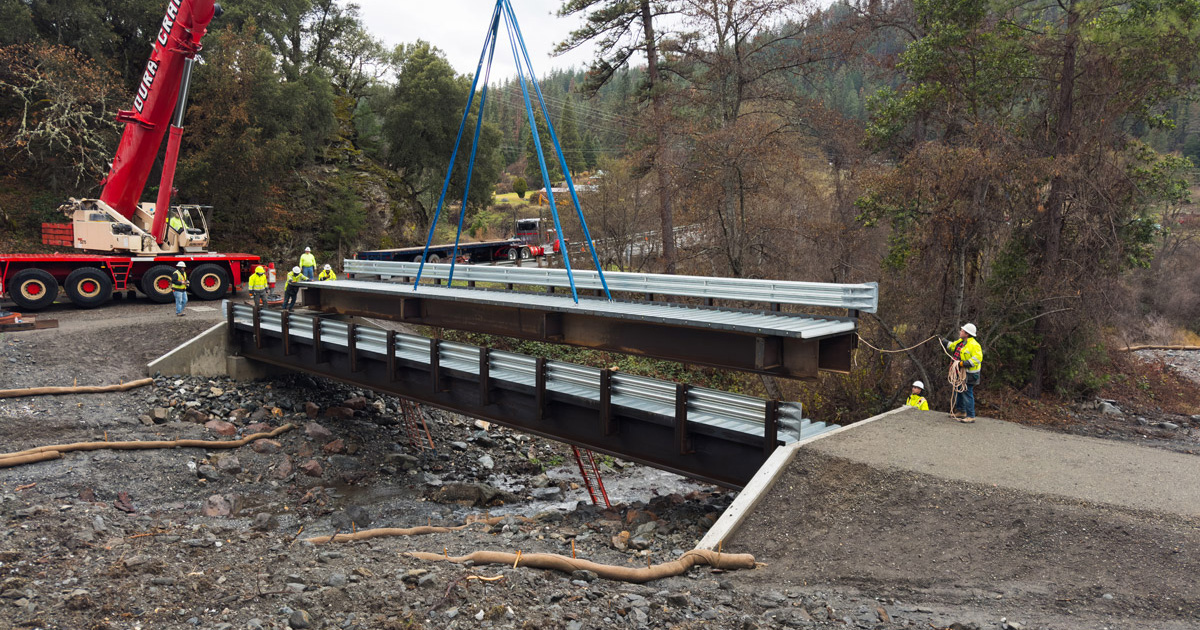
Through the Scott Bar Mill Creek Fish Passage Restoration Project, we removed an existing road crossing, which was a total barrier to fish passage, replaced it with a channel spanning bridge, and re-profiled the channel and its confluence with the Scott River. The existing confluence with the Scott was a steep bedrock cascade, which blocked fish passage during all but the highest flows. The new channel is at a much lower slope and filled with great habitat features for cover and shade.
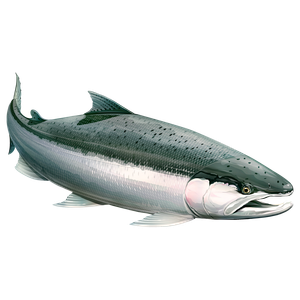
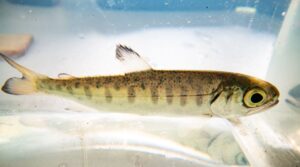
Now, regardless of upstream conditions in the Scott, whether it runs dry or disconnects, coho salmon will always be able to access this tributary for spawning and rearing. Habitat will also be used by fall-run Chinook salmon, steelhead, lamprey, and other native fishes.
Following bridge installation, we’ll use native plants to revegetate the site and provide shade. Our team will also monitor juvenile and adult salmonid use until 2025, when our current funding expires. Check out what the project looked like prior to construction here and how we made sure fish were safe throughout the process here.
As the Klamath River dams are removed, this new unlocked habitat will be especially important for salmon recovery throughout the larger mid-Klamath Basin. By the end of 2024, four Klamath River dams will be removed, which will improve water quality in the mainstem Klamath River, reduce disease, and increase the number of returning adults looking for suitable habitat conditions in historic spawning and rearing streams. Spawning and rearing tributaries to the Klamath, like the Scott River, act as salmon nurseries for the entire basin making our restoration efforts crucial in places like Mill Creek.
We are thrilled to partner on this project with the California Department of Fish and Wildlife (CDFW), the Karuk Tribe, private landowners, the Siskiyou Resource Conservation District, and Siskiyou County. We are grateful for our generous funders at the US Fish and Wildlife Service, Wildlife Conservation Board, and CDFW Fisheries Restoration Grant Program.


Restoring Mill Creek is part of CalTrout’s larger vision to enhance and restore fish passage throughout the Scott River watershed. Explore our projects on the East Fork, South Fork, and at Mill-Shackleford bridge.