
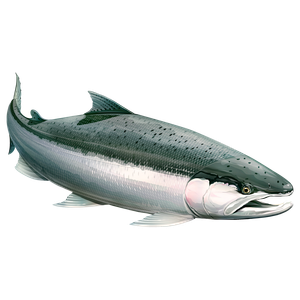
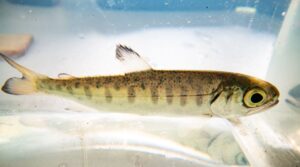
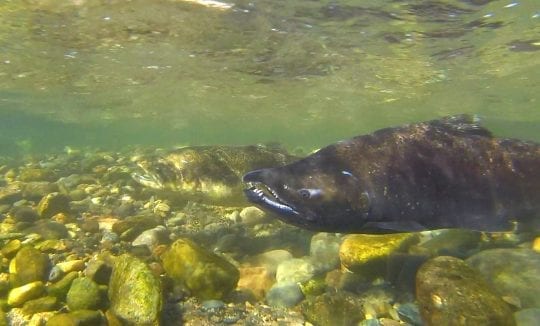
Winter-run Chinook salmon born in the Sacramento River surprised scientists by revealing, in a recent study, that they travel into the river’s tributaries to feed and shelter rather than stay in the main channel, contrary to what we have believed. This may have implications for how this critically endangered species is managed.
The scientists studied otolith samples from adult salmon that had died after spawning; otoliths are tiny ear bones that function much like a tree’s rings with discrete layers forming around the edges over time. Since otoliths absorb isotopes found in the water, researchers were able to match the isotopic signature to those of unique types of rocks in California waterways. California’s diverse geology produces distinct variation among rivers, which can be used with high certainty to place a fish. What the research team found is the majority of adult fish sampled had traveled beyond their natal reach of the main Sacramento River channel. With the isotopic analysis, researchers were able to re-trace the juvenile outmigration to the rivers they visited in their youth when they were migrating to the ocean.
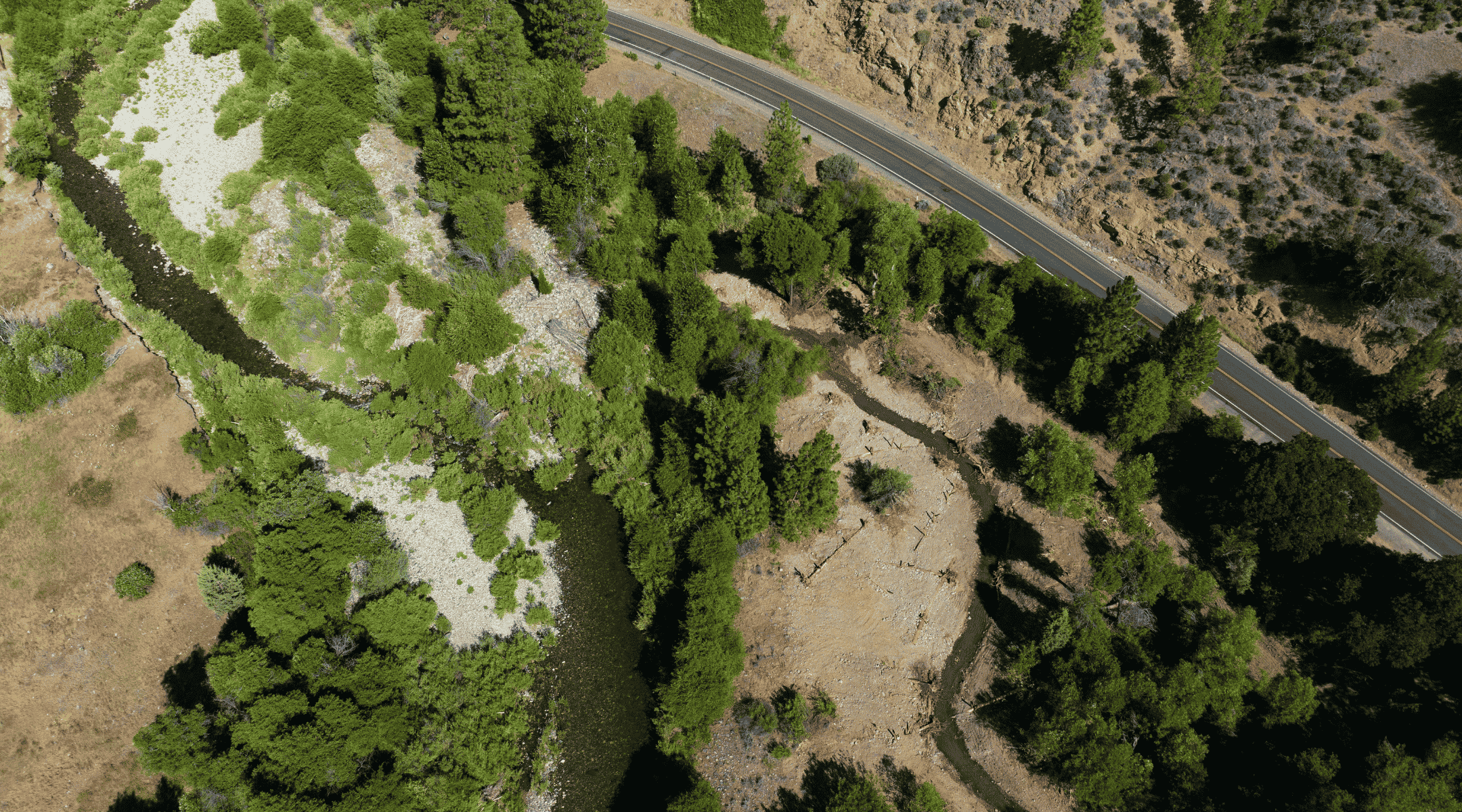
Data from studying habitat use and behavior can be used to determine what rivers should be designated as critical habitat for the federally-endangered winter-run Chinook salmon. “To date, most actions to conserve winter-run Chinook have focused on restoring and protecting habitats within the mainstem Sacramento River. But our work shows that winter runs use a diversity of habitats not previously appreciated and presents new conservation opportunities,” said Dr. Corey Phillis, lead author of the study. Importantly, the study suggests that habitats adjacent to migratory pathways are important for growth and rearing as fish move to the ocean. “These are pretty fascinating results, once again showing that these animals do not conform to set rules during their life cycle. Their ability to move and seek out new habitat has clear and important implications for recovery of winter-run Chinook and other imperiled salmonids in California,” said Dr. Robert Lusardi, CalTrout and UC Davis coldwater fish scientist.
The endangered Sacramento River winter-run Chinook are particularly important among California’s salmon runs because they exhibit a life-history strategy found nowhere else on the West Coast. These Chinook salmon spawn during the summer months when air temperatures usually approach their warmest. Their unique life history was shaped in response to access to year-round, spring-fed cold-water streams reaches, a rare hydrologic feature among salmon-bearing streams in the headwaters of the Sacramento River watershed. Streams fed by rainfall, snowmelt, and cold-water springs encircled the valley, fostering a diversity and abundance of Chinook salmon. Winter-run no longer have access to the cold headwaters, blocked by Keswick and Shasta dam. They are now entirely reliant on the cold water releases from Keswick dam and the one population of winter-run Chinook salmon exists downstream of the dam.
The study referenced was published in the journal Biological Conservation: Click here to read.