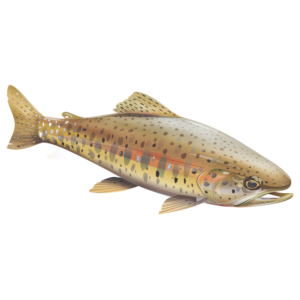
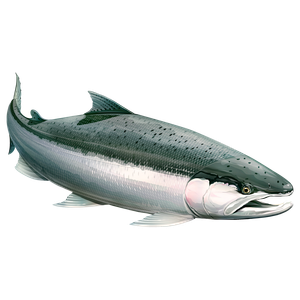

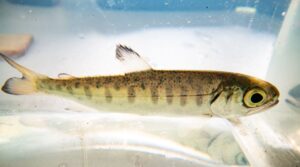
November’s Fish of the Month is Southern Oregon/Northern California Coast (SONCC) Coho salmon, a federally-listed threatened fish whose abundance has dropped by 95% within the last several decades. Many of these fish are in isolated populations of less than 100 individuals– too small to make a comeback on their own. Help is on the way. With a combination of restoration, science, collaboration, and advocacy, CalTrout is working on recovering SONCC Coho salmon in the Eel watershed, in the Klamath River, and at the state capitol advocating for policy to ensure adequate flows for fish.
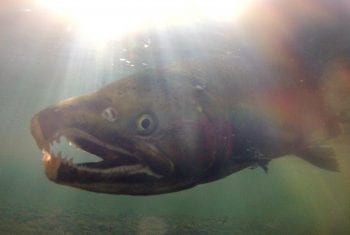
Historically, they occupied numerous coastal basins in the lower portions where they found high quality habitat. SONCC Coho salmon are still decreasing throughout their range from the Rogue River in Oregon to the Mattole River in Mendocino County. The 2017 SOS II: Fish in Hot Water report released by California Trout and UC Davis Center for Watershed Sciences found them at a critical level of concern; they could go extinct within 50-100 years if we don’t change course.
Identified in the SOS II report, the top threats to SONCC Coho salmon survival are:
- Estuaries that have been altered which compromises nursery areas and passage between freshwater and ocean;
- Water diversions from marijuana cultivation and other agricultural practices;
- Lack of access to cold-water habitat due to dams blocking their passage and diminishing flows;
- Competition for resources from hatchery-origin Coho salmon– in the Trinity River, it appears that wild SONCC Coho salmon have been completely replaced by hatchery fish;
As with all salmonids in California, climate change poses a large threat to their survival. Coho are the most sensitive of salmonids to changing environmental conditions. Climate change will lead to increased stream temperatures, more frequent and prolonged drought, and reduced streamflows.
What can be done to save them?
Despite a decrease in SONCC Coho salmon to a small fraction of their former abundance, they maintain a potential for recovery. Preserving existing cold water habitat is crucial for their survival. Juvenile coho salmon inhabit Northern California streams and rivers year-round, and require a steady cold water supply through the hottest months and access to quality feeding grounds.
CalTrout is recovering SONCC Coho salmon in California from two of our regional offices: Shasta and the North Coast.
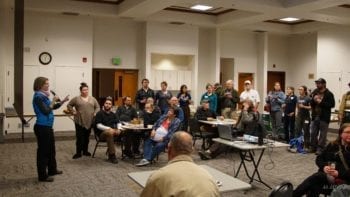
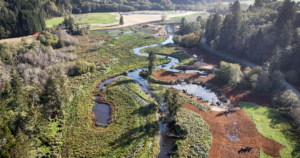
On the North Coast, CalTrout’s work on the Eel River’s Sproul Creek will develop a policy for protecting life-giving water flows, while balancing the water needs of rural homesteaders. In addition, our estuary restoration projects in the deltas of Redwood Creek and the Eel and Mad rivers provide important rearing habitat for juvenile coho. CalTrout also convenes the Eel River Forum which strategizes with 22 member organizations on how to recover SONCC coho salmon in California’s third largest river.
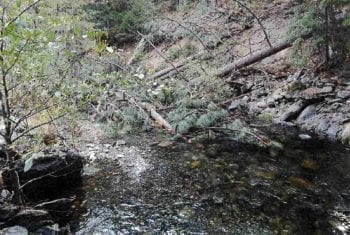
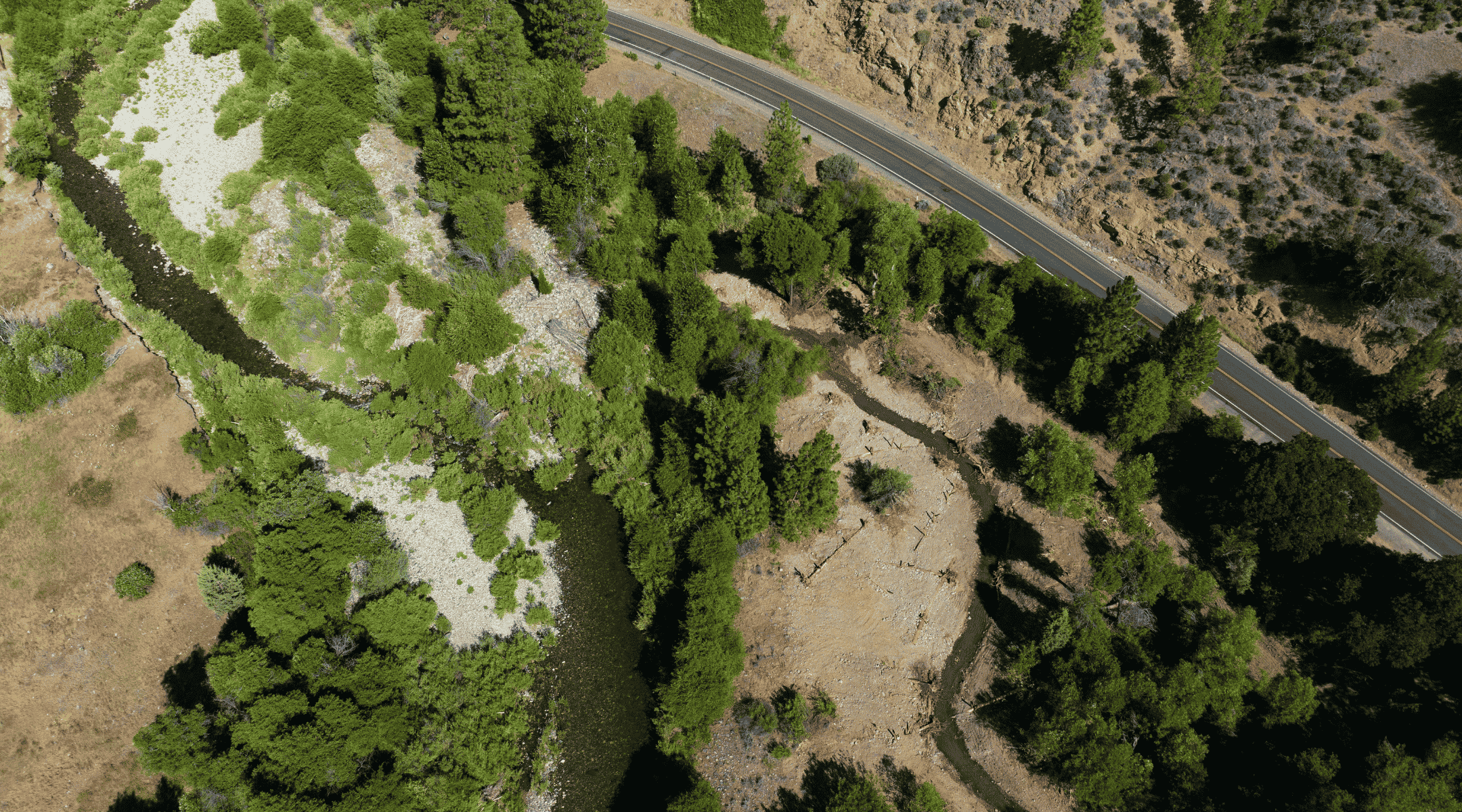
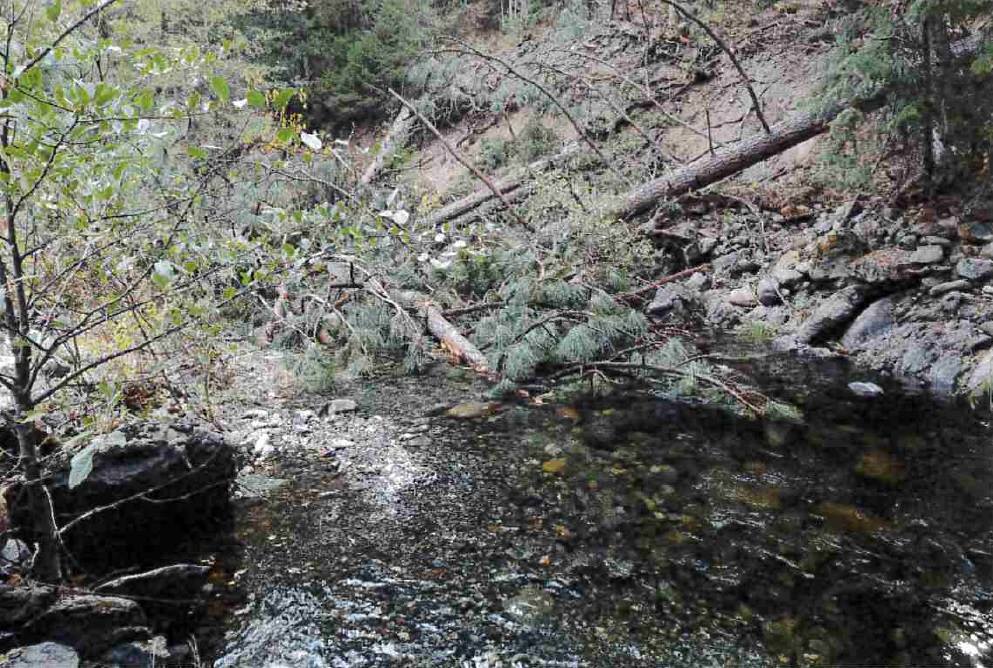
CalTrout’s Shasta team recently completed a restoration project that will help recover threatened coho salmon in the Scott River, the most productive coho stream in California. A stretch of the South Fork Scott River had become severely degraded from mining and agriculture, leading to incised channels and disconnection from the natural floodplain. Coho salmon need complex habitat and deep pools to rear in and for adults to rest in while migrating upstream. Generously funded by the California State Coastal Conservancy, we excavated an inset floodplain, reconnecting the river to off-stream rearing habitat, and installed woody debris in the stream for fish cover.
These efforts will help ensure that our state continues to have wild SONCC Coho salmon for generations to come.
Learn more about California’s remaining native salmonids from SOS II: Fish in Hot Water.
More Fish of the Month features: