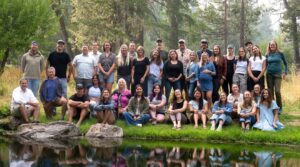
Welcome to Capitol Corner, a series dedicated to providing updates on CalTrout’s legislative and policy work. CalTrout’s policy team includes Redgie Collins (Legal and Policy Director), Analise Rivero (Associate Director of Policy), and Kam Bezdek (Policy Intern). This dynamic trio manages the development and implementation of CalTrout’s natural resource and water policy agenda in the California state legislature. Their work includes, but is not limited to, supporting CalTrout’s organizational goals through regulatory and public funding advocacy, building relationships with state agencies, and working directly with key decision makers to support issues that advance the mission and programs of CalTrout.
A Special Report Out from CalTrout’s Policy Intern
As an intern at CalTrout, the Legal and Policy team has introduced me to a wide variety of restoration topics and issues. Though my first task was to create a set of factsheets to inform decision-makers about CalTrout’s projects throughout the state, in the past couple of months, I’ve had fun diving in deeper and getting a taste of the complex legal and policy issues that affect CalTrout’s work. Below I will describe a few of the projects that have been keeping me busy!
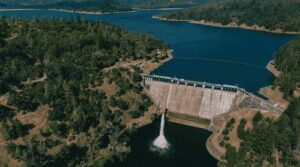
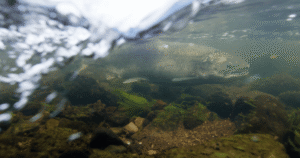
Most recently, I have been working on two memos for the Legal and Policy Team. One of these memos focuses on Fish and Game Code Section 5937, concerning the health of fish below and near dams in California. My research has been focused on how similar laws are enforced, how the enforcement of these laws differs for rivers across several states, and the effects of this legislation on the condition of fish in the American West. I have done research into the dams throughout the Columbia River Basin (including the Snake and Columbia Rivers) in the Pacific Northwest, as well as issues of water management and the impacts to restoration within the lower Colorado River Basin.
My role has mainly been to dive into the context of these laws, understand the relationships involved, and document the important elements of the issue that I encounter. I’ve been enjoying reading through cases and delving into the history of the complex relationship between fish and dams in the West. Another topic that I am beginning to research is beaver legislation in California. In addition to understanding more about the role of beavers in the natural environment and their important place in the coho salmon lifecycle, I will be researching more on the laws protecting beavers, solutions for beaver management, and ways in which the state could do more for beaver populations in our rivers and streams.
I also completed a risk assessment on several of CalTrout’s projects in order to help the team understand how and when decisions are made and give insight into the contracting process for future projects. Risk management is something I have never done before, yet was one of the most interesting projects I have had the pleasure to work on. I was fortunate that a few staff members walked me through the process and explained the essential components of the funding and contracting processes for different projects; from there I was able to take a look at what decisions were made and why. I researched and documented two of CalTrout’s projects, the Santa Margarita Bridge and the Eagle Canyon projects. The testing and contracts that were needed regarding endangered species, potential runoff and pollution, funding timelines, and crew safety was extensive, and it truly gave me a greater appreciation for the contracting process and those who specialize in it.
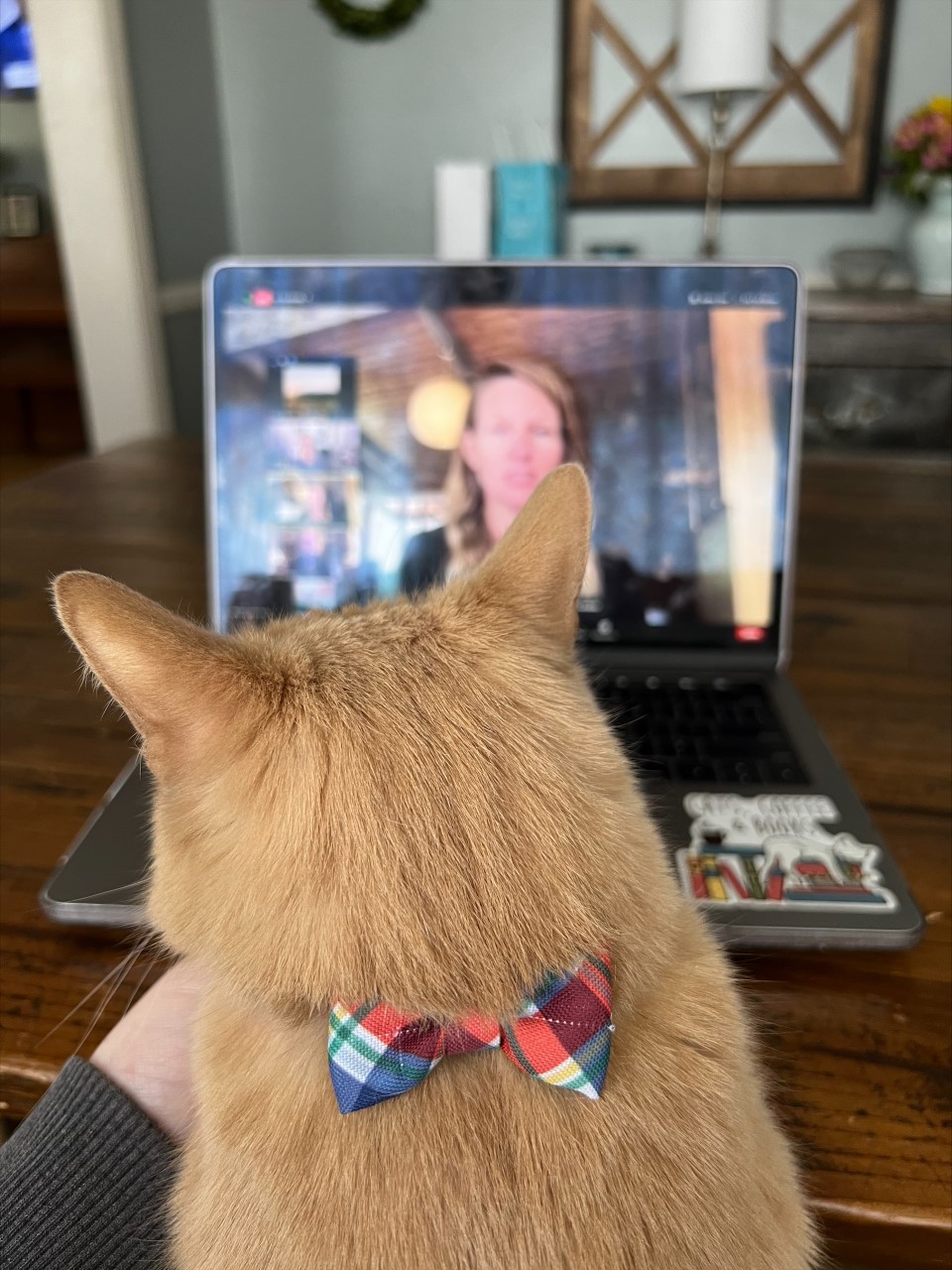
Earlier this month, my internship involved spending a day with the Surfrider Foundation over Zoom to attend their annual Oceans Day conference. The day was filled with several keynote speakers and panel discussions designed to give participants insight into the multifaceted issue that is ocean conservation. A panel discussion on ocean and beach microplastics revealed that babies consume 1 million microplastics a day from feeding bottles alone. CA Senator Ben Allen (District 26) also joined the conversation, as his district has many beaches that suffer from microplastics. This panel highlighted the relationship between conservation and public health, just as other panels throughout the day were designed to connect the dots and appeal to those who might not otherwise see the role of conservation in their daily lives.
Another interesting panel discussion introduced the idea of storytelling to the participants. The panelists discussed their own ocean stories and invited participants to share as well in the chat, demonstrating the power of storytelling and narrative to captivate and unite individuals to a cause. They argued that once a person is connected to the idea of conservation, the mind moves immediately to ask, “what can I do to protect this?” This message is incredibly powerful in the movement to keep the oceans clean and restore natural ecosystems throughout California. By creating personal connections and identifying common goals within ocean conservation, the panels left the participants with small takeaways they could remember the next time they see advertisements for beach clean-ups or make the decision to donate to an organization that supports sustainable energy in California.
I’ve gained incredible knowledge and experience in the past couple of months and I am so grateful for the mentorship I have received as I have grown. I’m excited to learn even more as my internship continues!